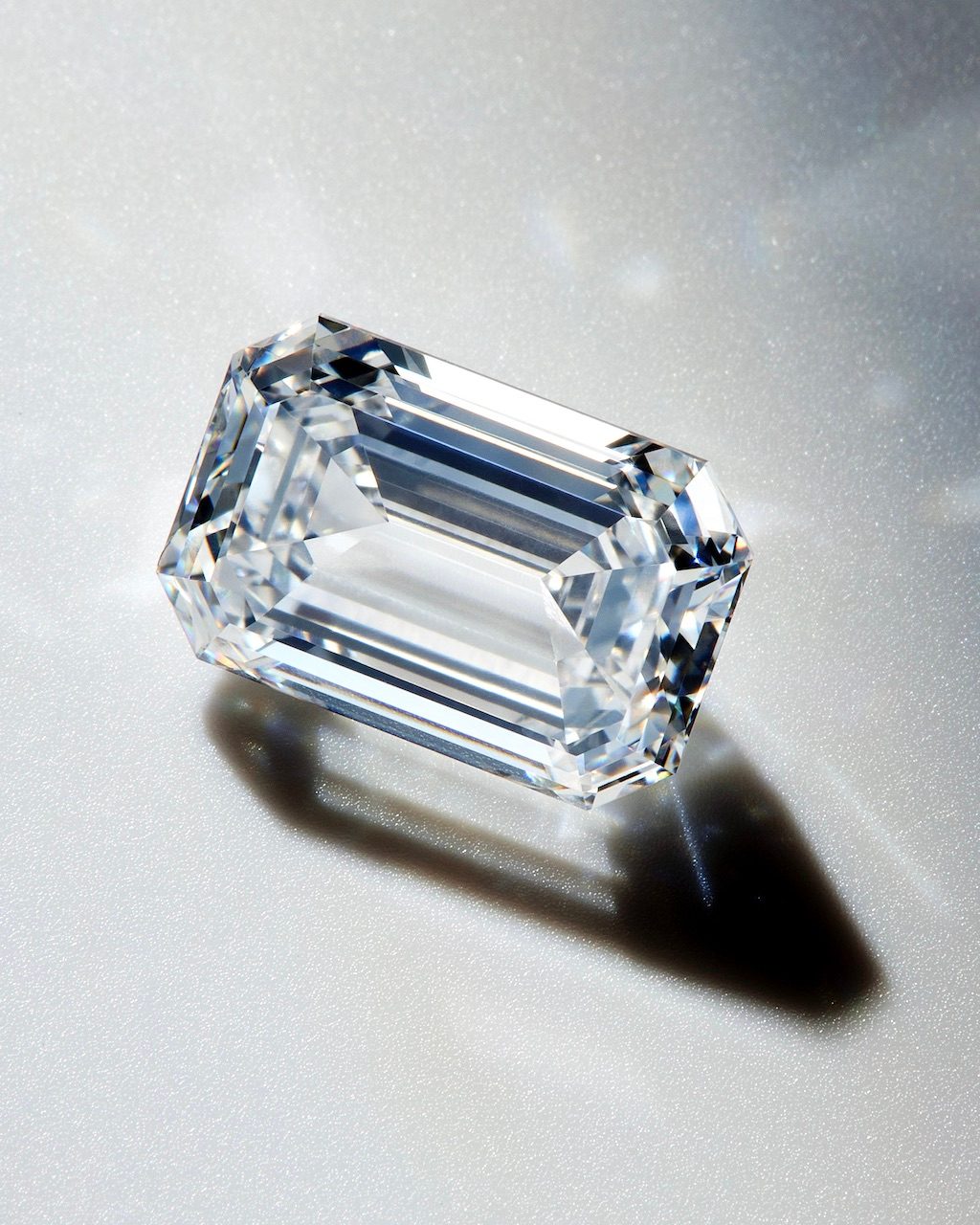
D Color
Completely colorless and the most valuable.
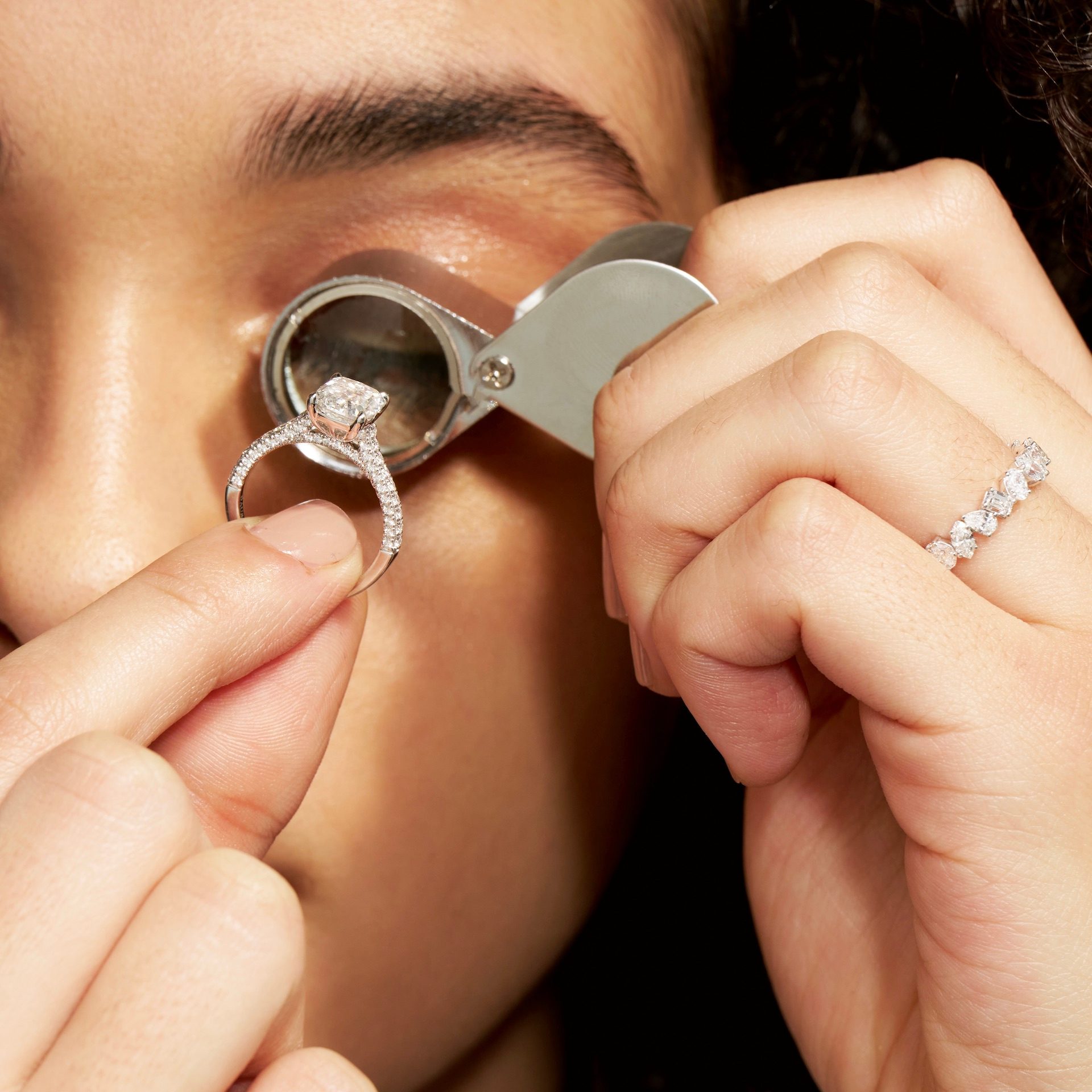
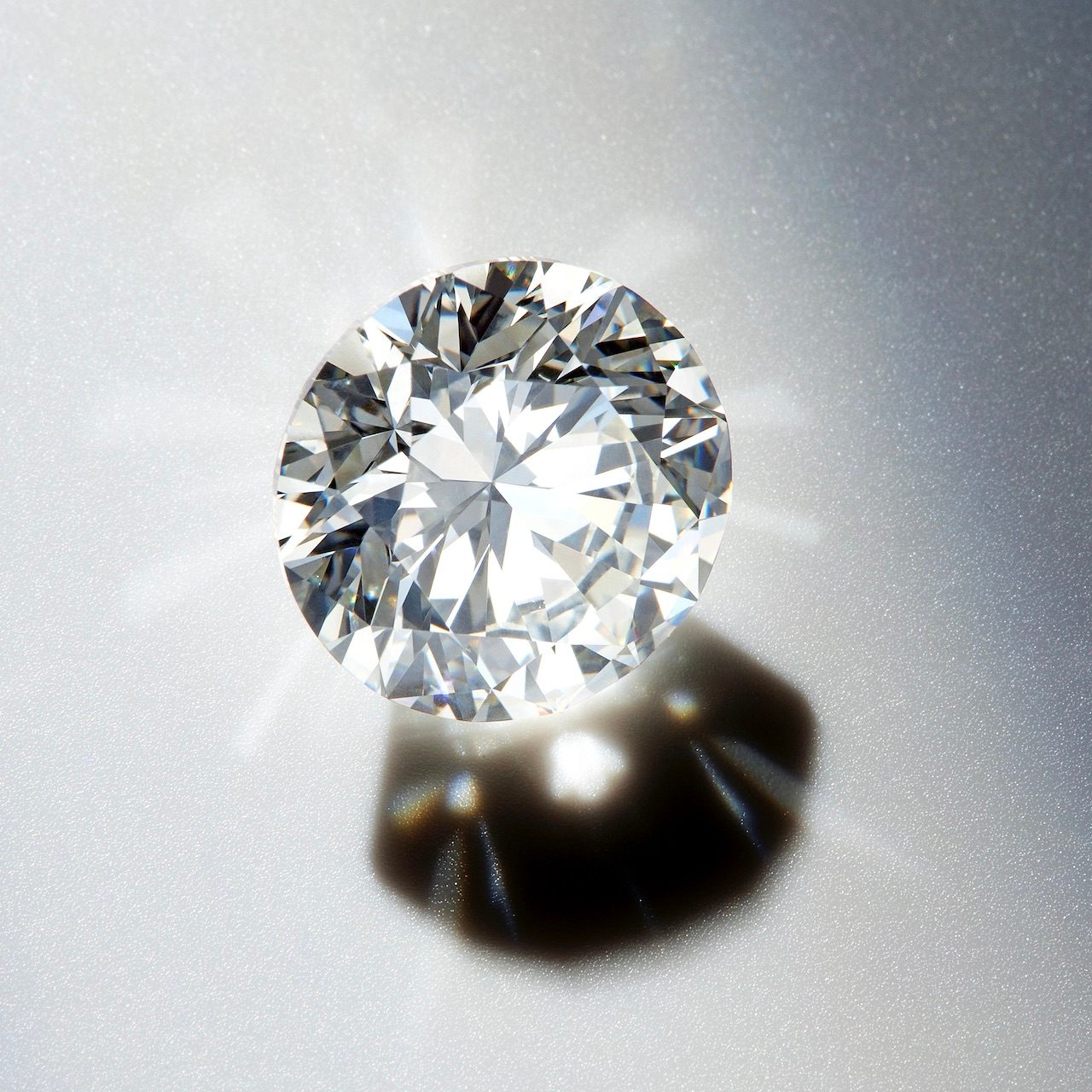
The 4Cs—Cut, Color, Clarity, and Carat—give you a useful framework for understanding a diamond’s quality and characteristics. But just as a birth chart can describe someone without defining them, a grading report can only tell you so much about a diamond. There’s another part of the equation that can’t be measured: how the stone makes you feel. Natural diamonds form over billions of years deep in the Earth’s mantle, where immense heat and pressure shape each one in its own way over time. That process can leave behind tiny inclusions and blemishes—natural markings that make every stone distinct.
Think of these details as little time capsules, offering a glimpse into a diamond’s extraordinary journey from deep within the Earth to the moment it becomes yours. They’re part of the diamond’s biography, revealing particulars about its age, authenticity and rarity you won’t find in any other stone. And just as no two people have exactly the same story, no two natural diamonds are exactly alike. A diamond’s value isn’t only about its technical qualities or grading; it’s also about the meaning you give it and the memories it comes to hold. Whether you’re marking a milestone, celebrating a relationship, honoring an accomplishment or simply choosing something special for yourself, the right diamond is the one that resonates with you.
The clarity grade of diamonds refers to the absence of inclusions or blemishes. The clarity scale ranges from Flawless (FL) to Included (I). Natural diamonds that form without any inclusions are extremely rare and deemed internally flawless on most grading scales. These rare diamonds are some of the most valuable in the world. Just as the positions of the planets at the moment of birth contribute to a person’s individual makeup, a diamond’s clarity can reflect the conditions of its creation. Tiny inclusions and blemishes are natural traces of the immense heat, pressure and time that shaped the stone.
What It Reveals: Think of clarity as a record of the conditions surrounding a diamond’s formation. A diamond’s clarity affects how clean and brilliant it looks, especially under magnification or close inspection. Rather than imperfections, these natural details are part of what makes each diamond distinctive and can be part of what you love about it.
1. Flawless
(FL)
No inclusions or blemishes visible under 10x magnification.
2. Internally Flawless
(IF)
No inclusions or blemishes visible under 10x magnification.
3. Very, Very Slightly Included
(VVS1, VVS2)
Minute inclusions are difficult to detect even under magnification.
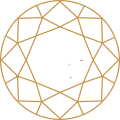
4. Very Slightly Included
(VS1, VS2)
Inclusions are minor and difficult to detect under 10x magnification.
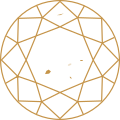
5. Slightly Included
(SI1, SI2)
Inclusions are visible under magnification and may be visible to the naked eye in SI2.
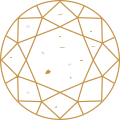
6. Included
(I1, I2, I3)
Inclusions are visible to the naked eye and may affect the diamond’s appearance and durability.
Completely colorless and the most valuable.
Nearly colorless, with only microscopic traces of color detectable by experts.
Also nearly colorless, with a barely perceptible difference from E.
A slight hint of color, nearly indistinguishable to the naked eye.
Slight warmth but still appears white in most lighting.
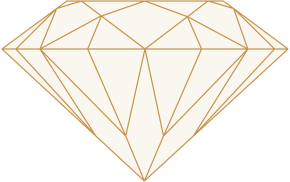
Some noticeable tint in larger diamonds.
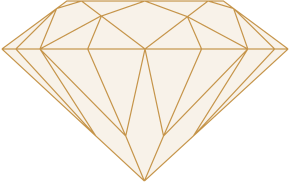
Slightly more visible color, especially in larger stones.
A natural diamond’s color grade is usually a measure of how colorless the diamond is. Most natural diamonds appear colorless or near colorless to the average shopper, but actually have slight tints of yellow or brown. The closer the stone is to a colorless diamond, the rarer and generally more valuable it is.
Natural diamonds are graded on a color scale ranging from D (colorless) to Z (heavily tinted brown or yellow). Diamonds typically begin to show a noticeable light yellow tint starting at the K grade on the GIA color scale.
Diamonds can also form naturally in almost any color imaginable because of factors apparent in the earth when they form. Most of these natural colored diamonds are so rare that their value can be limitless, and they are graded on a different scale more closely describing the visible color.
What It Reveals: Color is one of the details that gives a diamond its particular vibe. Some lean icy and colorless; others have warmer undertones or show off a more unexpected hue. A diamond’s color can impact its overall appearance and price, especially in certain shapes or larger stones where color is more noticeable. Consider it a compatibility question: are you drawn to crisp, bright whites, warmer tones or something completely unexpected?
Not to be confused with diamond shape, the cut of a natural diamond determines how it interacts with light and how it expresses its brilliance, giving each stone its own distinct energy and presence. The Cut Grading System assesses a diamond’s appearance, including its brightness, fire, and scintillation, which make up the way a diamond reflects light, dispersing it into color, and sparkles.
Cutting a natural diamond requires a perfect balance of artistry and precision to enhance its brilliance. This is why a diamond’s cut grade not only measures how well it reflects light but also evaluates the craftsmanship behind its proportions, polish, and symmetry. Ranging from Excellent to Poor, cut grade is considered the most important factor influencing a diamond’s overall beauty and value.
The GIA (Gemological Institute of America) and other grading organizations use the round brilliant diamond as the benchmark for evaluating cut quality because it has the most precise and universally recognized proportions.
What It Reveals: A diamond’s cut has the biggest impact on its sparkle and brilliance, more than any other of the 4Cs of diamonds. It’s also one of the qualities you’re most likely to notice at a glance. Just as each zodiac sign has its own set of idiosyncrasies, the cut of a diamond shapes its appearance. When it comes to sparkle, trust your eyes: what catches your attention is uniquely yours.
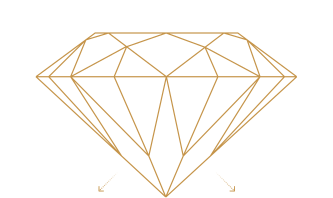
A poorly cut diamond that appears dull and lacks fire due to excessive light loss.
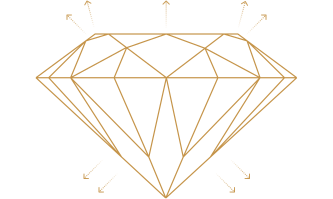
Still offers a decent amount of sparkle, but some light leakage occurs, reducing overall brightness.
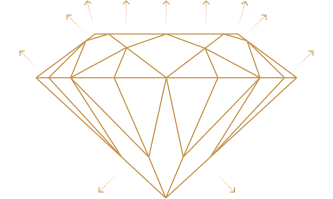
Still offers a decent amount of sparkle, but some light leakage occurs, reducing overall brightness.
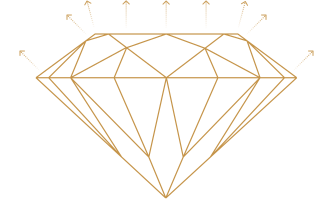
Nearly as brilliant as Excellent, with only slight differences in light performance that are difficult to detect.
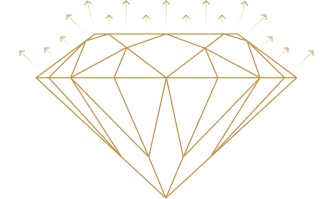
The highest cut grade, offering maximum brilliance, fire, and scintillation. Light is reflected efficiently, creating the most dazzling effect.
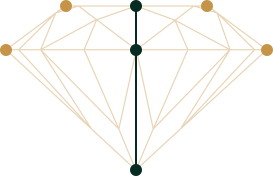
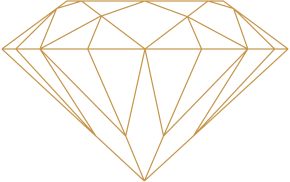
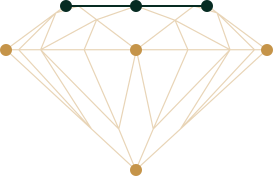
The table is the top horizontal facet of the diamond.
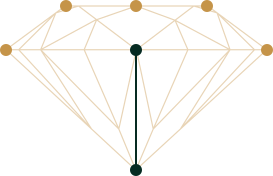
The crown height is the upper portion of the diamond.
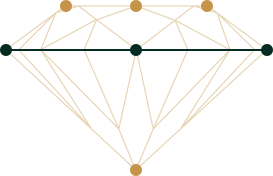
The girdle is the middle portion of a diamond.
Pavilion angle is an important dimension of the stone
The small facet at the bottom of a diamond to prevent chipping and abrasion to the point.
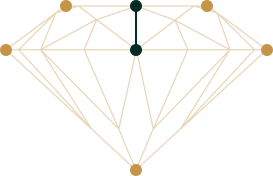
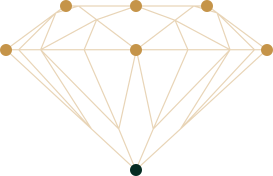
The diamond’s overall depth from the surface of the table to the culet.
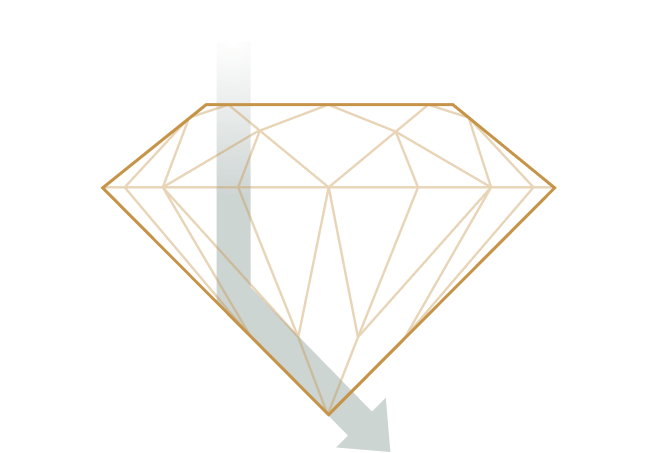
Poor brilliance and light performance
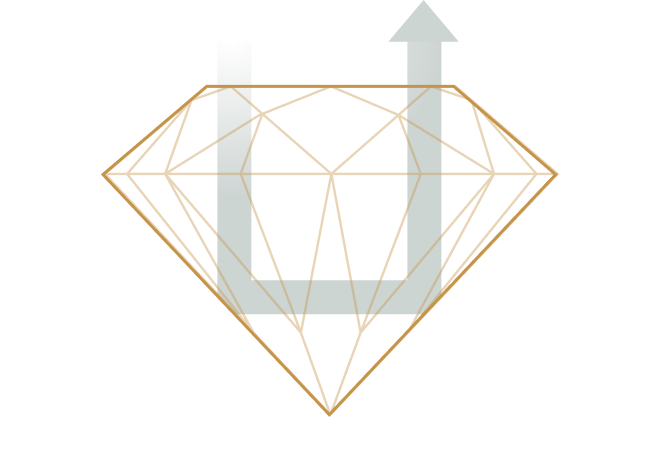
Most brilliant. Optimal light performance
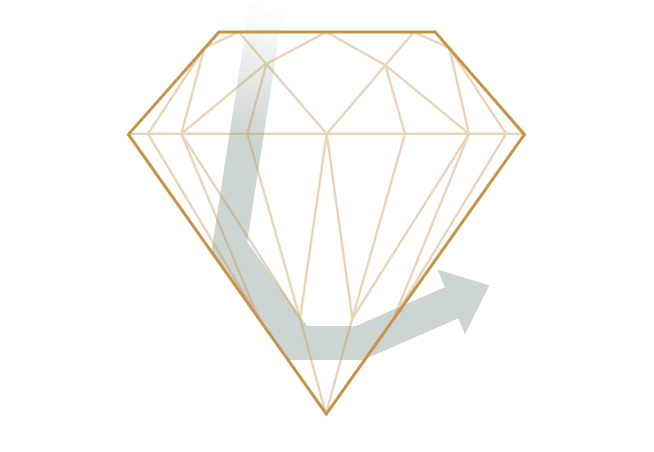
Poor brilliance and light performance
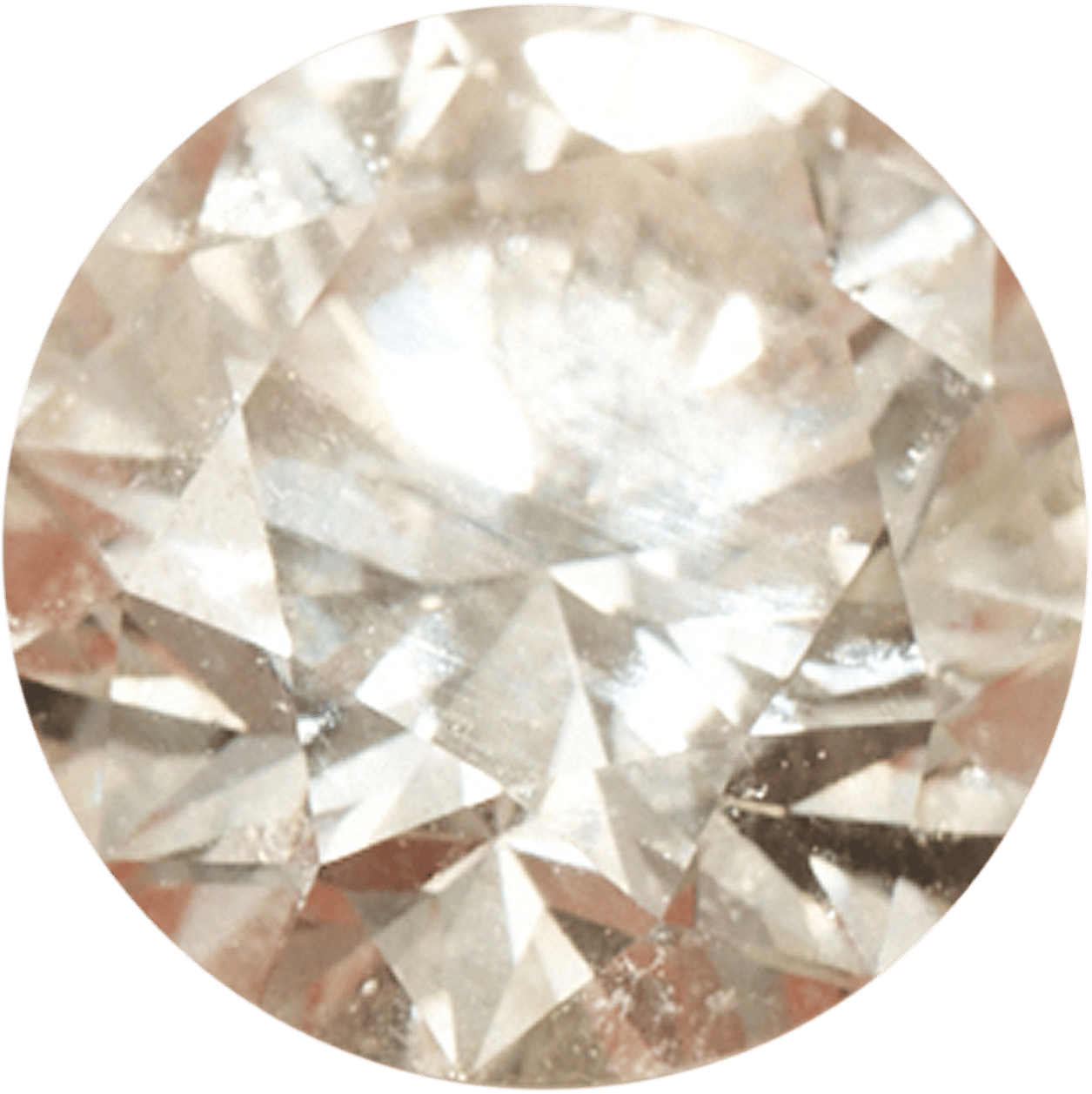
Diamond sizes shown are for visual reference only and are approximate. Actual sizes may vary.
The carat of a natural diamond is the measurement of its weight. One carat is equivalent to 200 milligrams, or 0.2 grams. Carat weight is often used as an indicator of a diamond’s size, though two diamonds of the same carat weight can appear different in size depending on their shape and how they are cut. Just as two people born on the same day have very different personalities, two diamonds of the same carat weight can look surprisingly different.
Natural diamonds one carat and larger are becoming increasingly rare, as global supply continues to decline and only one significant deposit has been discovered in decades. In fact, the annual global recovery of all natural diamonds one carat and larger could fit inside just one exercise ball.
What It Reveals: Carat weight influences a diamond’s size—and its price—but bigger isn’t always better. Cut and proportions play a major role in visual impact. Shape and cut influence how large a diamond appears, making carat weight just one part of the bigger picture. The right carat is the one that suits your style, priorities, budget and the way you want your diamond to feel.