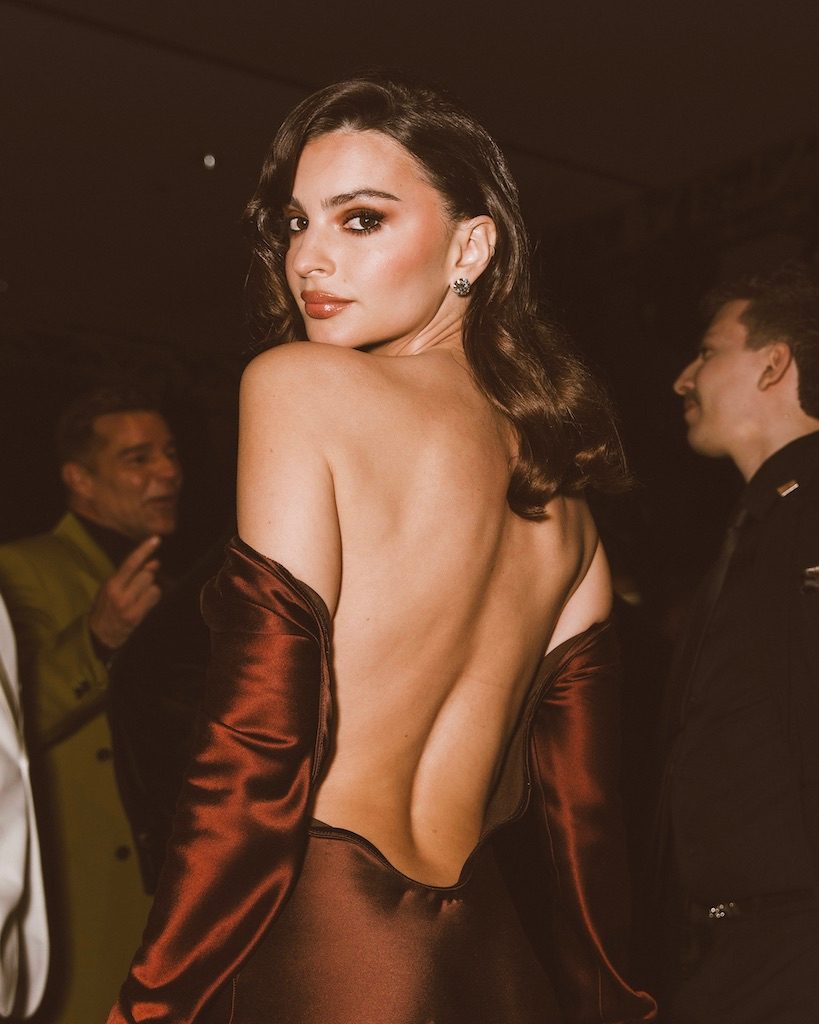
The super-sized stud earring is taking over the lobes of our favorite style stars. While we can’t all opt for diamonds with double-digit carat weights, here are a few tips and tricks to maximize the impact of your natural diamond studs.
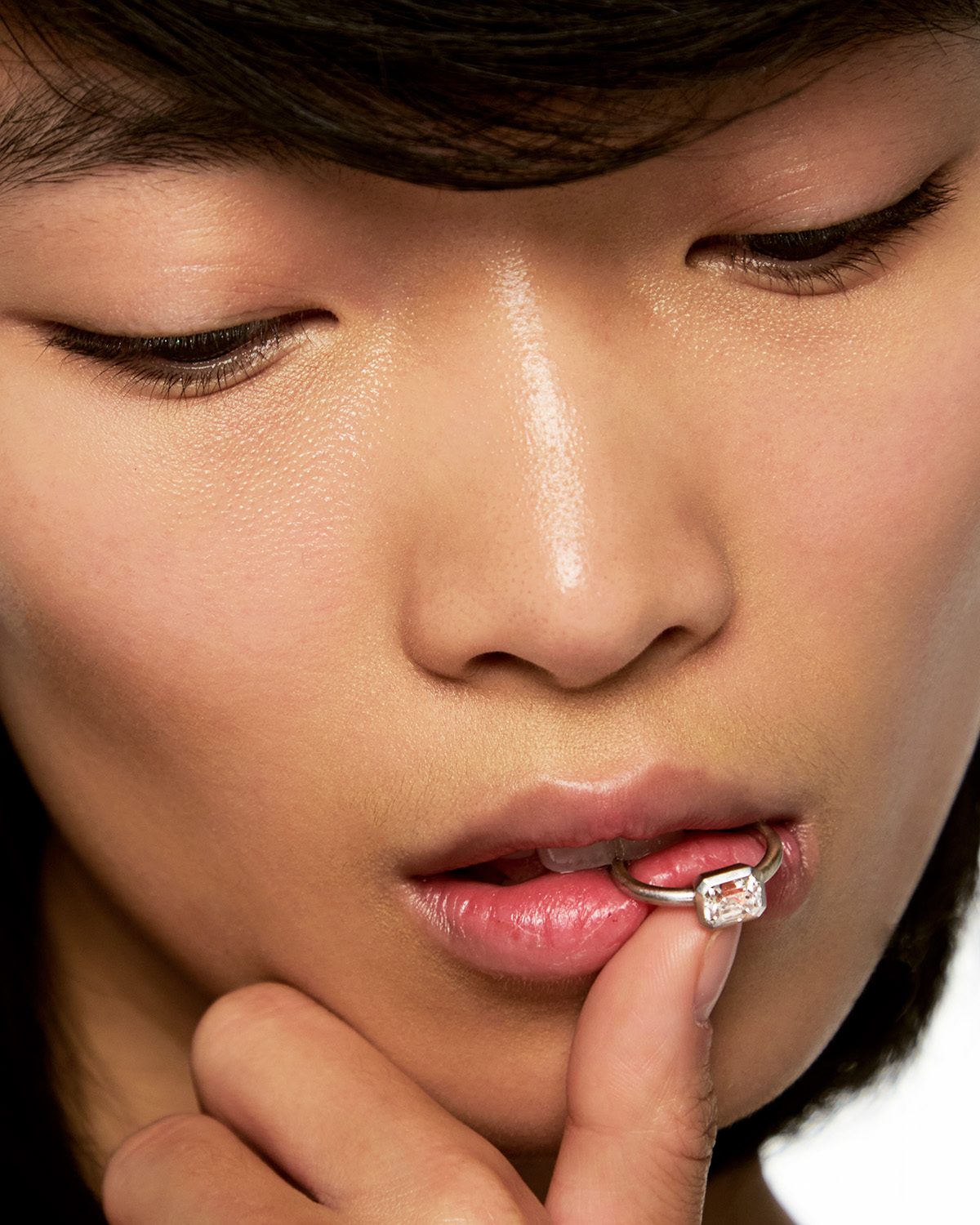
(Photographed by Mark Lim for The Diamond Collective)
The East-West Ring Has a Rebellious Streak
A sideways diamond, a little attitude, and absolutely no interest in following tradition. Zendaya-approved east-west rings are giving classic engagement jewelry a bold new perspective.
The east west ring setting offers a fresh, gender-neutral take on traditional diamond styles, making it a versatile choice for both men and women. By turning elongated diamond cuts—like emerald, oval, pear, and marquise—horizontally, this setting transforms classic stones into something modern and unexpected. Couples searching for commitment or engagement rings are increasingly drawn to designs that express their individuality while still offering the timeless elegance of a natural diamond ring meant to last a lifetime—or at least a few decades.
Zendaya made headlines with her east west ring, revealing her engagement to actor Tom Holland at the 2025 Golden Globes. She debuted a 4-carat east–west–set elongated cushion cut natural diamond engagement ring in a Georgian-style button-back setting.
What Is an East-West Ring?
It’s all in the angle. The east west ring setting takes a classic diamond shape and gives it a subtle yet striking twist—by turning it on its side. Instead of being set vertically along the finger, elongated cuts like emerald, marquise, oval, and pear are placed horizontally across the band. The style first appeared in the early 20th century, surfacing in Art Deco and Retro designs, but has seen a powerful resurgence in recent years as modern couples look for rings that balance timeless elegance with a hint of individuality.
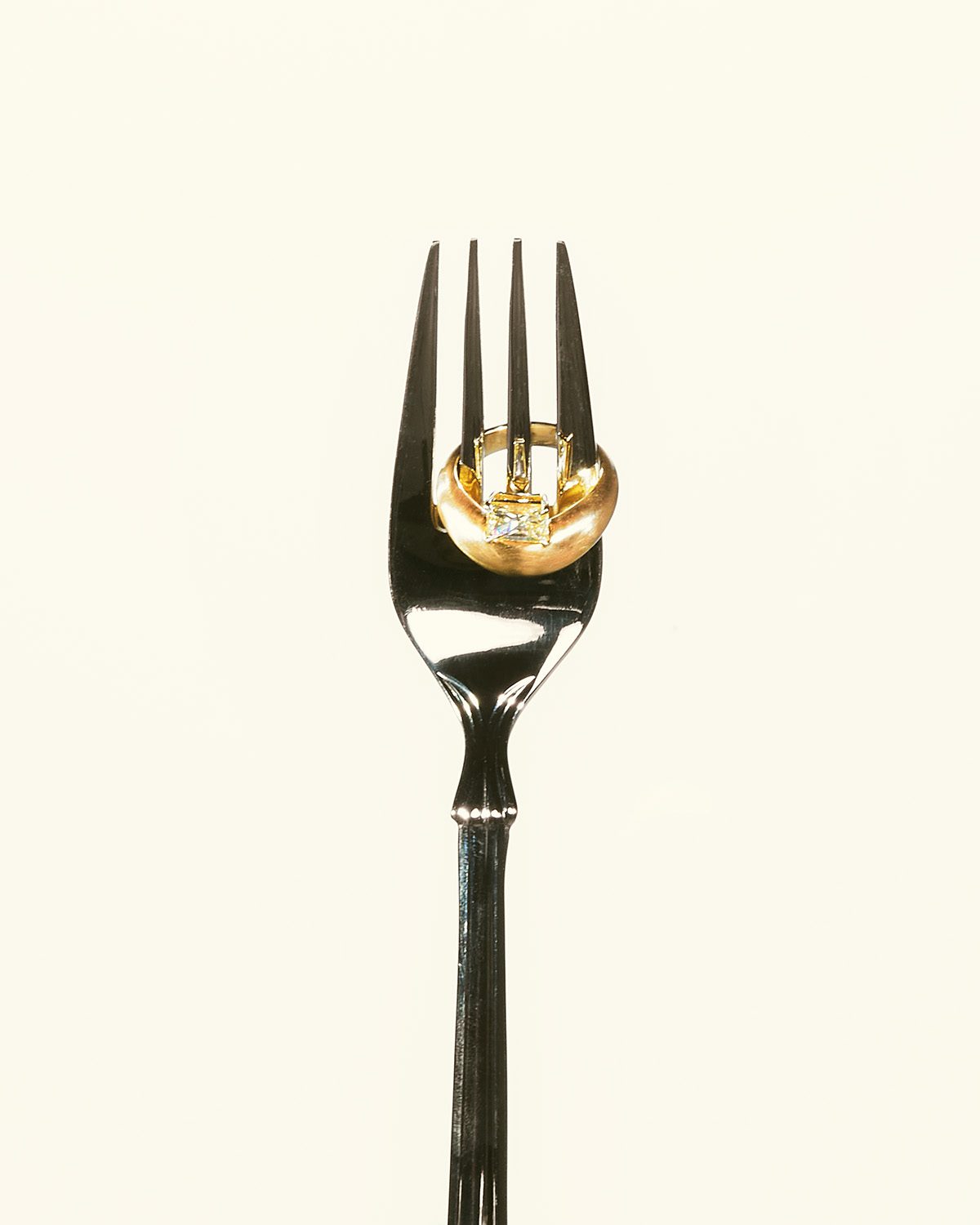
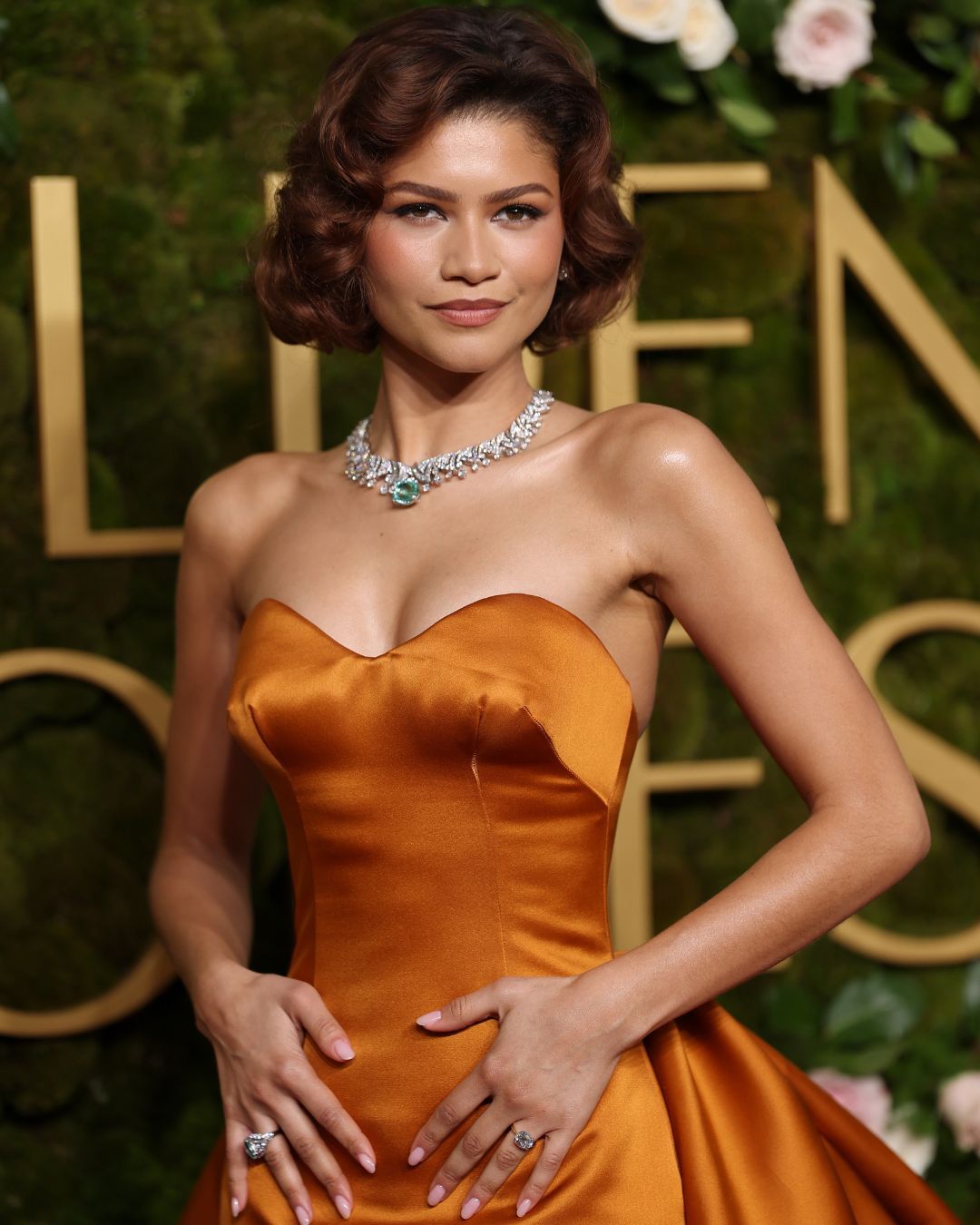
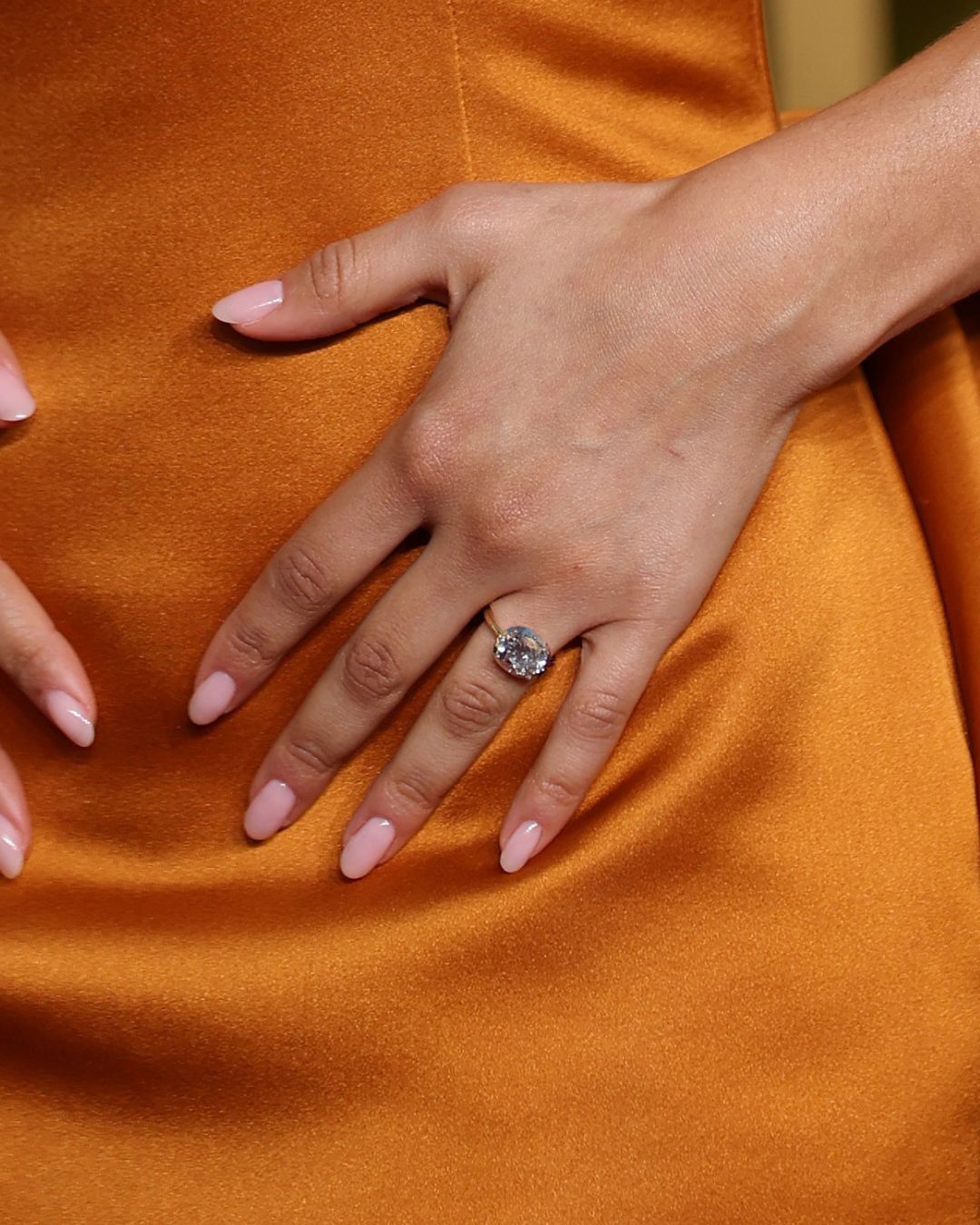
Sideways Diamonds With Star Power
Zendaya may have reignited the conversation, but she’s in very good company. The east-west ring has long been an A-list favorite for those who prefer their diamonds with a little personality. Kate Beckinsale married Len Wiseman with an emerald-cut diamond flipped on its side, and Portia de Rossi wed Ellen DeGeneres with a horizontal marquise-cut ring on a twisted band covered in diamonds in 2008. Catherine Zeta-Jones wears a stunning east west marquise diamond ring given to her by husband Michael Douglas. French businessman Antoine Arnault proposed to supermodel Natalia Vodianova with a pear-shaped east west engagement ring.
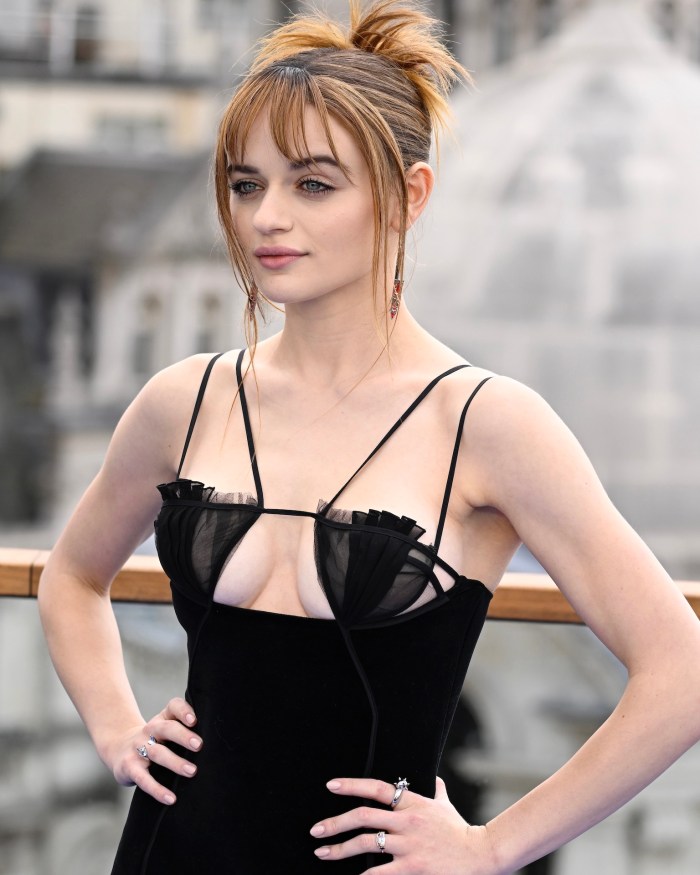
Actress Joey King told The Diamond Collective all about how her husband, Steven Piet, decided on her horizontal-set diamond ring. “He had found Mociun and he was curious if I liked the design direction because it was very unique and less traditional,” she explained. “I was obsessed.” These days, the east west ring has broad appeal and is featured by jewelers around the world at every price point.
Tradition With a Twist
For designers, a simple change in direction opens up a world of creative possibilities.
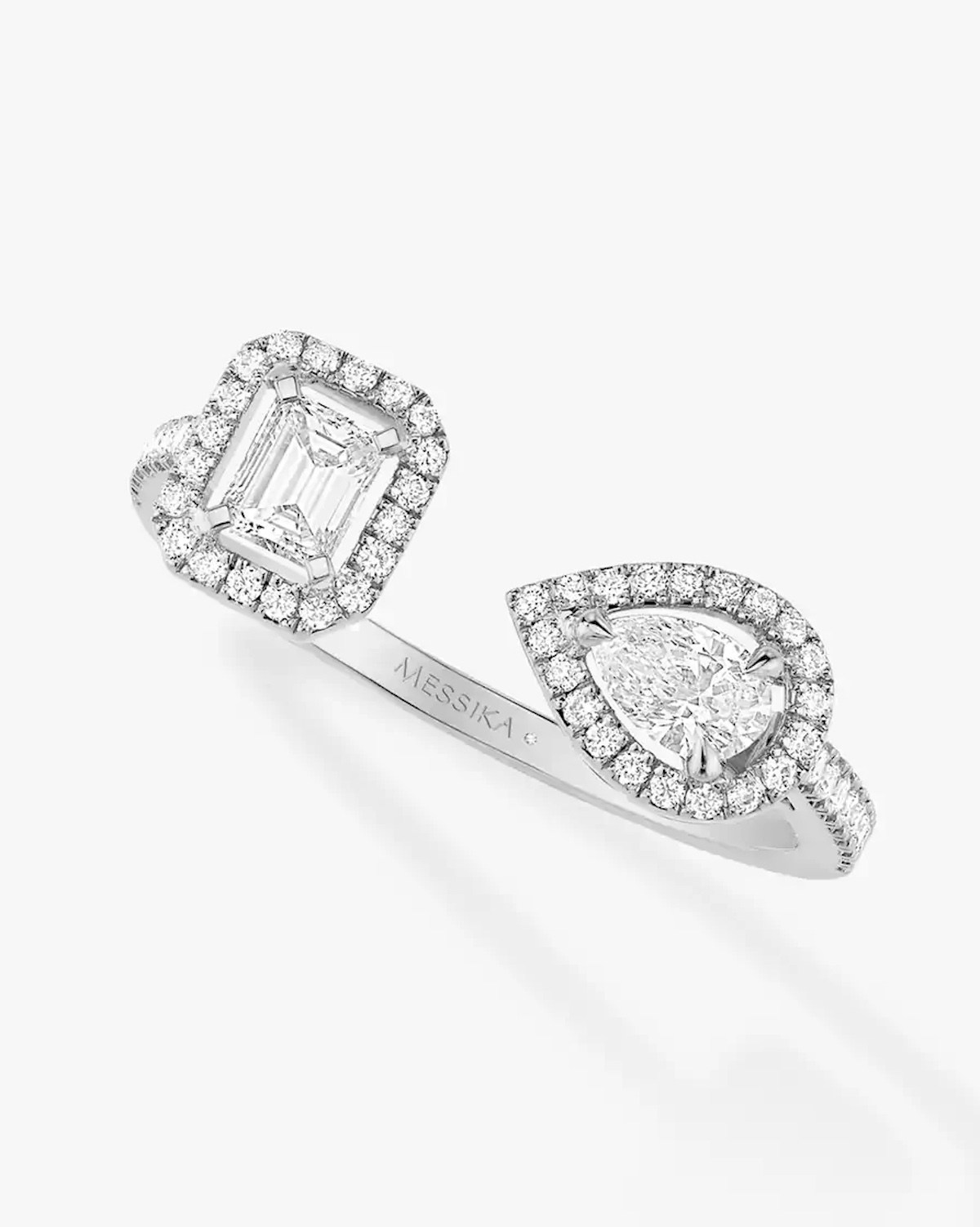
“People are looking for designs that are more pure and modern, and ways of wearing diamond jewelry that feel personal and unique,” says Valérie Messika, founder and creative director of Messika Paris, musing over the appeal of the east west engagement ring. “I like this new generation of design that challenges the traditional codes of high jewelry, and we know perfectly well how to break the codes.” Messika’s new collection features Toi et Moi rings with east west–set pear-shaped diamonds.
Understated Edge
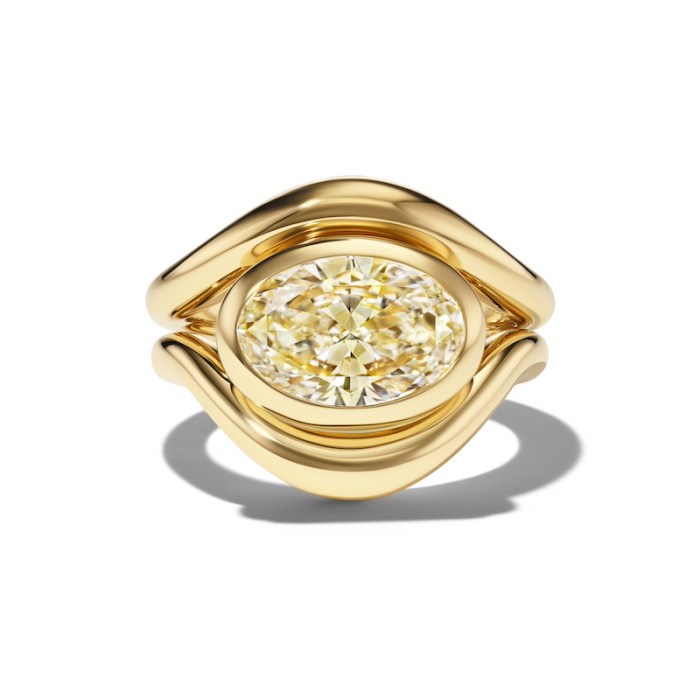
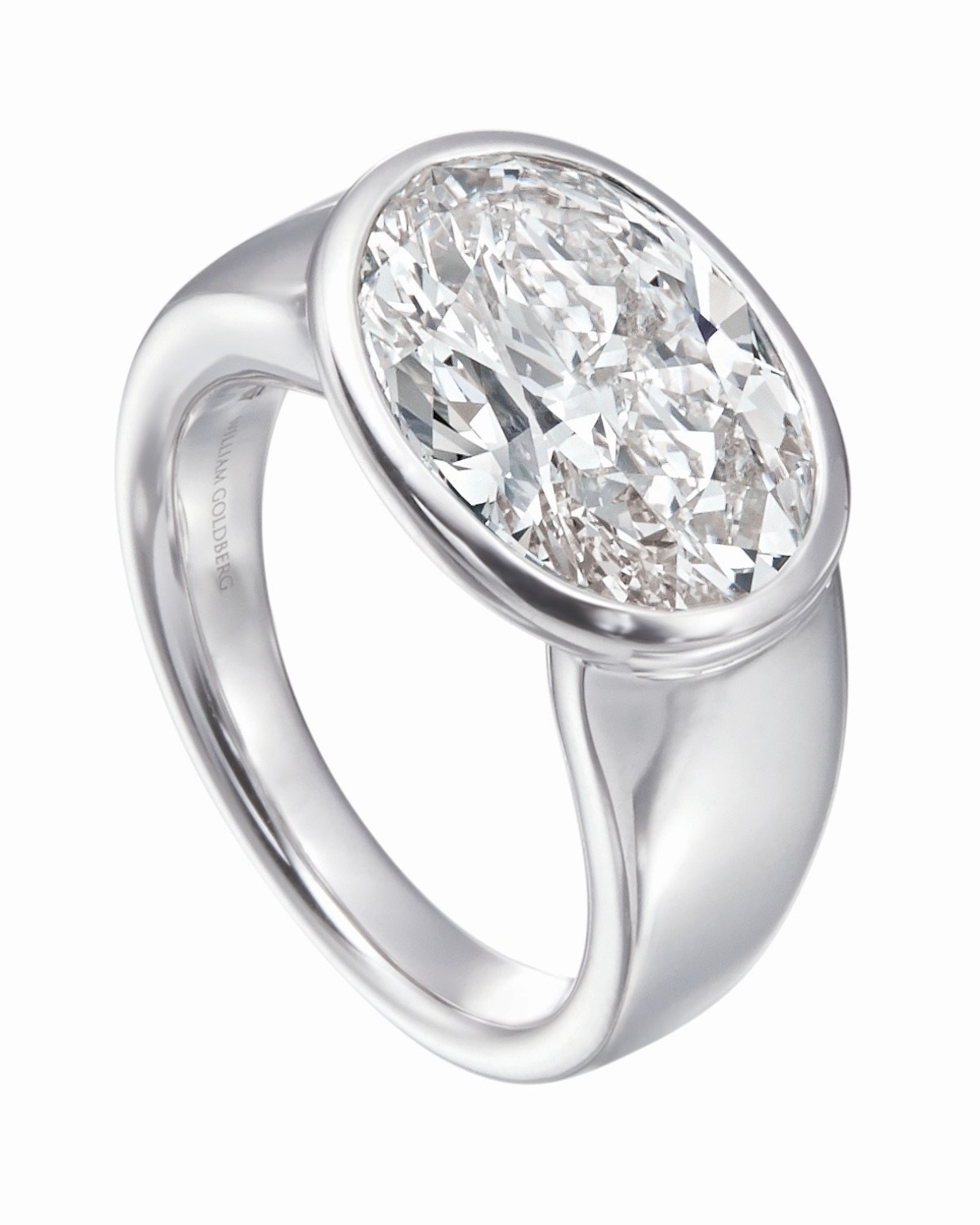
Not every statement piece needs to shout. “I personally love the east west ring because it’s a little more casual and wearable for every day,” says Eve Goldberg of William Goldberg, a family-owned diamond company that creates some of the world’s most magnificent diamond jewels. She explains, “I love this style ring because it’s different, clean, and modern looking.”
There’s a certain confidence in a ring that doesn’t have to work overtime to get noticed. For couples who want something distinctive without going over the top, the east-west setting strikes a compelling balance. The unexpected placement does the talking, giving a familiar diamond shape a little attitude without sacrificing its classic appeal.
One Setting, Endless Possibilities
There’s no one way to go sideways. Whether showcasing the bold geometry of a substantial diamond in a minimalist band or creating a more delicate, understated design with smaller stones, the east-west setting can take on an entirely different personality depending on who’s designing it.
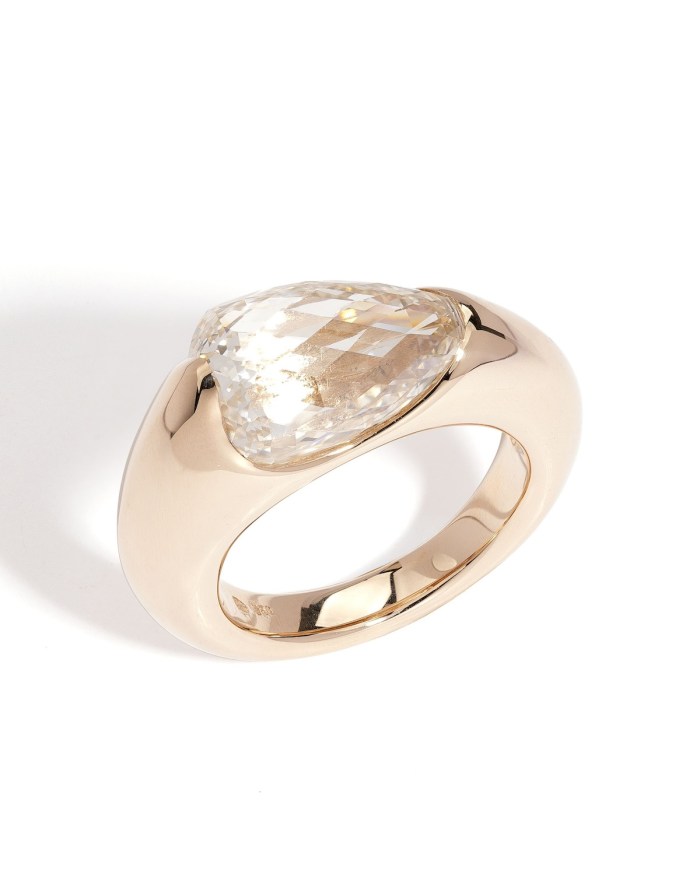
William Goldberg and Kwiat lean into its graphic, architectural appeal, while Anna Sheffield and Jewels by Grace offer more artisanal interpretations. London jeweler Glenn Spiro pushes the boundaries even further, incorporating east-west diamonds into unexpected combinations of wood, bronze, and gold.
No Gender, No Rules
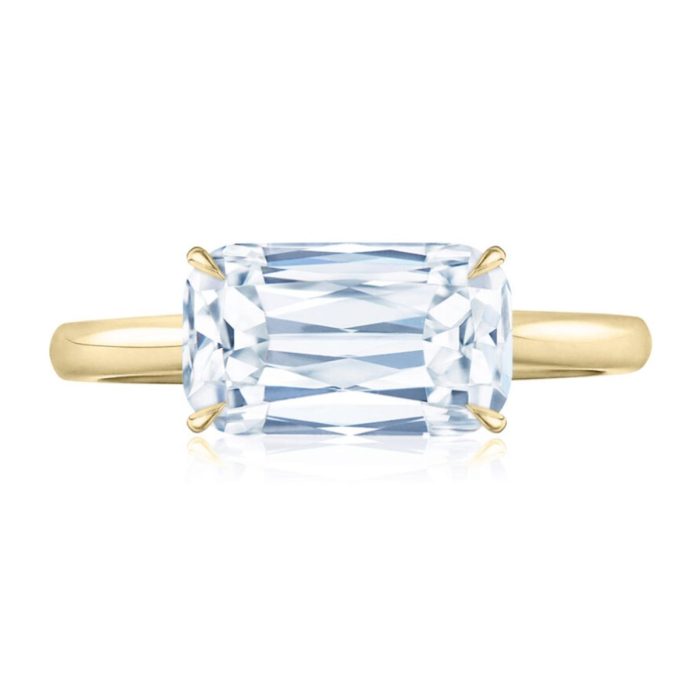
Who decided diamond rings had to follow gender rules anyway? The east-west setting feels especially relevant as traditional ideas about engagement jewelry continue to evolve. Its clean lines and horizontal silhouette work just as well in a bold, substantial band as they do in a delicate solitaire.
David Yurman is one of the many designers offering modern rings for men with diamonds discreetly set horizontally in wide gold bands. Clearly, many men want to wear diamond jewelry but prefer a more understated look.
Old Diamonds, New Attitude
An heirloom diamond comes with history, but that doesn’t mean its design has to stay in the past. If you’ve inherited a family diamond ring, resetting an elongated stone horizontally can give it an entirely new look while preserving everything that makes it meaningful. It’s a way to honor the original diamond and make it feel unmistakably yours.
“The east west ring has always been a great option,” says Goldberg, who was showing sideways-set oval diamonds years ago. And its enduring appeal speaks to a bigger shift in how people want to wear fine jewelry: less about saving something for a special occasion and more about making it part of everyday life. “Today, women aren’t looking for jewelry to keep in the vault, but pieces they can wear every day, and the east west style ring just works.”
The East West Ring Edit
Explore our favorite east-west rings, including sleek minimalist bands, sculptural statement pieces, and unexpected takes on the classic diamond solitaire.
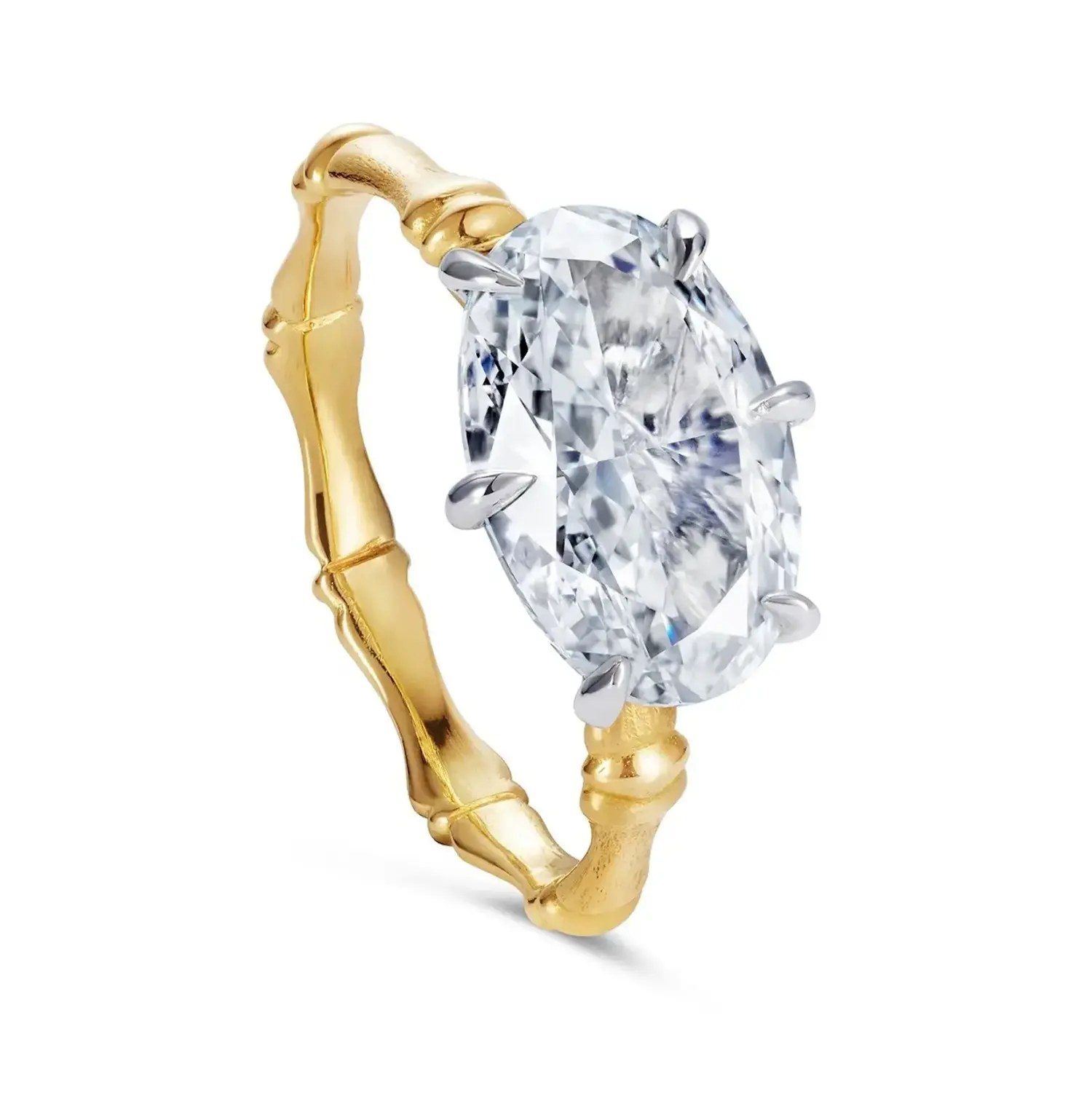
Thelma West Sugarcane Oval Ring, Price Upon Request, thelmawest.com
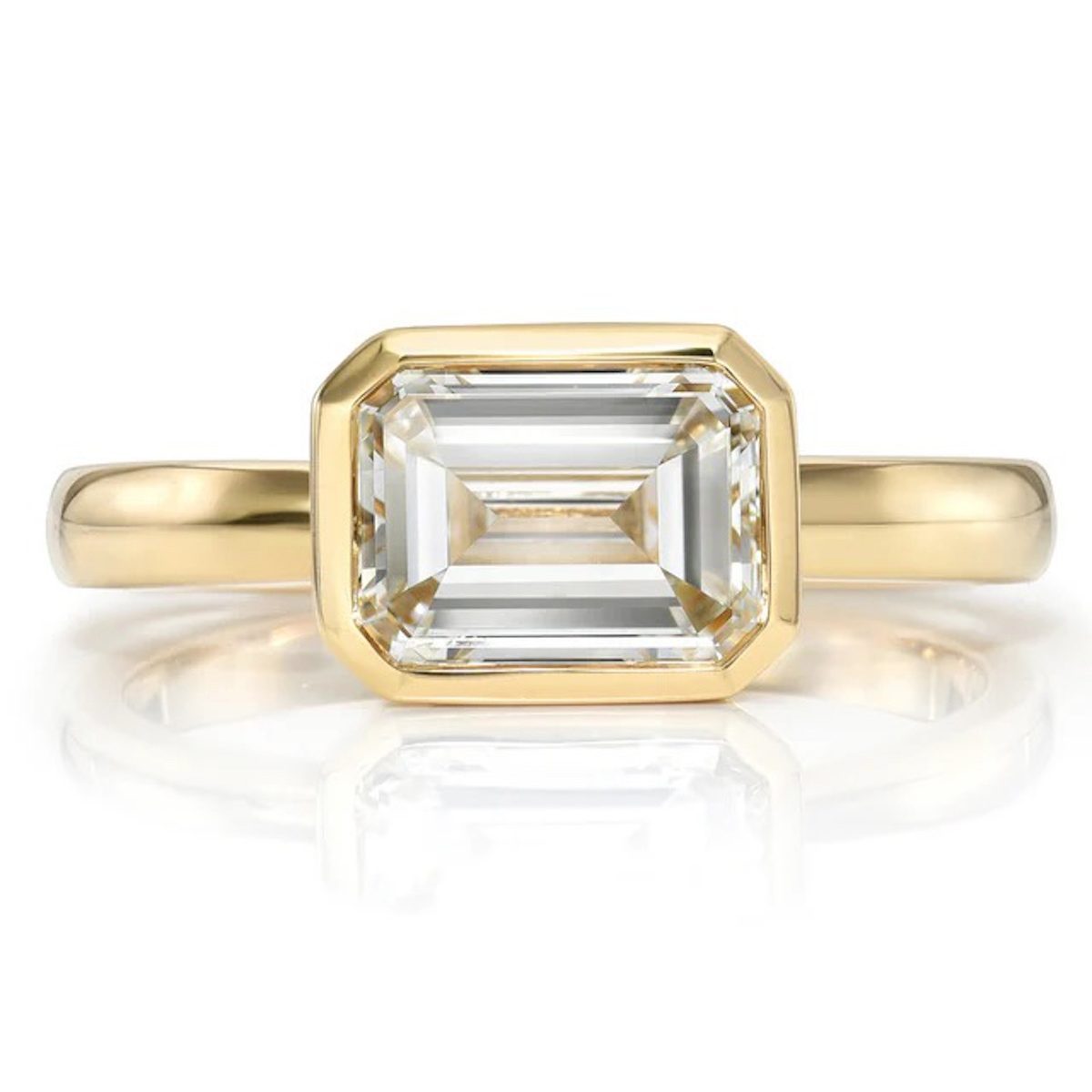
Single Stone Leah Ring, $19,000, singlestone.com
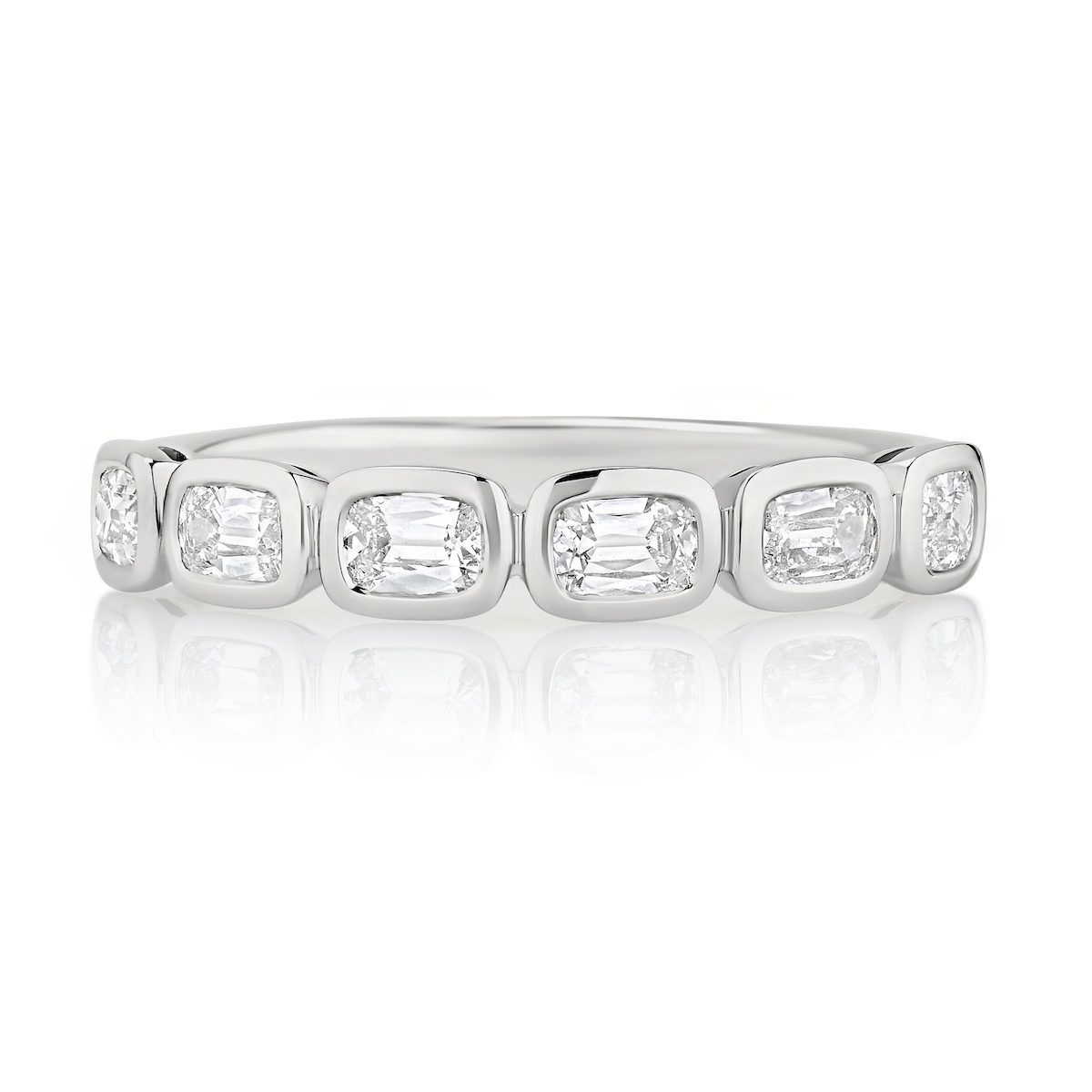
Henri Daussi East West Diamond Eternity Band, Price Upon Request, henridaussi.com
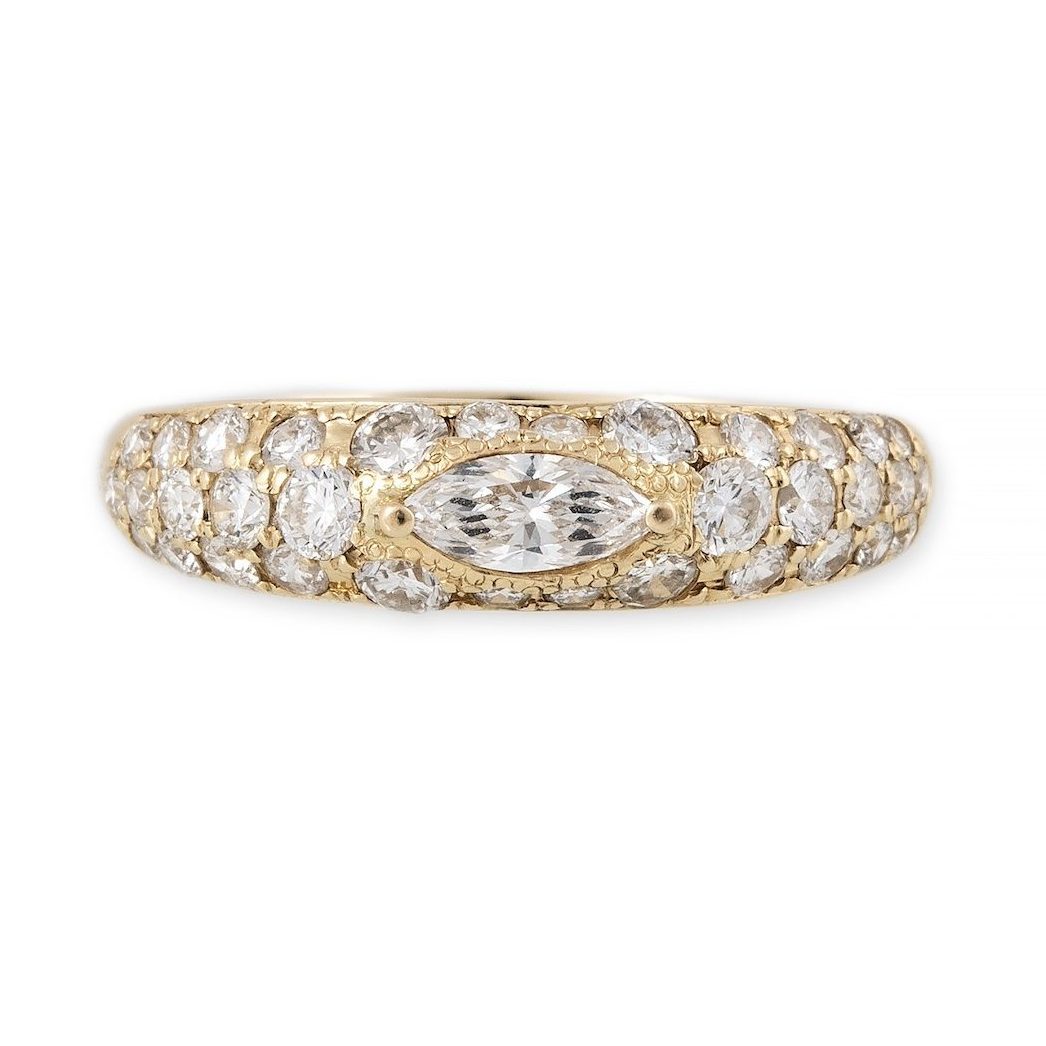
Jacquie Aiche Marquise Center Pavé Diamond Dome Ring, $5,795, jacquieaiche.com
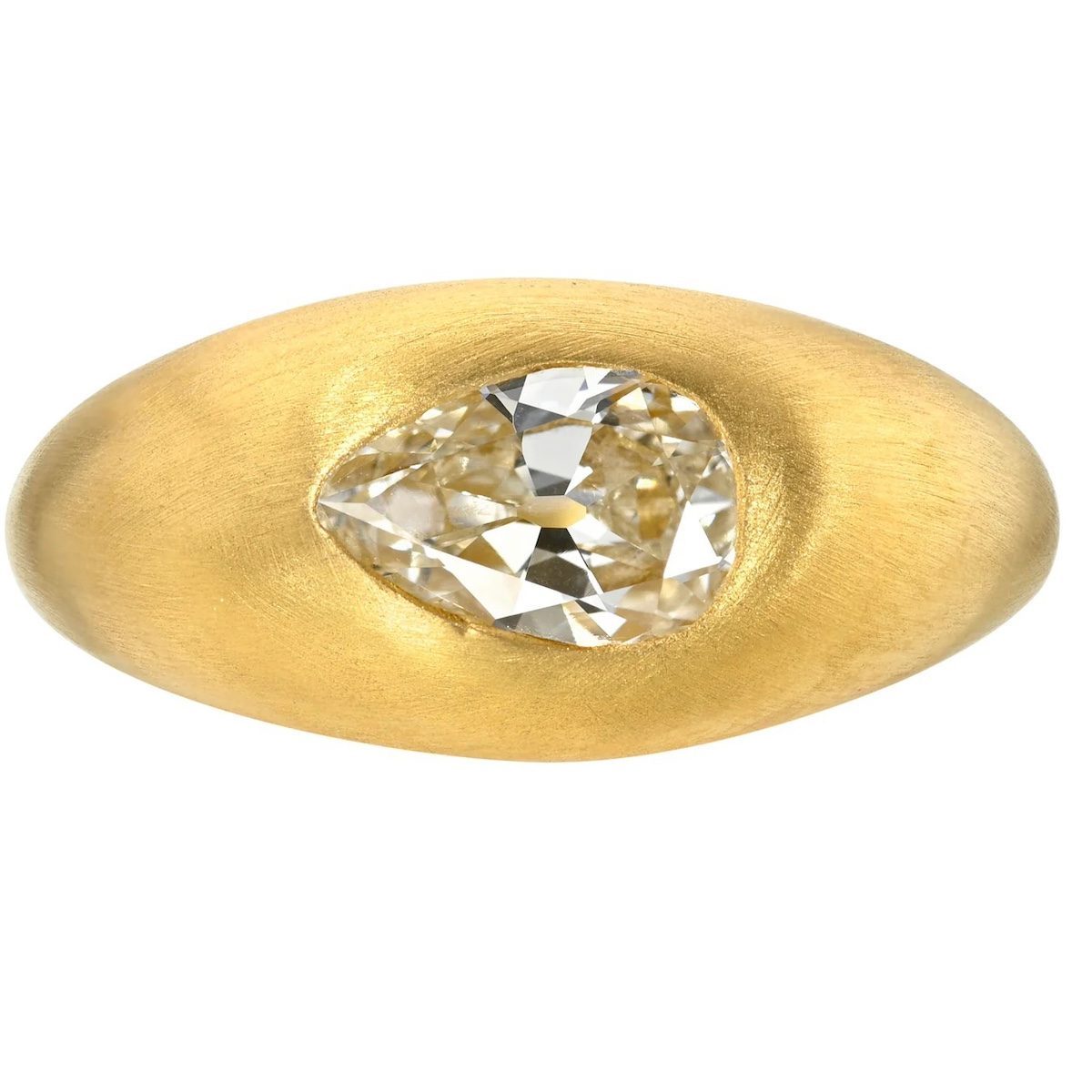
Darius Jewels Antique Pear Signet ring, Price Upon Request, dariusjewels.com
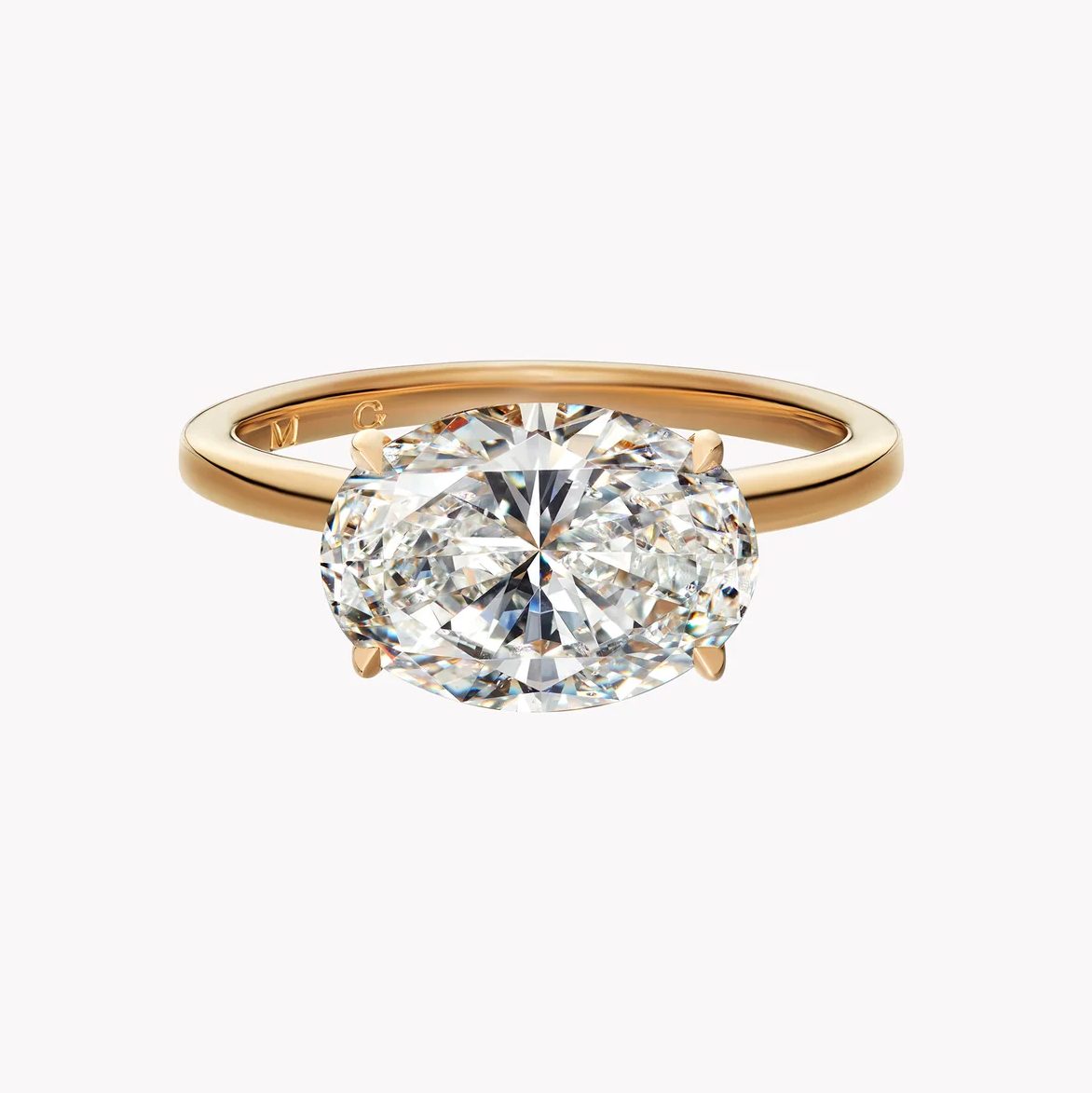
Material Good East West Oval Cut Solitaire Engagement Ring, Price Upon Request, materialgood.com
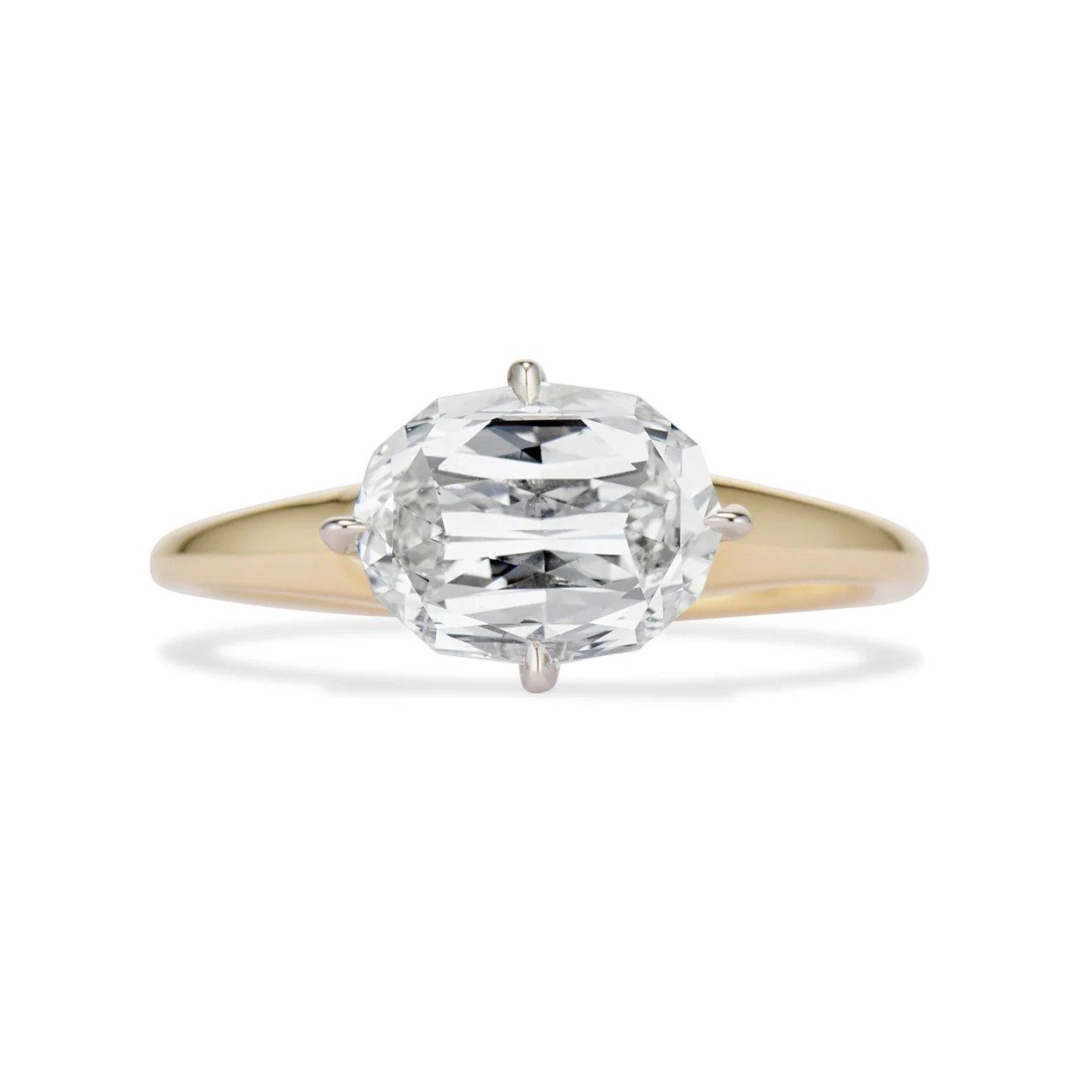
Ashley Zhang Sutton East West Oval Cut Diamond Engagement Ring, Price Upon Request, ashleyzhangjewelry.com
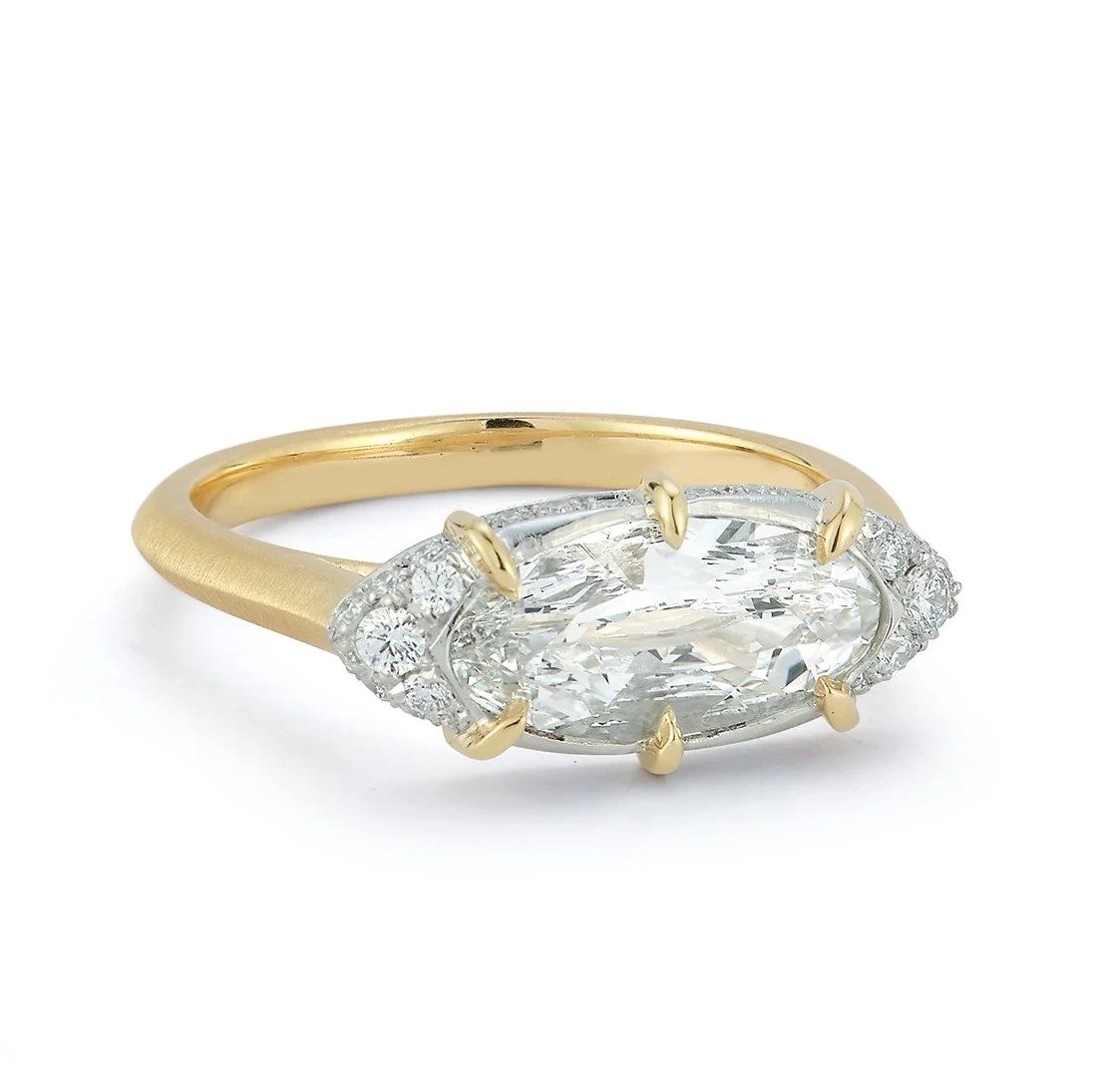
Jade Trau Mariam Oval Ring, $12,200, jadetrau.com
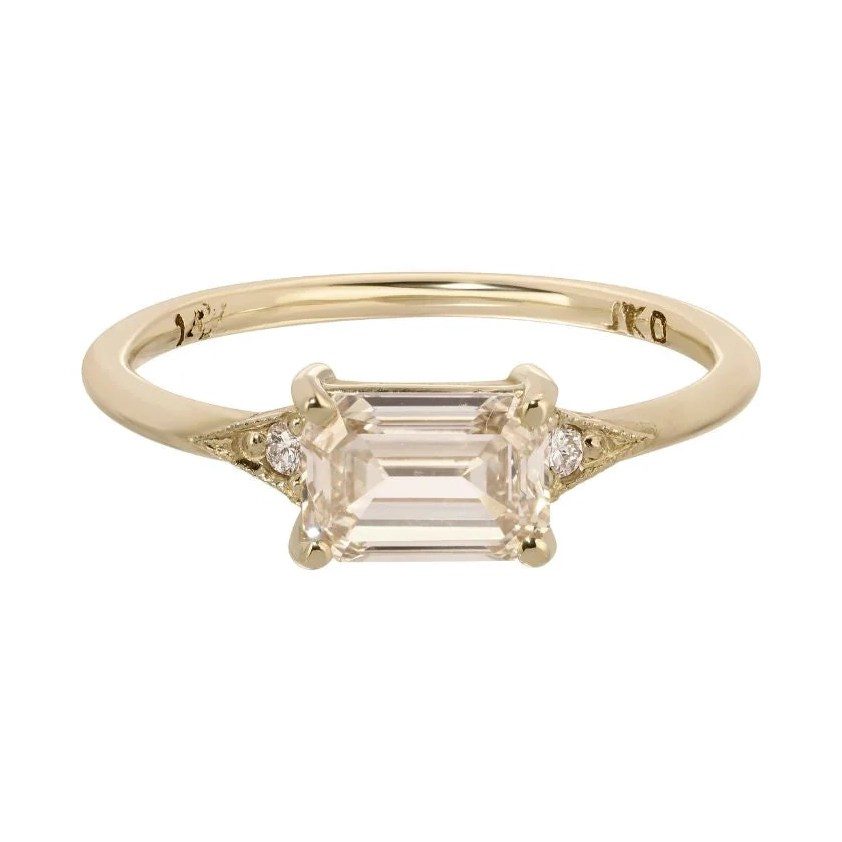
Jennie Kwon East West Champagne Diamond Deco Ring, $8,075, jenniekwondesigns.com
Big Stud Energy
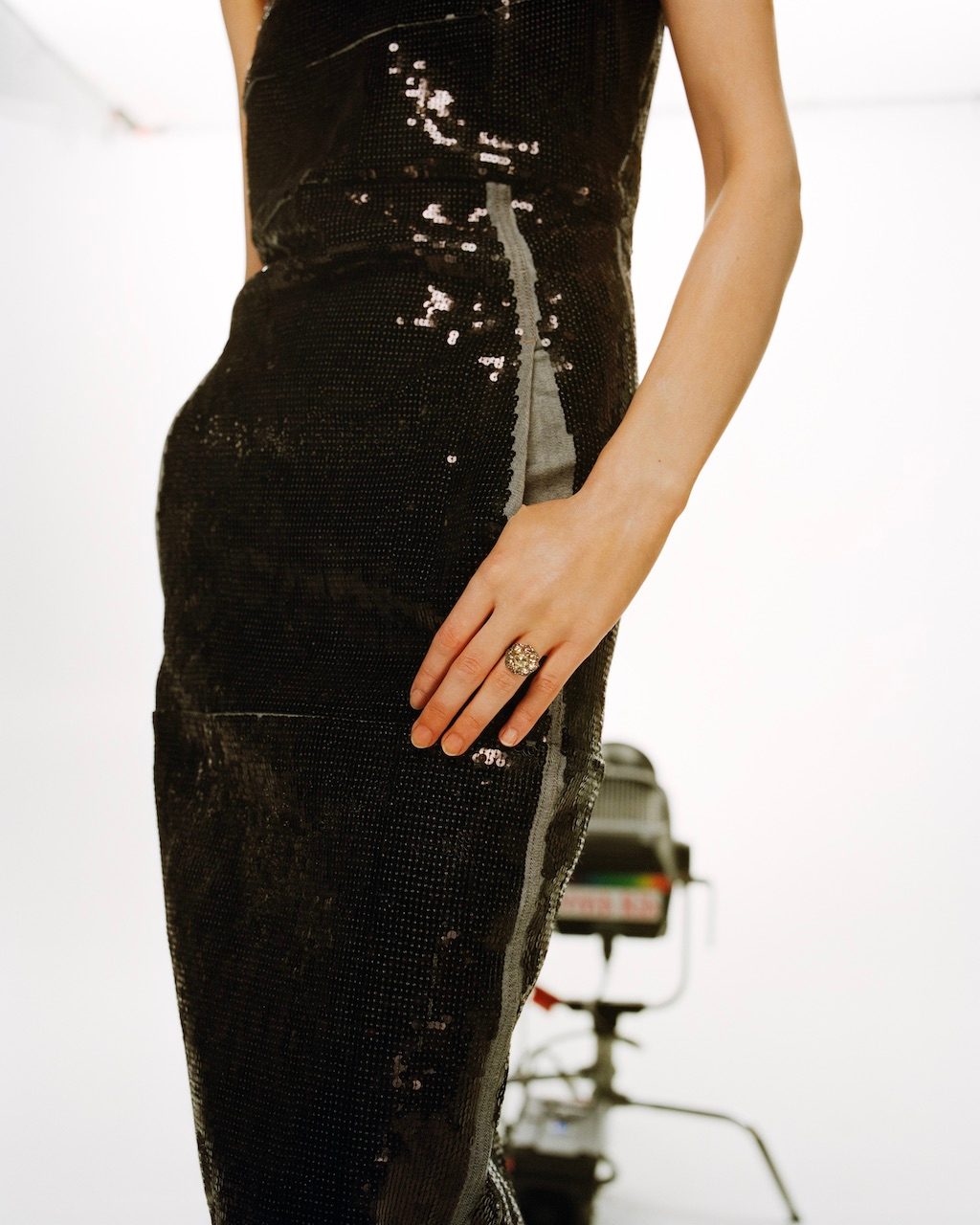
The 5 Biggest Diamond Engagement Ring Trends of 2026
Something old, something bold. The engagement rings defining 2026 are rewriting the rules, one distinctive diamond at a time.
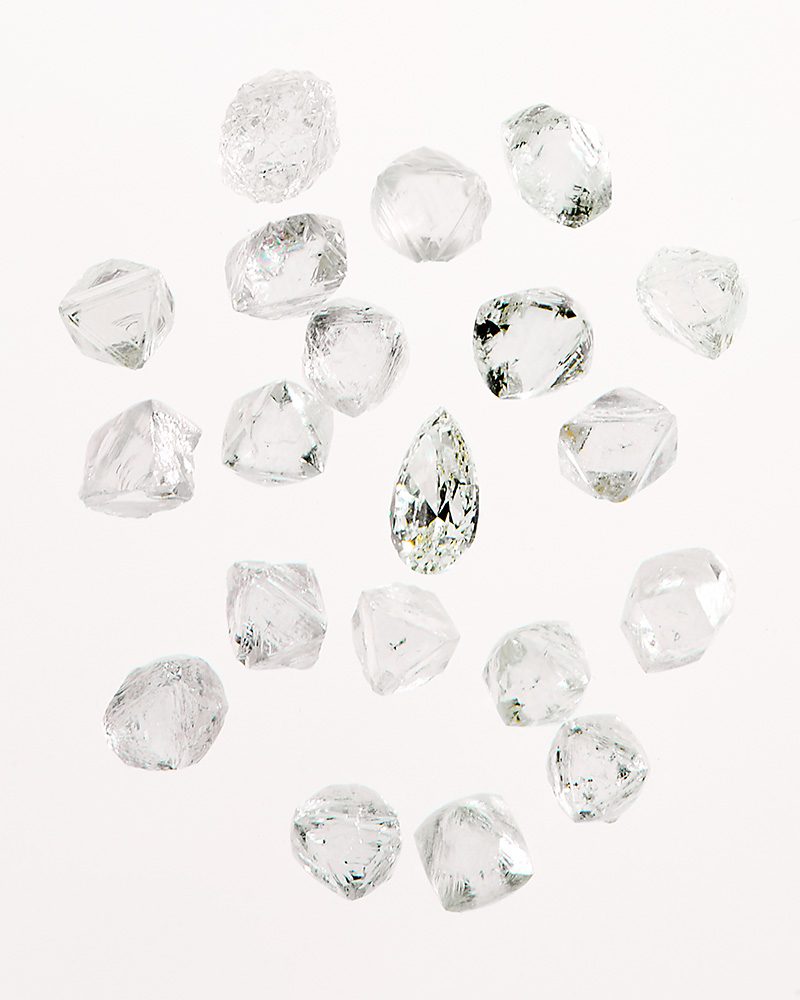
The Juicy New Era of Pear-Shaped Diamonds
Elizabeth Taylor knew it. Kylie Jenner knows it. With its seductive curves and flair for the dramatic, the pear-shaped diamond has never followed the crowd.
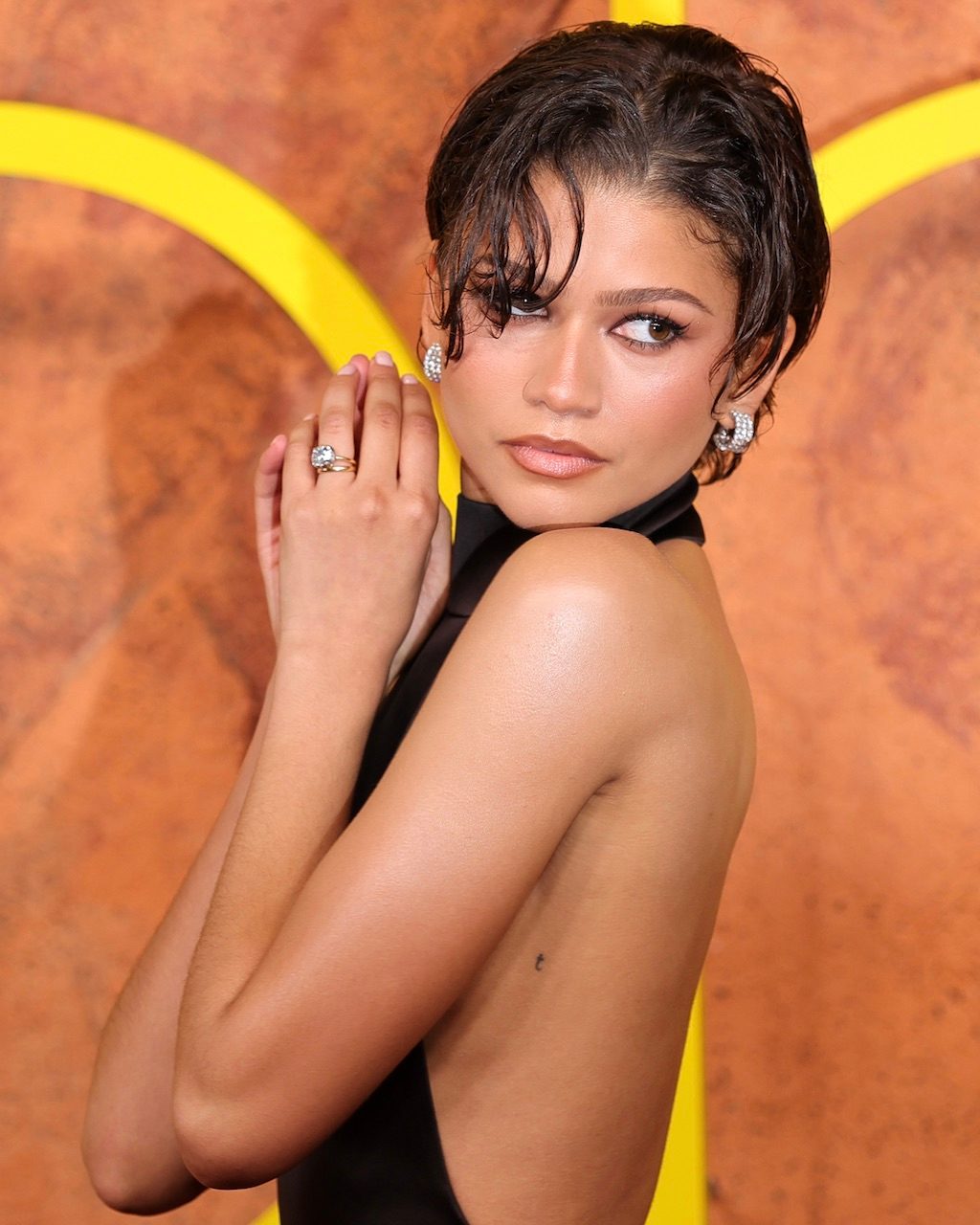
Everything You Need to Know About Zendaya’s Engagement Ring
Zendaya and Tom Holland have officially tied the knot, right under our noses. Here's everything you need to know about Zendaya's engagement ring, from its diamond cut and carat weight to its east-west setting.
Get the Newsletter
Sign up for the latest diamond news, delivered directly to your inbox.