Nikos Koulis walks the line between classic and contemporary jewelry design with an unmistakable flair.
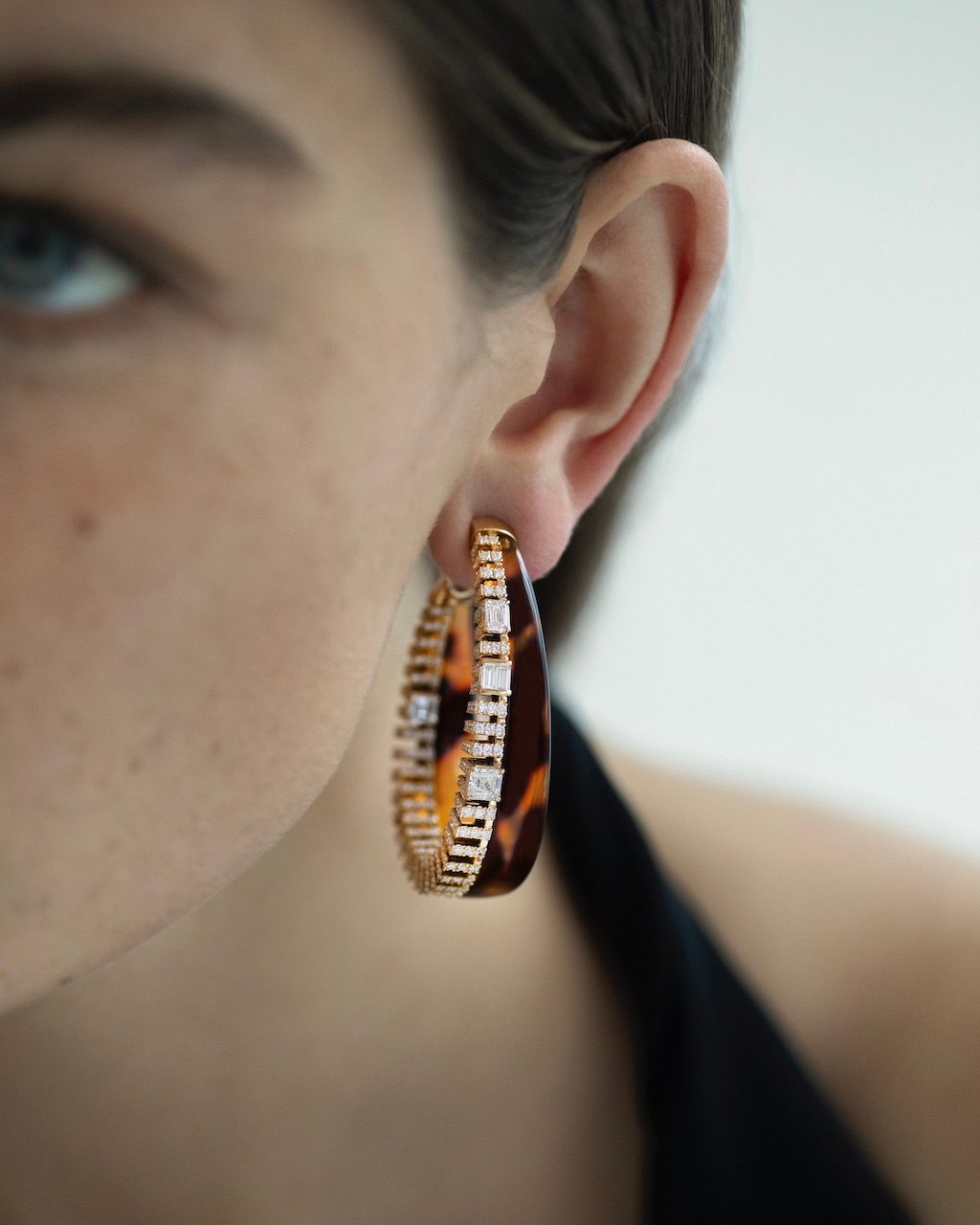
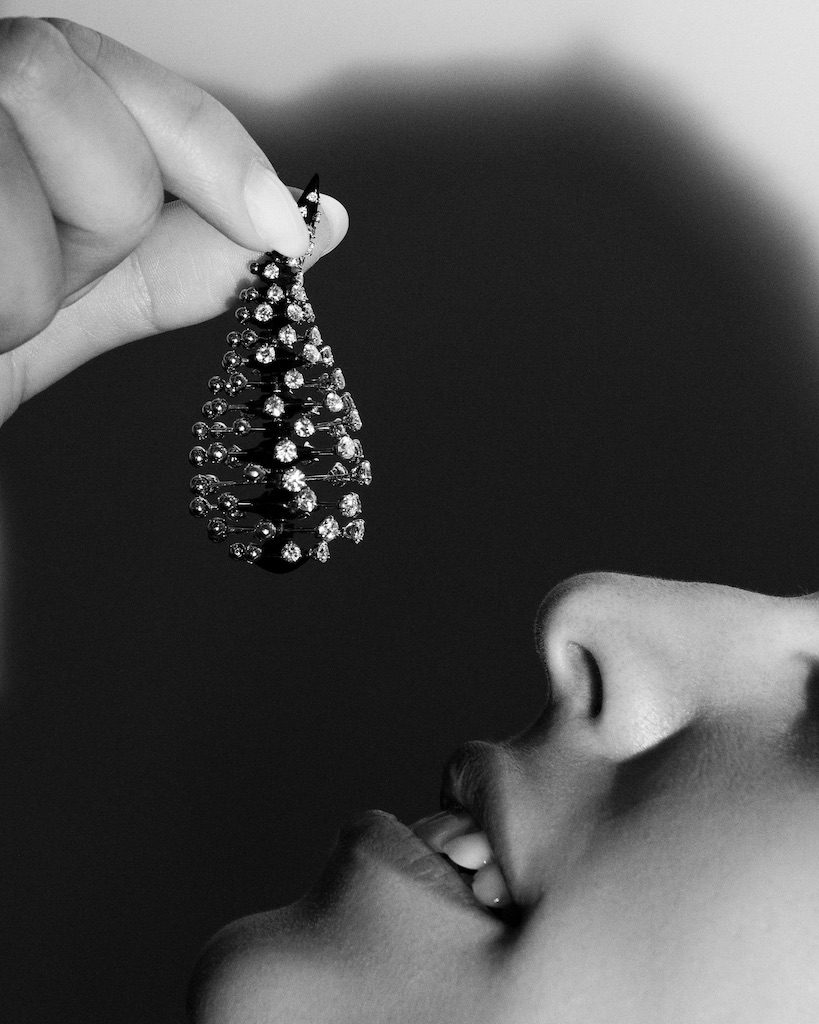
Nikos Koulis 77 Earrings, Price Upon Request, nikoskoulis.com
Nikos Koulis Is Making Diamonds and Tortoiseshell a Thing
Inspired by a pair of sunglasses, the jewelry designer’s new 77 collection pairs diamonds with an unexpected material—and brings a little ’70s attitude into the mix.
The Nikos Koulis 77 collection was born from an unlikely source: a pair of sunglasses. Not just any sunglasses, but a pair of Jacques Marie Mage frames sitting on jewelry designer Nikos Koulis’s desk in Athens. The faux tortoiseshell acetate seemed to come alive in the light, shifting from shades of golden honey to chocolate brown. Most people would have put them on and gone to lunch. He saw the makings of a diamond jewel.
A year later, that unlikely material took center stage, paired with diamonds and gold in pieces that are at once glamorous, sculptural, and just a little subversive.
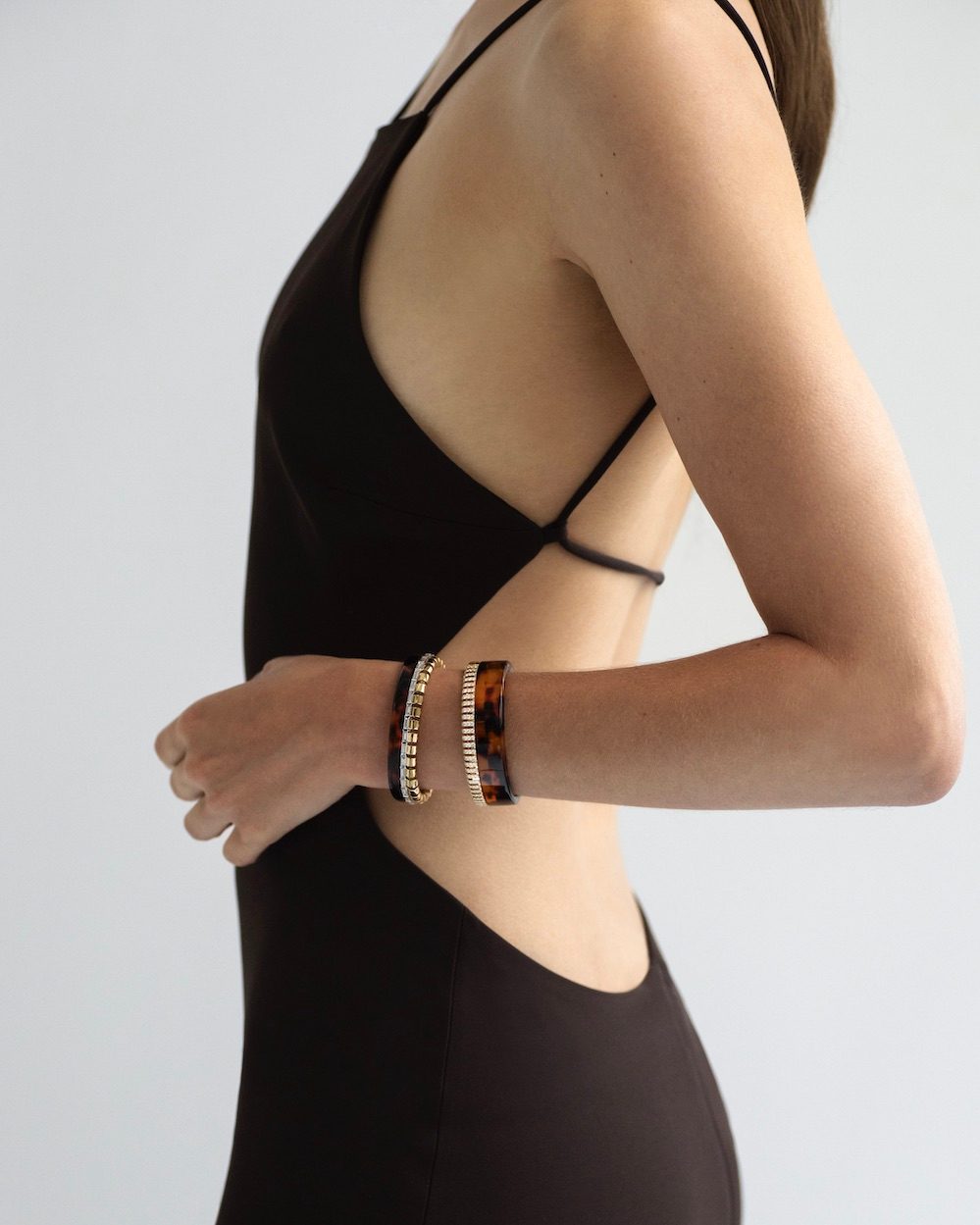
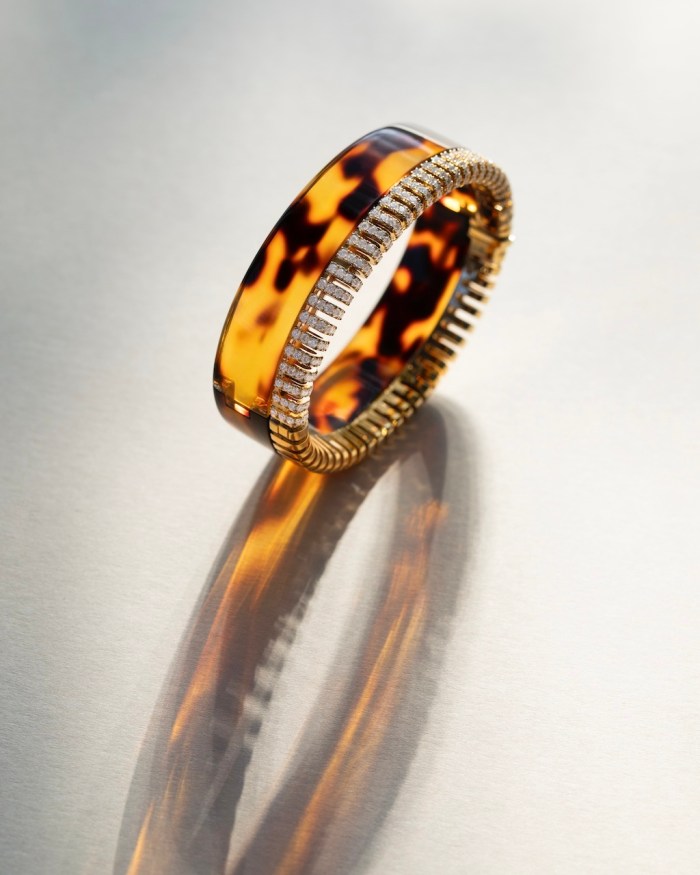
Named after the year he was born, the collection is a love letter of sorts to the free-wheeling spirit of the seventies, when personal style was more about attitude than rules. Think Bianca Jagger and Grace Jones at Studio 54. There are sexy bangles and hoop earrings dripping with diamond fringe, large sculptural rings with substantial diamonds, and collars punctuated with loops of diamonds. The pieces have the swagger of vintage glamour but feel entirely modern.
The Nikos Koulis 77 Collection Is Already Turning Heads
When Nikos Koulis unveiled the collection in Paris in July, the reaction was immediate. Curiosity quickly turned into desire, and now there is a waiting list for pieces.
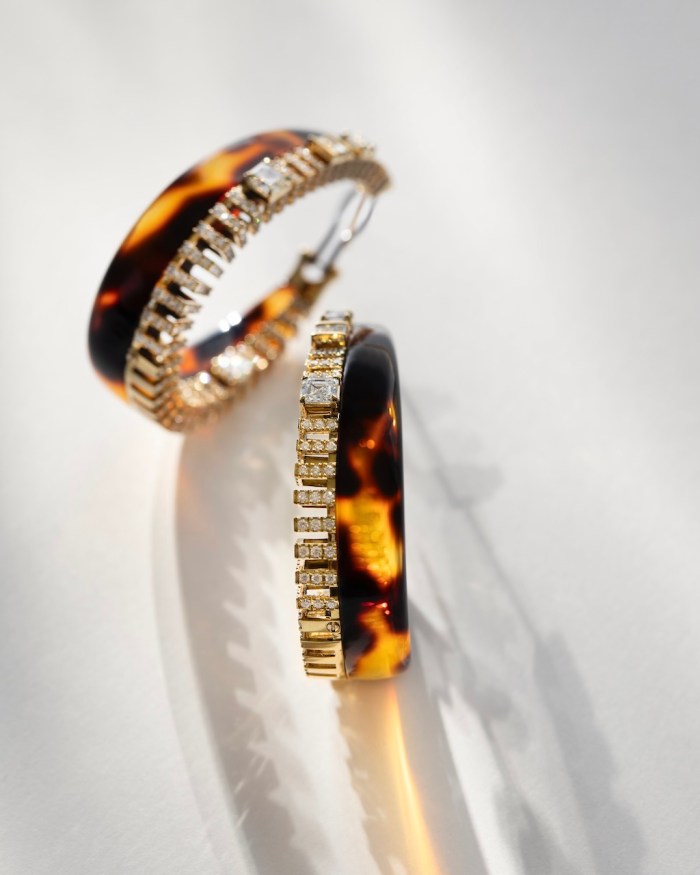
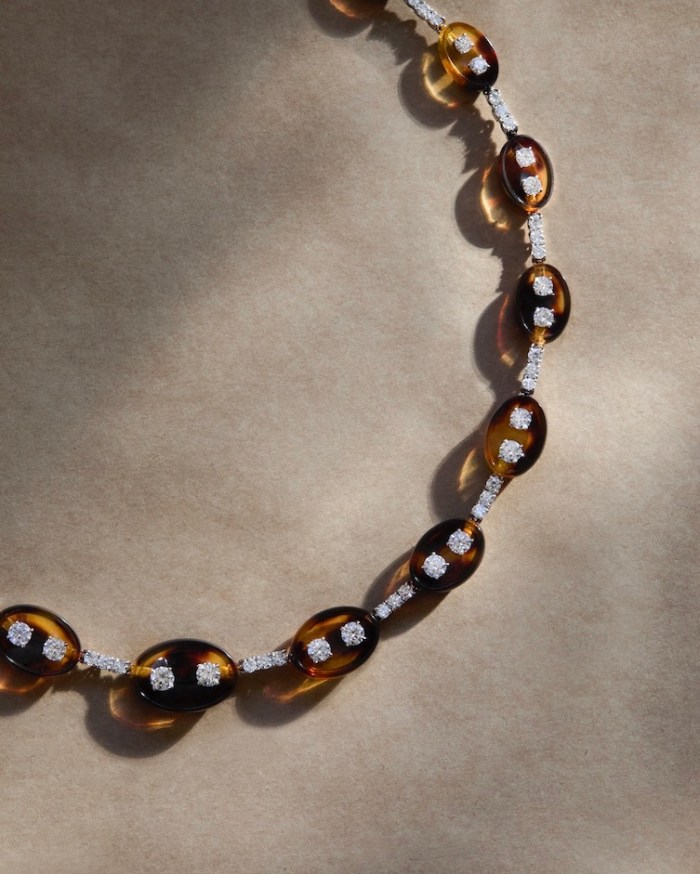
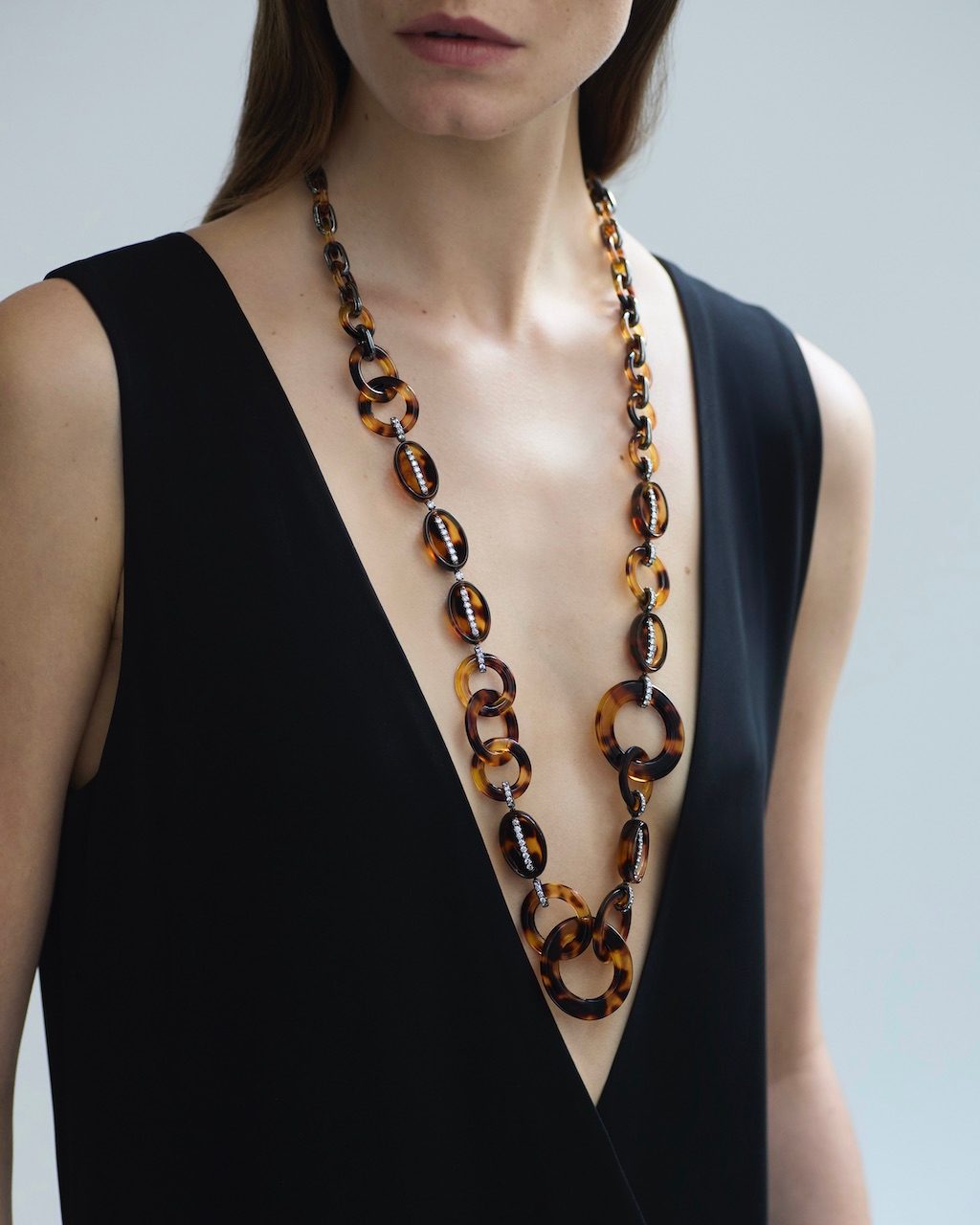
At first glance, the warm marbled acetate looks like a hard stone, polished to a high gloss. But move it toward the light and something unexpected happens: the material glows, revealing an almost liquid transparency. It gives even substantial diamonds a more relaxed, everyday style.
It’s particularly appealing at a time when women want jewelry that has personality, originality, and pieces that move effortlessly from a white T-shirts and jeans to a dinner party.
Of course, making something look this effortless requires an almost obsessive amount of effort. The process begins in Germany, where blocks of cellulose acetate, a renewable, plant-based material, are specially made for Koulis. In his Athens workshop, the material is carved into generous, rounded shapes designed to follow the contours of the body. Next, the material is sent to an Italian workshop where it is treated to enhance durability and given a coat of translucent enamel for added shine and hardness.
Then comes the tricky part: the diamonds.
Diamonds Meet Their Most Unexpected Match
Unlike gold or platinum, acetate doesn’t lend itself naturally to traditional stone-setting techniques. Koulis had to develop a concealed mechanism that allows the gold settings to attach securely to the acetate without interrupting its fluid silhouette. What you see is the contrast between glowing tortoiseshell and icy white diamonds—softness and sparkle, warmth and coolness.
“A client recently said to me, ‘Are you more creative or more crazy?’” Koulis told me. The answer is probably both.
Nikos Koulis is known for using precious materials in exciting new ways. In previous collections, diamonds seemingly float inside translucent rock crystal, while magnificent diamonds and emeralds have been suspended in daringly minimal settings, with barely enough visible metal to explain how they stay in place. His jewelry has always been about the tension between technical virtuosity and visual ease.
But 77 takes that instinct somewhere new. Rather than making precious material appear weightless, he’s made ordinary material feel precious.
“What impressed me the most was how the sun’s reflection transformed the material into something magical,” says Koulis. “The colors change in the light.”
Why No Two Pieces Are Exactly Alike
Those very qualities also made the material unpredictable. No two sections of the tortoiseshell are identical. Some glow with amber and honey tones; others are streaked with chocolate brown. Koulis personally selects the material for every design, considering how the pattern will interact with the shape and placement of diamonds. What might look random is anything but.
Tortoiseshell, in particular, has an enduring appeal—equal parts classic, glamorous, and just a little wild. “Many women are drawn to the animal-print patterns,” says Koulis. It’s familiar territory but paired with diamonds suddenly feels new and daring.
For all the novelty of the material, Koulis insists that novelty itself has never been the goal. He’s interested in creating jewelry that lasts, pieces that will still feel relevant decades from now. The Seventies may have inspired the collection, but he isn’t interested in reproducing the past. He’s borrowing its audacity.
Nikos Koulis is already thinking about what’s next. “Being curious always brings you to unknown paths,” he says, “and that makes me excited.”
Considering his latest creative detour began with a pair of sunglasses sitting on his desk, it’s probably worth keeping an eye on whatever he’s leaving around.
Inside the Beautiful Contradictions of Nikos Koulis

The Best Jewelry Moments of the 2026 Academy Museum Gala
Taylor Swift, Kim Kardashian, Sabrina Carpenter, and Hollywood’s best-dressed brought major diamond energy to the sixth annual Academy Museum Gala.

Kylie Jenner Debuts the $50 Million Victoria’s Secret Fantasy Bra
After an eight-year hiatus, the diamond-studded Victoria’s Secret Fantasy Bra is officially back—and Kylie Jenner is bringing all of its extravagance to the runway.

The Victoria’s Secret Fantasy Bra Is Back—Here’s a Look at Its Very Extra History
Get the deepest diamond details, straight from the jewelers responsible for the magnificent bejeweled Victoria’s Secret Fantasy Bras.
Get the Newsletter
Sign up for the latest diamond news, delivered directly to your inbox.