

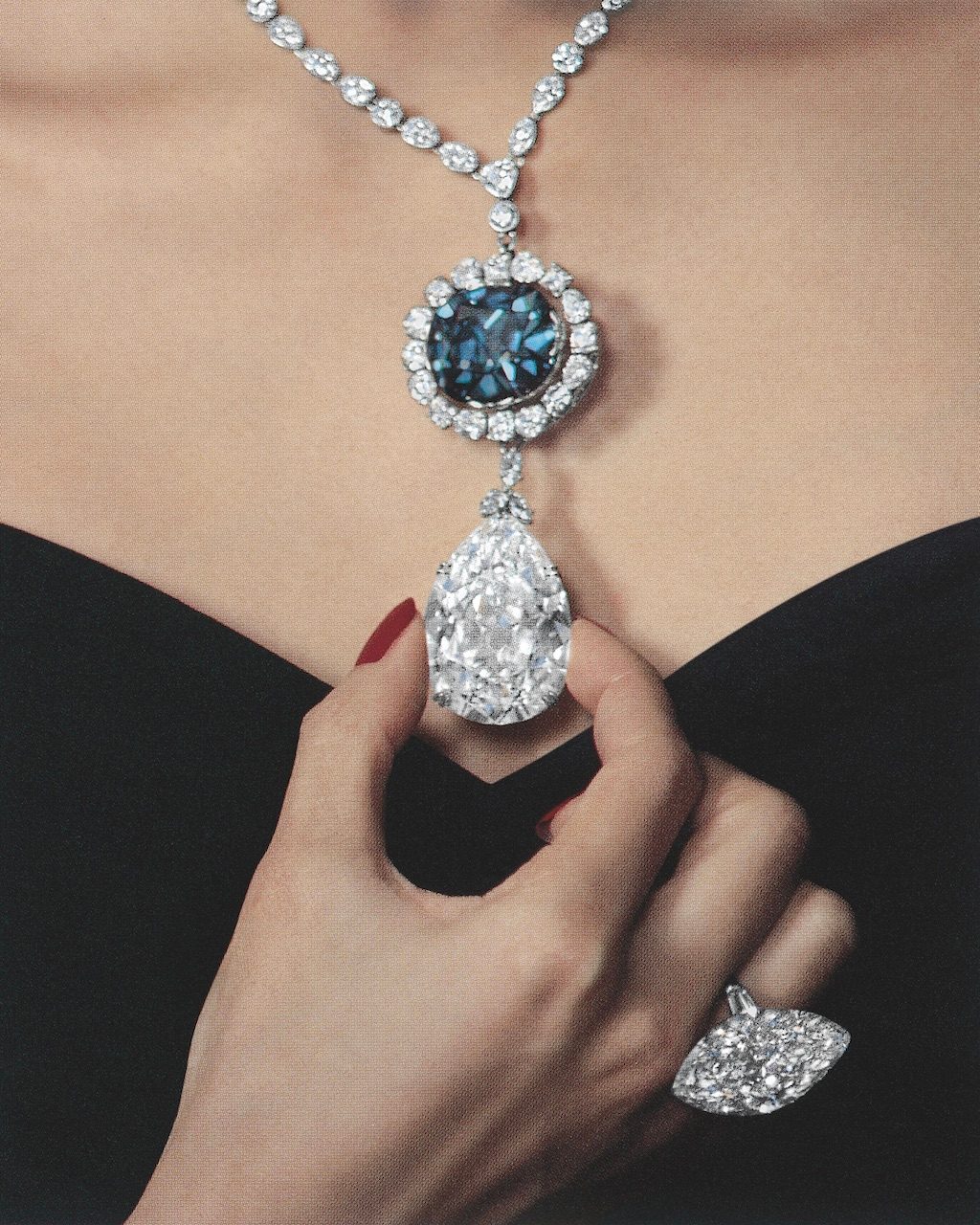
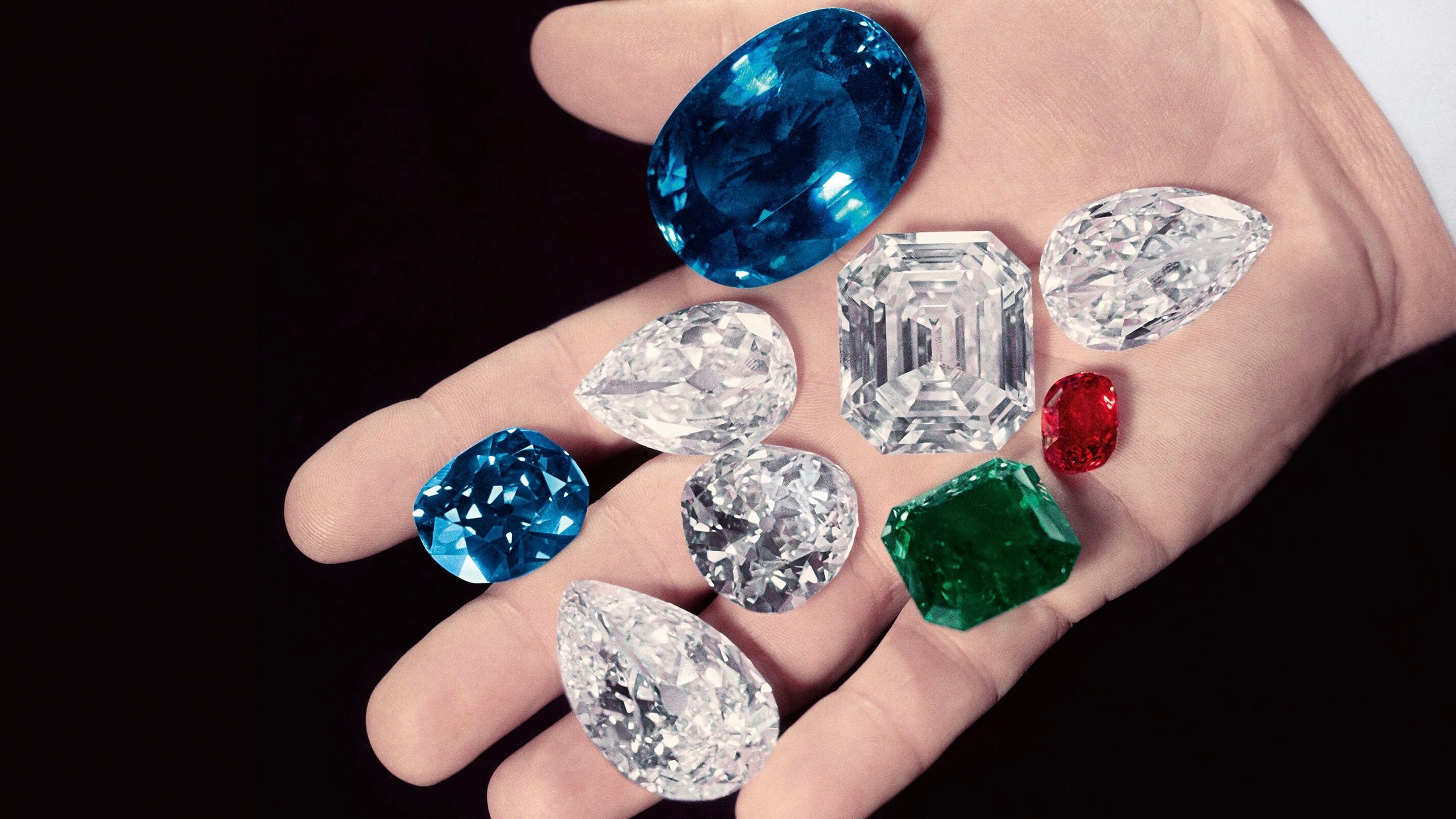
The Hope Diamond and the Star of the East Diamond. (Courtesy of Harry Winston)
The Hope Diamond Is a Blue Wonder With a Legendary Curse
What does it feel like to hold one of the world’s most legendary—and eerie—diamonds? A GIA scientist takes us inside her rare encounter with the Hope Diamond and the strange stories, infamous curse and fascinating science behind it.
The lore of the Hope Diamond is unmatched. From theories that it was once the famous lost French Blue to its time spent on a dog’s collar under one of its most eccentric (and doomed) owners, this mysterious blue diamond has secrets.
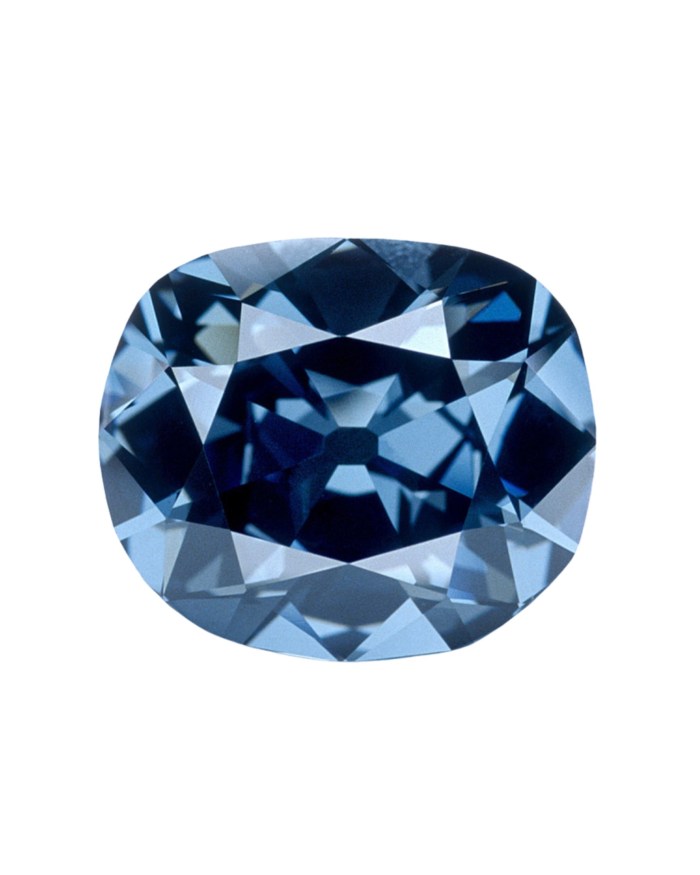
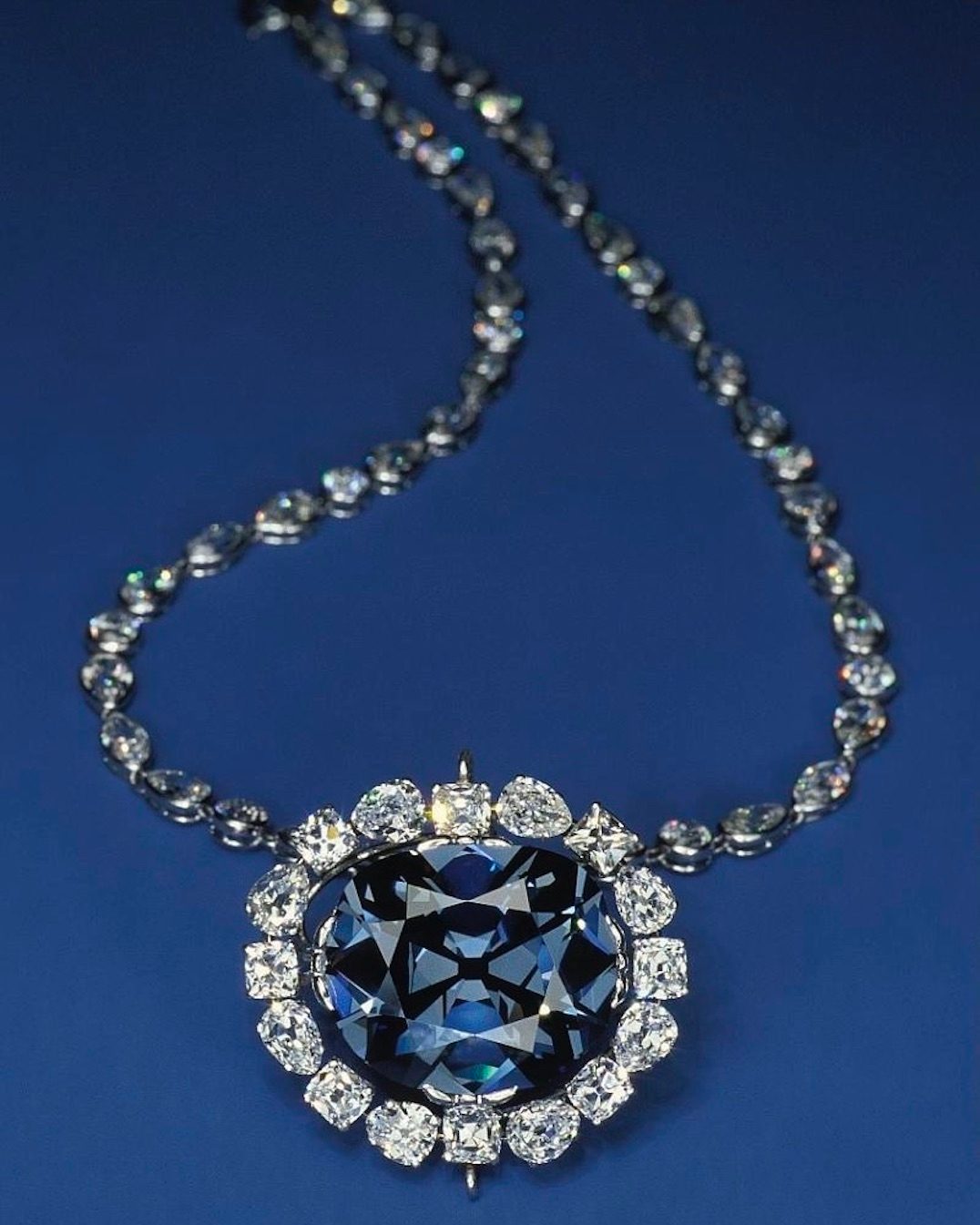
At 45.52 carats, the Fancy Deep grayish-blue diamond has lived many lives. It has passed through the French monarchy, from Kings Louis XIV through XVI, and likely into the hands of British monarch, King George IV. It has been lost, recut, stolen, and coveted by some of the biggest names in jewelry, including Pierre Cartier and Harry Winston.
And then there’s the curse.
For centuries, stories of ruined fortunes, madness, and mysterious deaths have followed the diamond and the people who owned it. But behind the mythology is something just as compelling: science. The Hope Diamond has physical properties so unusual that researchers are still unlocking its secrets.
Ahead, Dr. Sally Eaton-Magaña, Senior Research Scientist at the Gemological Institute of America (GIA), gets us closer to the Hope Diamond than most people will ever get (and lives to tell the tale).
What It’s Like to Hold the Hope Diamond
In 2005, I was fortunate to be part of a research team that documented and researched the Hope Diamond’s red phosphorescence, which was previously observed many times before, yet never fully investigated. Those heady days were an exciting opportunity for me; it was enthralling to hold this singular stone and come so close to its incomparable story.
Before the Curse, There Was a King
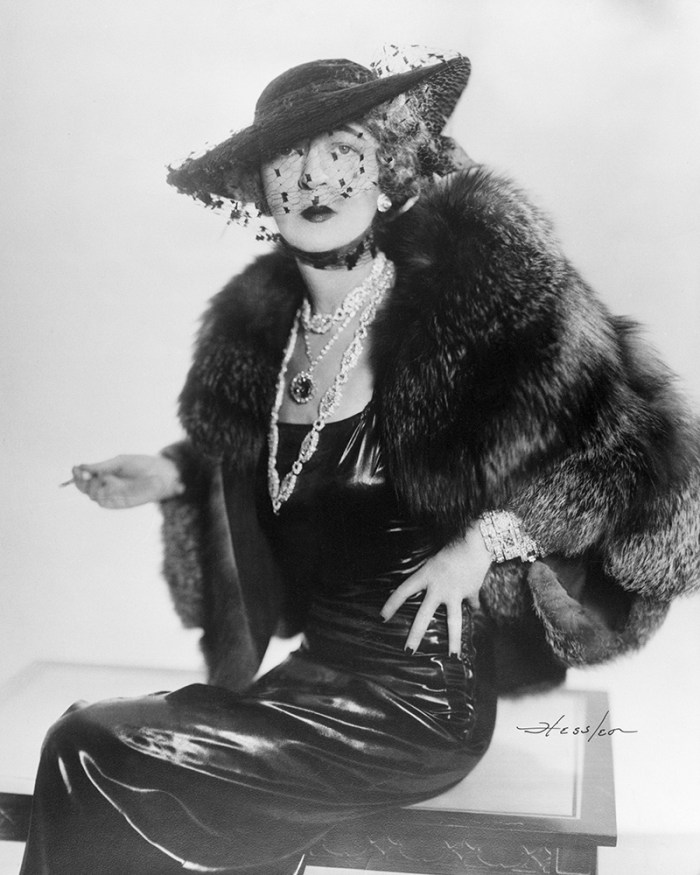
The Hope Diamond got its name from one of its first documented owners, Henry Philip Hope, a wealthy British banker and an avid collector of gems and paintings. Included among Hope’s holdings when he died, the diamond was passed down through this family until 1901 when it was sold to a jeweler. Then, it traded hands several times until it was bought in 1912 by Evalyn Walsh McLean, a Washington, D.C., socialite, who owned it until her death in 1947. Jeweler Harry Winston owned it for the next eleven years until he donated the Hope Diamond to the Smithsonian Institution in 1958. Today, it belongs to the American people.
Its exact value? That’s another mystery. The Hope Diamond has not been sold in decades, but estimates have placed its worth between $200 million and $350 million.
But the Hope Diamond’s story begins centuries earlier—and with a much bigger stone.
In the 17th century, French gem merchant and traveler Jean Baptiste Tavernier acquired a 112 3/16-carat diamond, likely sourced from the Kollur mine in Golconda, India. The stone had a roughly triangular shape and a crude cut. Tavernier described its color as a “beautiful violet.”
Tavernier sold the diamond to King Louis XIV of France, the “Sun King,” in 1668, along with 14 other large diamonds and several smaller ones. In 1673, the stone was recut by his royal jeweler into the 69-carat French Blue and fashioned with a gold backing that allowed the “sun” to shine within its central field of blue.

The Diamond That Disappeared for 20 Years
Then things get strange.
The French Blue was stolen during the French Revolution in 1792. Twenty years later, a smaller—although still spectacular—45-carat blue diamond surfaced in London. The timing was almost cinematic: the diamond appeared just days after the 20-year statute of limitations for crimes committed during the French Revolution had passed.
There is little information about who might have recut the gemstone. Although it had been speculated for decades that the lost French Blue and the Hope Diamond were actually the same stone, convincing evidence was not presented until the mid-2000s.
Since its donation to the Smithsonian, the Hope Diamond has left the museum only four times. In 1962, it traveled to Paris for a month-long exhibition at the Louvre titled Ten Centuries of French Jewelry. Three years later, in 1965, it was displayed at the Rand Easter Show in Johannesburg, South Africa. In 1984, the diamond was loaned to Harry Winston Inc. in New York to commemorate the firm’s 50th anniversary. Its most recent journey occurred in 1996, when it was again sent to Harry Winston Inc. for cleaning and minor restoration.
These computer models show the Hope Diamond nested inside the French Blue and the Tavernier Blue and offer some of the most convincing evidence that today’s Hope Diamond was cut from the French Crown Jewel. (Museum Diamonds)
Realistic replicas of the 112-carat Tavernier Blue and the 69-carat French Blue were created, and computer models of all three diamonds were used to verify that the Hope could be wholly contained within the French Blue. Some of the cutting decisions of the Hope Diamond, including its asymmetric shape, were best explained by its prior history as the 69-carat French Blue.
How Real Is the Curse of the Hope Diamond?
You can’t tell the story of the Hope Diamond without talking about the curse. For centuries, legends have suggested that misfortune—and even death—follows those who own it. The stories have been repeated, exaggerated and embellished so many times that separating history from mythology is part of the fascination.
After Jean Baptiste Tavernier sold the original 112 3/16-carat diamond to King Louis XIV, legend claims he was later torn apart by wild dogs. (Almost certainly not true, but the story stuck.) Then came Louis XVI and Marie Antoinette, eventual owners of the recut French Blue, who were both sent to the guillotine during the French Revolution.
And the bad luck didn’t end with royalty. After American heiress Evalyn Walsh McLean acquired the diamond in 1911, her life became one of the darkest chapters in the Hope’s lore: both of her children died tragic deaths, and her husband lost his fortune before dying in a psychiatric hospital.
Coincidence? Almost certainly possible. Great material for a centuries-old legend? Absolutely. The pattern of misfortune helped cement the story of the curse, adding a layer of mystique that continues to captivate—and unsettle—those who encounter the gem.

The Science Is Stranger Than the Curse
Forget the supernatural for a second. The Hope Diamond does something genuinely extraordinary: under the right light, it glows red.
Its rare grayish-blue color has fascinated scientists and collectors alike. So what makes a diamond this blue—and this unusual?
The Hope Diamond was graded by the GIA in 1988 and again in 1996 as a 45.52-carat diamond with a cushion shape with antique brilliance, VS1 clarity and a Fancy Deep grayish-blue color. That color comes from an exceptionally high concentration of observable boron impurities, measured at about 1.7 parts per million.
The vast majority of natural gem diamonds—about 99%—have high amounts of nitrogen impurities, while the remaining 1% have little-to-no detectable nitrogen. Less than 0.1% of diamonds, including the Hope, have detectable boron. Among these, the vast majority have lower quantities of boron than the Hope Diamond, with most containing less than 0.5 parts per million.
In other words: a natural diamond with this much boron is exceptionally unusual. Finding it in a diamond this large makes the Hope rarer still.
And Then It Glows Red
Another extraordinary trait of the Hope Diamond is its fiery red phosphorescence. When exposed to ultraviolet light, the blue diamond transforms, glowing like a burning ember for more than a minute after the light source is removed.
Like the diamond’s blue color, the red phosphorescence is also related to the boron incorporated into the diamond while the gemstone formed. When exposed to short-wave UV, those boron atoms interact with other impurities within the diamond, causing the gemstone to emit visible light. Its vivid red glow—and how long it lasts—is one of the Hope Diamond’s most distinctive scientific signatures.
For all the supernatural stories surrounding the Hope Diamond, science has revealed mysteries that are arguably even more interesting. Over the last two decades, researchers have used computer modeling to convincingly connect it to the French Blue, investigated the origins of its phosphorescence, and measured the boron responsible for its extraordinary color.
After kings, revolutions, disappearances, fortunes, tragedies, and more than a few rumors of supernatural revenge, the Hope Diamond ultimately found its way to the Smithsonian. There, millions of people continue to come face-to-face with it.
And then there’s the name. After centuries of changing hands, crossing continents, and collecting more than its share of lore, the diamond took its lasting identity from one of its first documented owners: Hope. For a stone with a story this extraordinary, there’s something almost poetic about the name that endured.

Newsletter