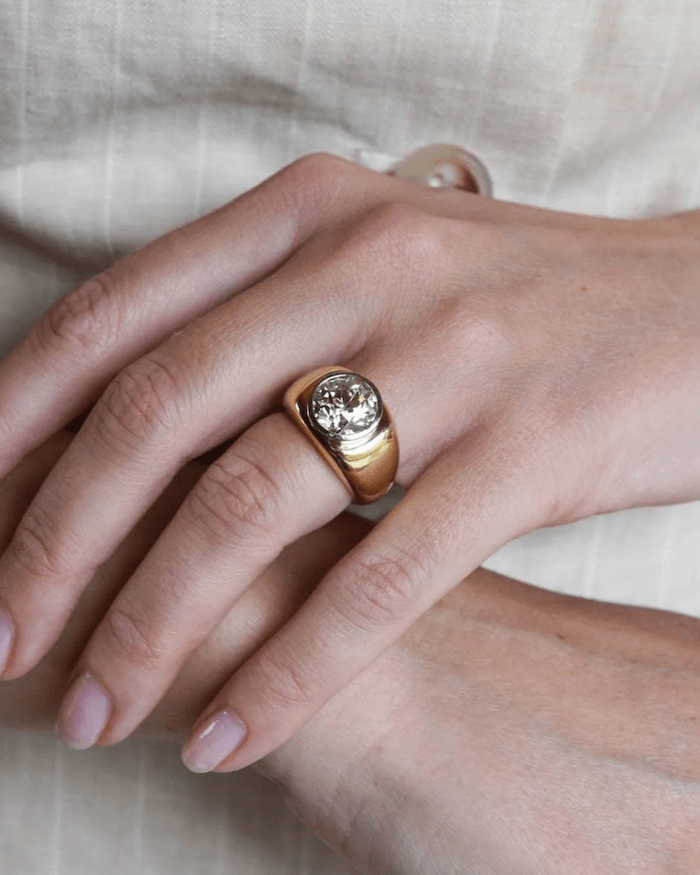
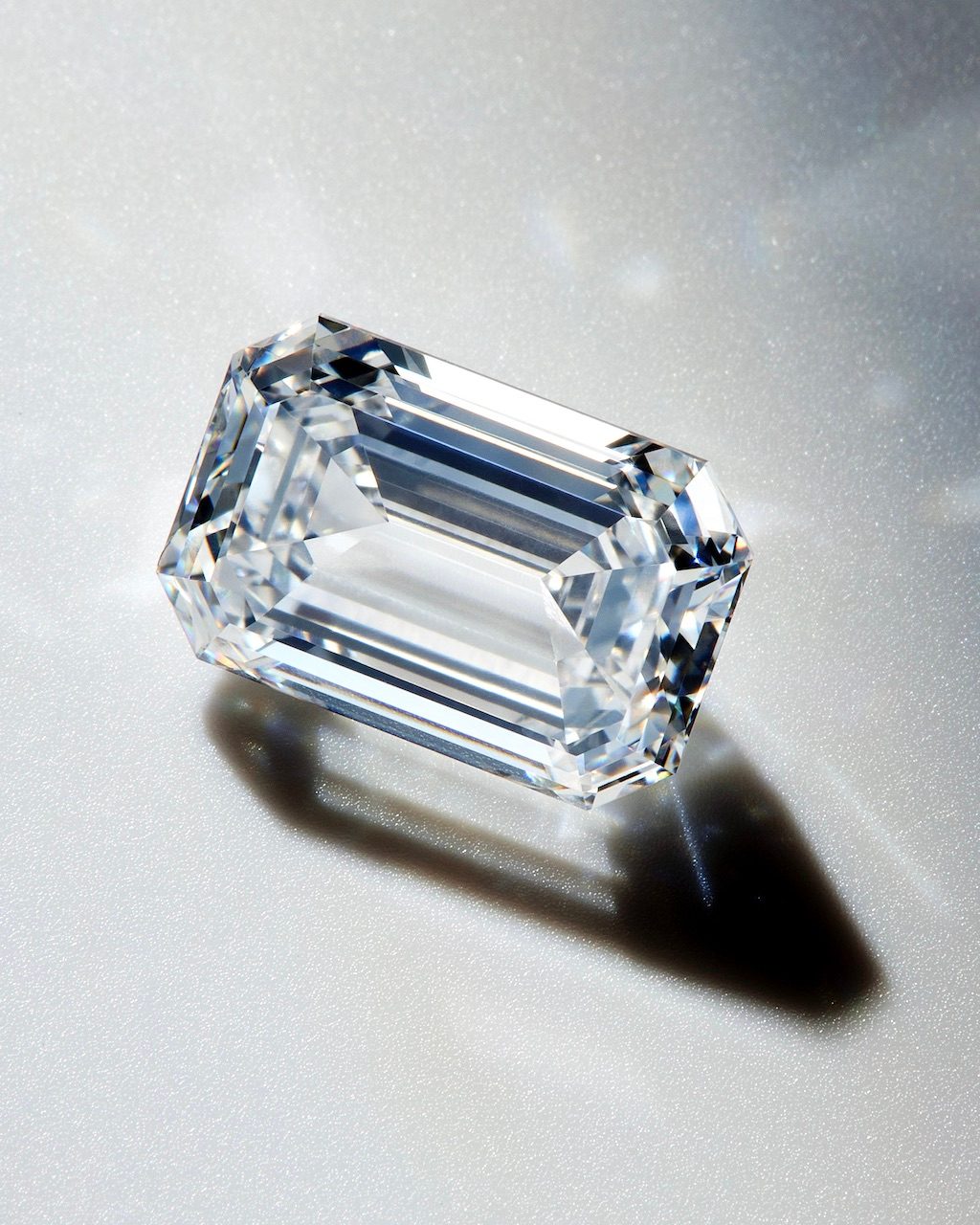
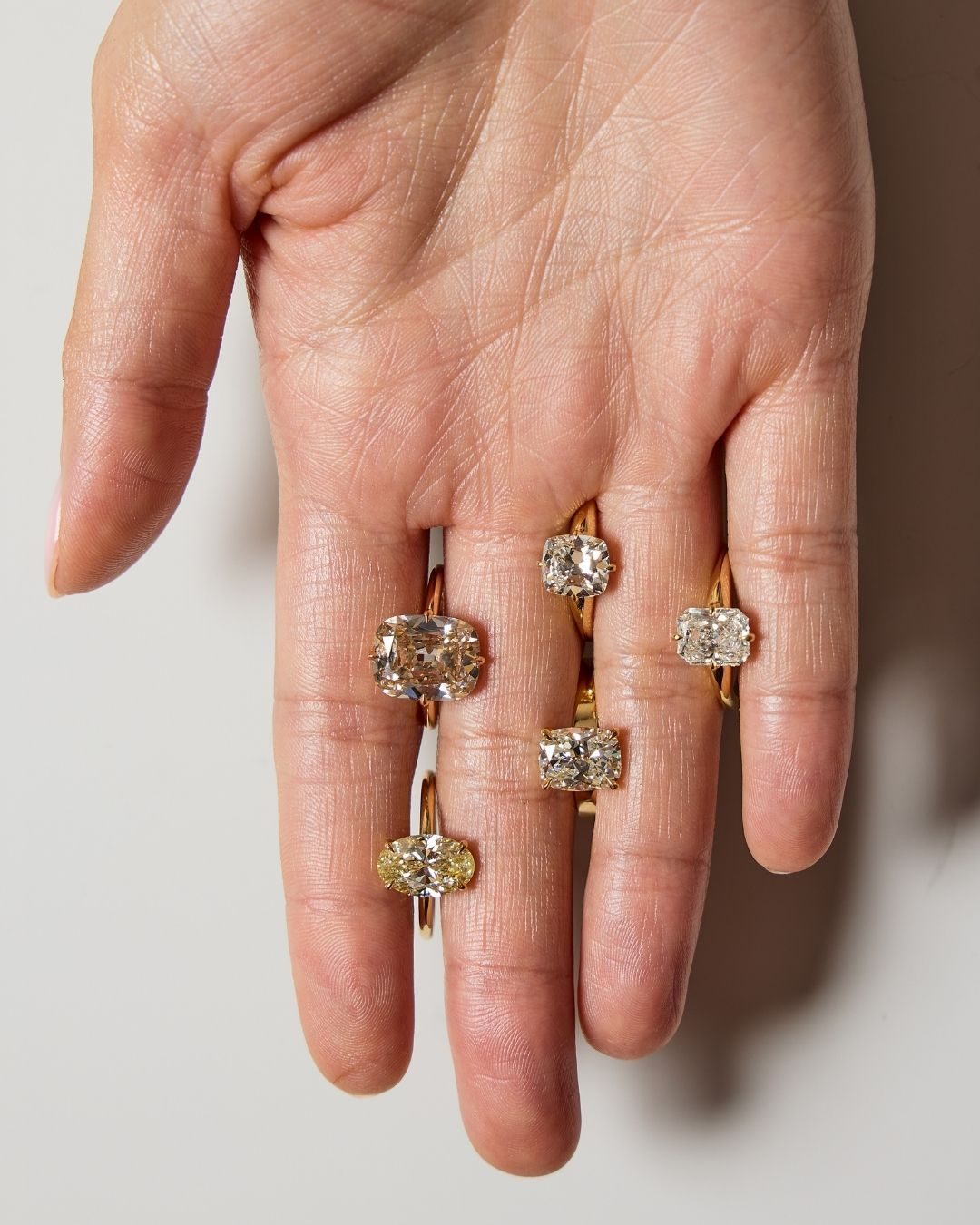
Warm diamond engagement rings. (Courtesy of AARYAH)
Warm Diamonds Are the New Cool
Diamond perfection used to mean icy, colorless and flawless. Not anymore. Buttery yellows, soft champagnes and sun-kissed undertones are having a moment.
For decades, the diamond conversation ran in mostly one direction: whiter, brighter, colorless, period. The goal? Climb as high up the color scale as your budget allowed. Warm diamonds were something to avoid, not something to covet.
Now, that thinking is starting to feel seriously dated. Some of the most coveted diamonds right now aren’t the iciest whites at all. They’re buttery, champagne-toned and visibly warm, with the kind of character that makes a stone feel unmistakably its own. And for a generation obsessed with individuality, that difference is exactly the point.
First, Let’s Talk About Color
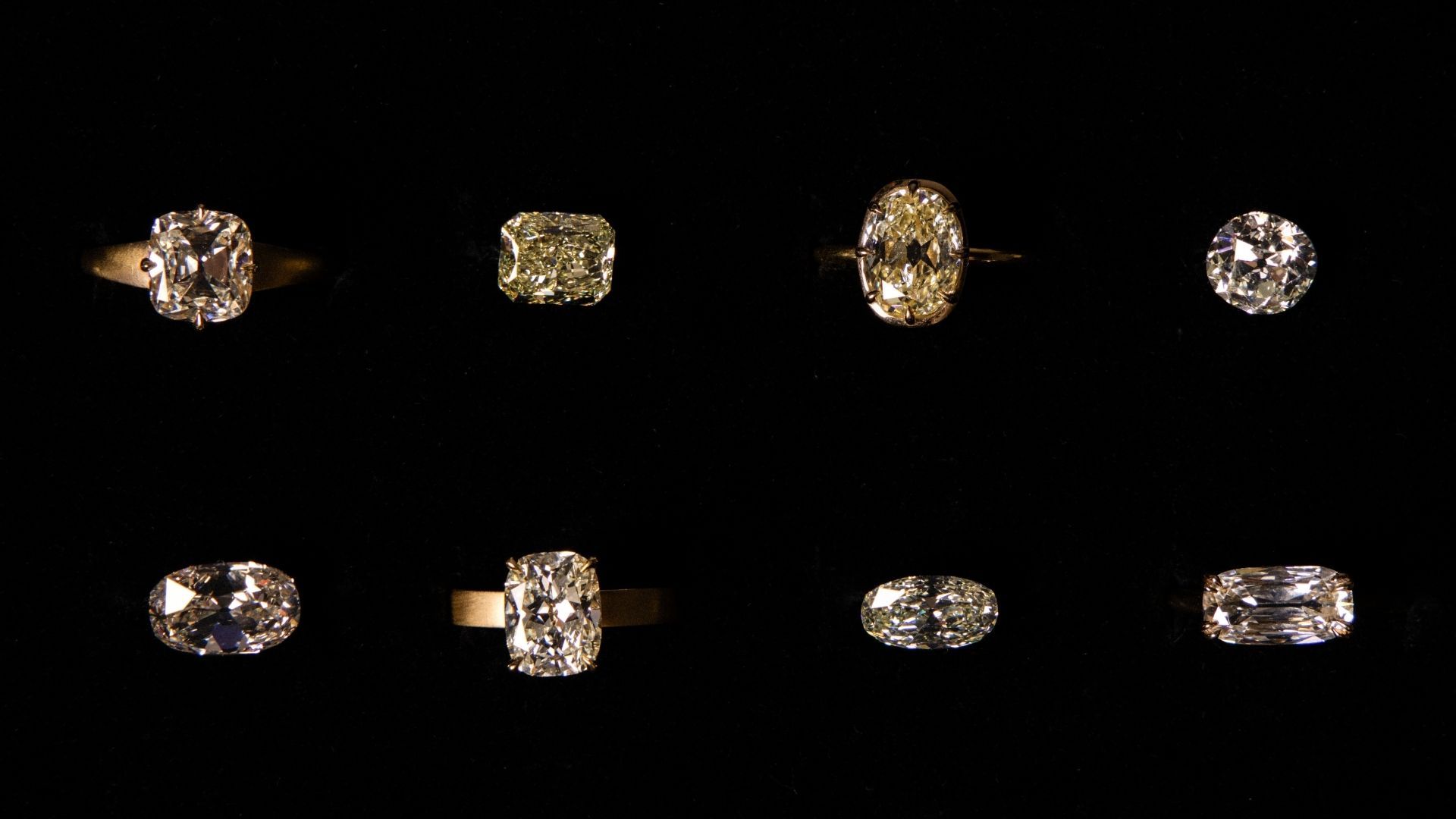
Before we get into why warm diamonds are suddenly everywhere, here’s the color-scale cheat sheet.
The standard scale runs from D to Z. A D-color diamond sits at the very top: completely colorless, with no detectable tint whatsoever. As you move down the alphabet, diamonds pick up increasing amounts of warmth—faint yellows and browns—until you reach Z, which shows a heavy, obvious tint. (Beyond Z, you enter the world of fancy color diamonds, where the color becomes so saturated that it’s prized in its own right.)
Here’s where it gets interesting. Historically, the vast majority of diamonds sold for engagement rings fall around H color or higher. From D through H, any color is so subtle that the diamond generally still reads white to the naked eye. Move into I, J, K and beyond, and the warmth starts to show. Think soft gold, champagne and candlelight rather than stark white.
For a long time, consumers treated anything below that invisible-color threshold as a lesser product. But different doesn’t mean worse. Increasingly, it means more interesting.
Why Warmer Isn’t a Downgrade
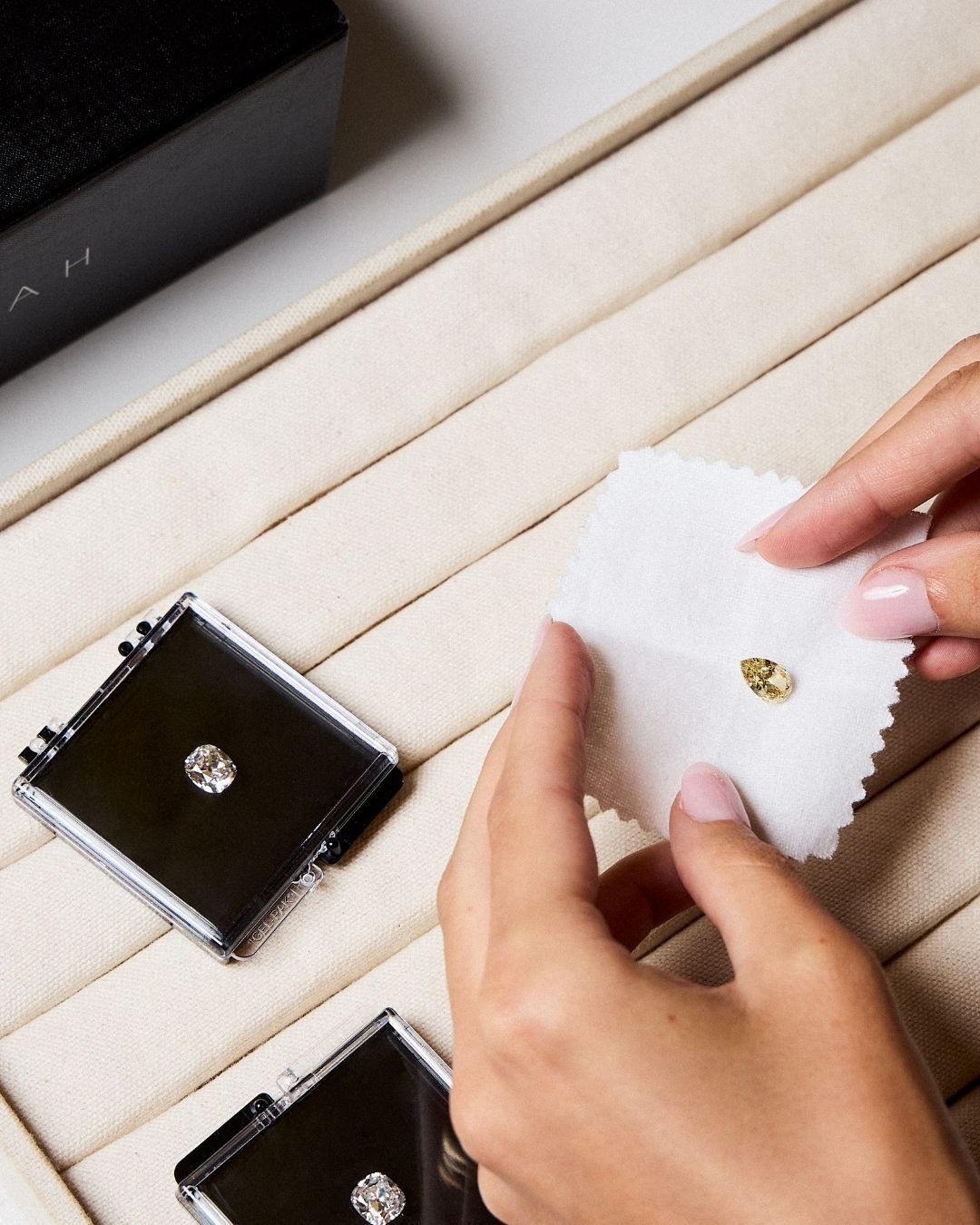
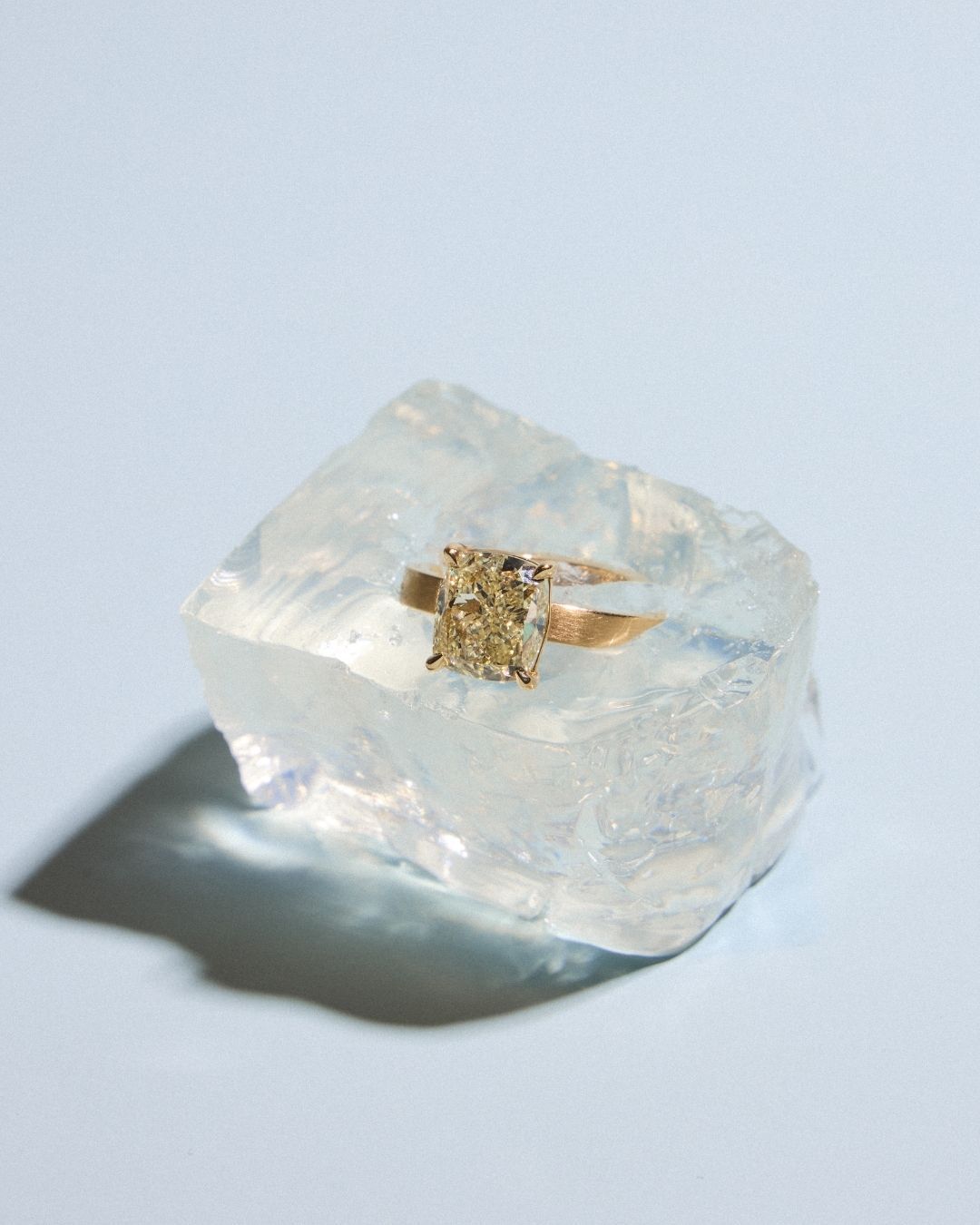
A lower color grade doesn’t automatically mean a less beautiful diamond. It means a different vibe.
Megan Kothari, founder of the jewelry brand AARYAH, has watched this realization spread through her client base firsthand. “When I first started in bridal, the conversation was always about how white a diamond could be. Everyone wanted the highest color grade possible,” she told me. “Today, the conversation has completely shifted. Clients are looking for diamonds that feel distinctive and unique. They love warmer natural diamonds because they stand out and feel one of one. In a world where everything is becoming more uniform, individuality has become the new luxury.”
That word—individuality—keeps coming up, and for good reason. Warm diamonds bring something icy whites simply can’t. “A warmer diamond has a depth and character that super icy white diamonds simply don’t,” Kothari said. “The buttery yellows, soft champagne hues, and subtle brown undertones create incredible dimension. Combined with beautiful faceting, the sparkle and shimmer feel richer and more dynamic. They offer something fresh compared to what you see everywhere else.”
There’s a reason everyone looks good in candlelight. Warmth has a softness and richness that pure, clinical white can’t replicate.
More Color, More Carats
Here’s the other reason to go warm: your budget can go further.
A diamond’s color comes down to what happened while it was forming deep inside the Earth. Nitrogen incorporated into a diamond’s crystal structure can create yellow tones, while other natural processes and structural variations can produce different shades and undertones. Truly colorless diamonds are comparatively rare.
And rarity affects price. Colorless stones near the top of the grading scale typically command a premium, while moving warmer can open up more options at a given budget. Translation: you may be able to go bigger without spending bigger.
That’s not a downgrade. That’s an opportunity
This value angle has become one of the most compelling reasons buyers consider them, and it’s where I think the warmer-diamond trend stops being just aesthetic and starts to feel genuinely smart.
“One of the biggest misconceptions is that choosing a warmer diamond is settling,” Kothari explained. “In reality, it allows clients to maximize their budget. They can purchase a larger, beautifully cut natural diamond with incredible presence. It’s truly getting more bang for your buck without sacrificing beauty.”
Dr. Chari Belmonte, a newly engaged New Yorker, discovered exactly that when she started shopping. “I wasn’t thinking much about price at first, but when I really started looking, I realized how much better the prices are for diamonds with a little color,” she told me. “So it was a nice surprise and means I probably got a bigger diamond than I would have otherwise.”
Her path to warmer color started, where so many trends start now: her feed. “I started seeing warmer color diamonds more and more on my social media feeds the last couple of years, and it was the first time I had even thought about them,” she said. “Before that, I just thought the higher the color, the better, and that I would eventually be proposed to with a completely colorless diamond. But the more I looked at the warmer colors, the more I liked how they looked on my skin and were different than what everyone else had.”
How Warm Became the New Cool
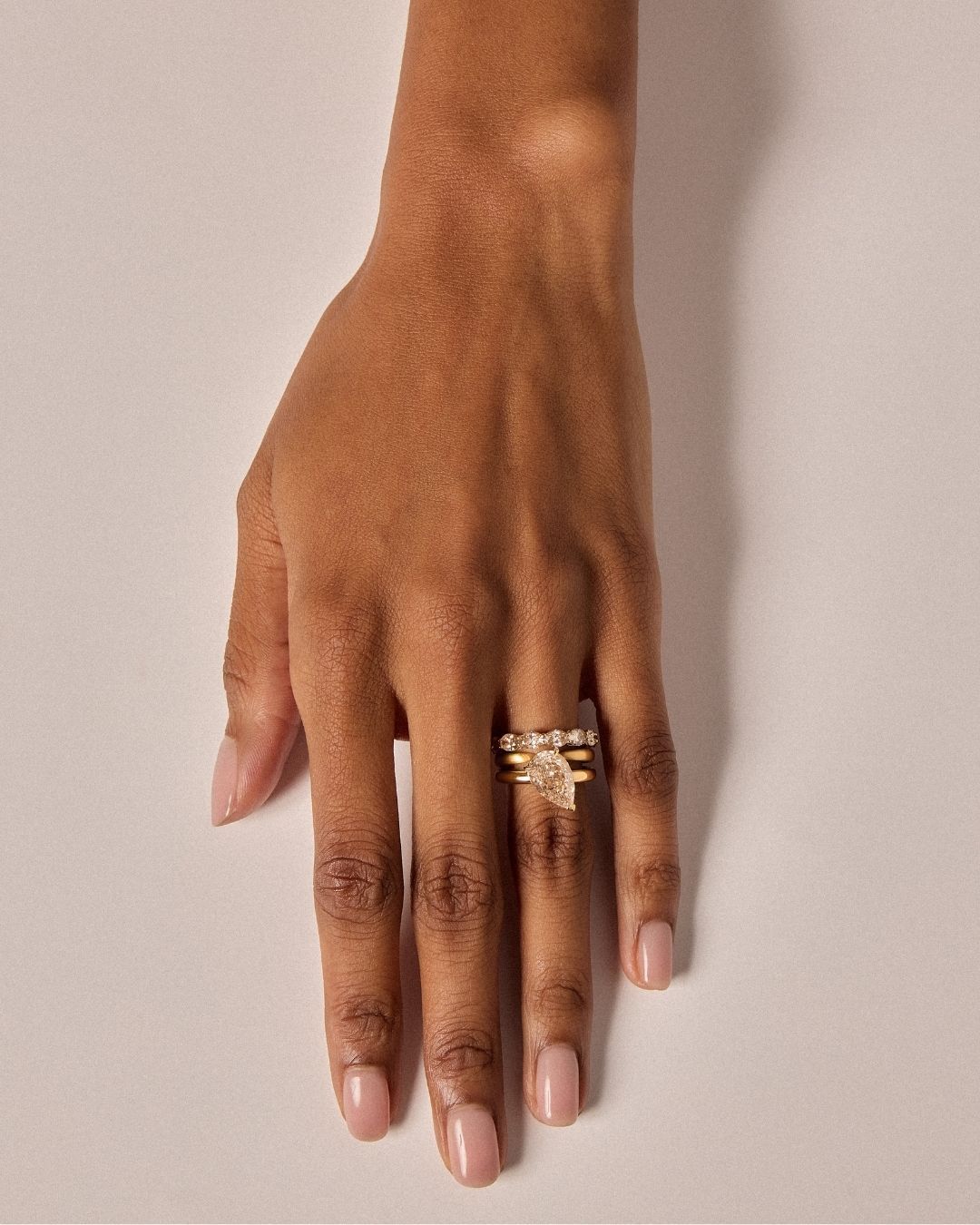
The plot twist? The characteristic buyers were once told to avoid has become the whole point.
“People aren’t looking for the most technically ‘perfect’ diamond anymore. They’re looking for something no one else has,” Kothari said. “Really beautiful, warm natural diamonds have become incredibly sought after, and we’ve actually seen prices increase because demand has grown so much. It’s becoming harder to source exceptional warm diamonds because they’re exactly what today’s clients are asking for.”
And buyers aren’t stopping at a hint of warmth. “Warm diamonds were once overlooked. Today, they’re some of the most requested diamonds in our showroom,” she said. “The majority of our clients are looking for warm colors, or even fancy yellow and brown diamonds, because they want something that feels different from the traditional engagement ring. They’re searching for the diamond that makes them stop in their tracks.”
AARYAH was early to the shift. “At AARYAH, we celebrated color in natural diamonds long before it became a broader trend,” Kothari said. “We’ve always believed that warmth adds personality and character, and it’s exciting to see more consumers embracing that perspective. Some of the most unforgettable diamonds are ones with the most soul.”
Personal Is Better Than Perfect
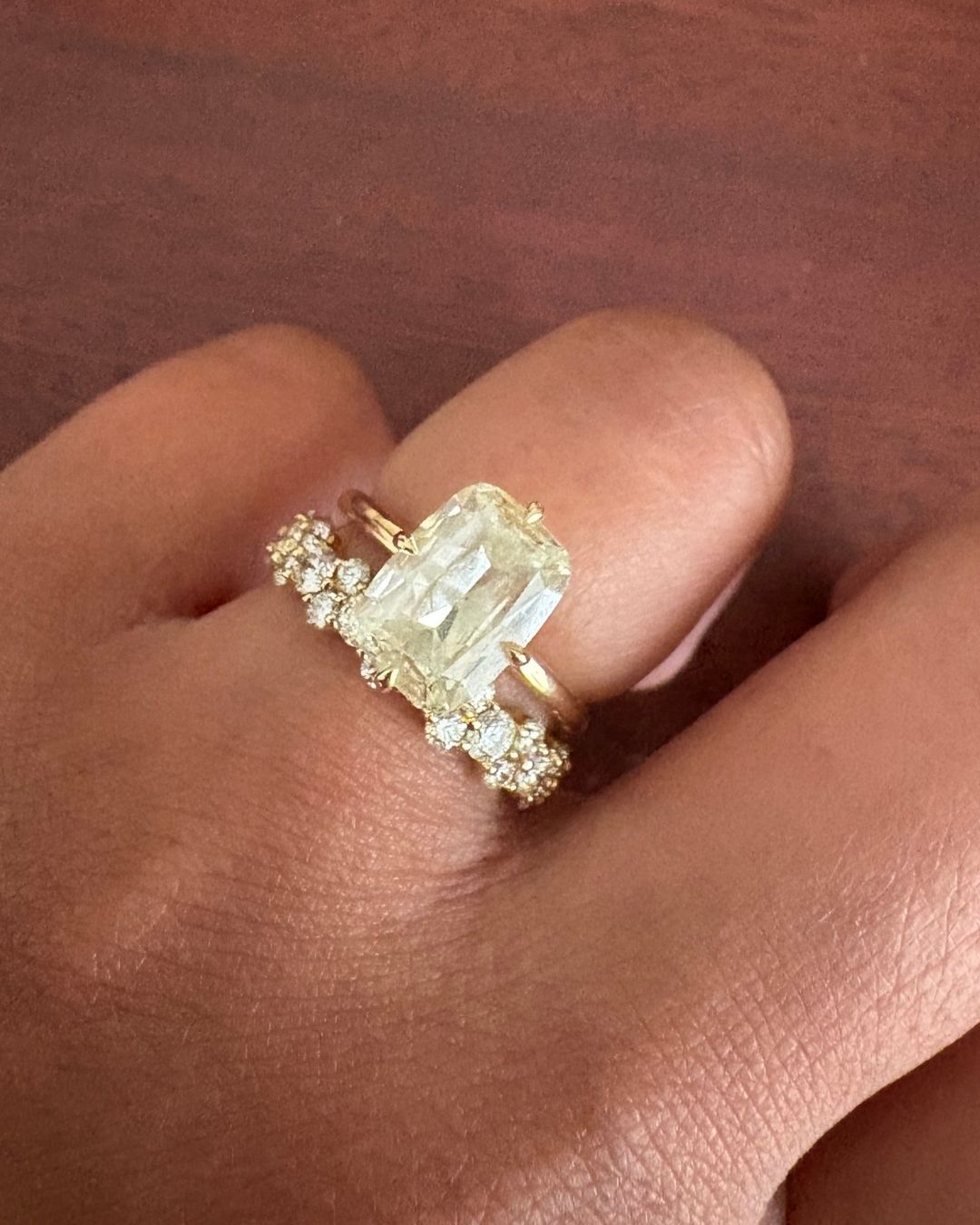
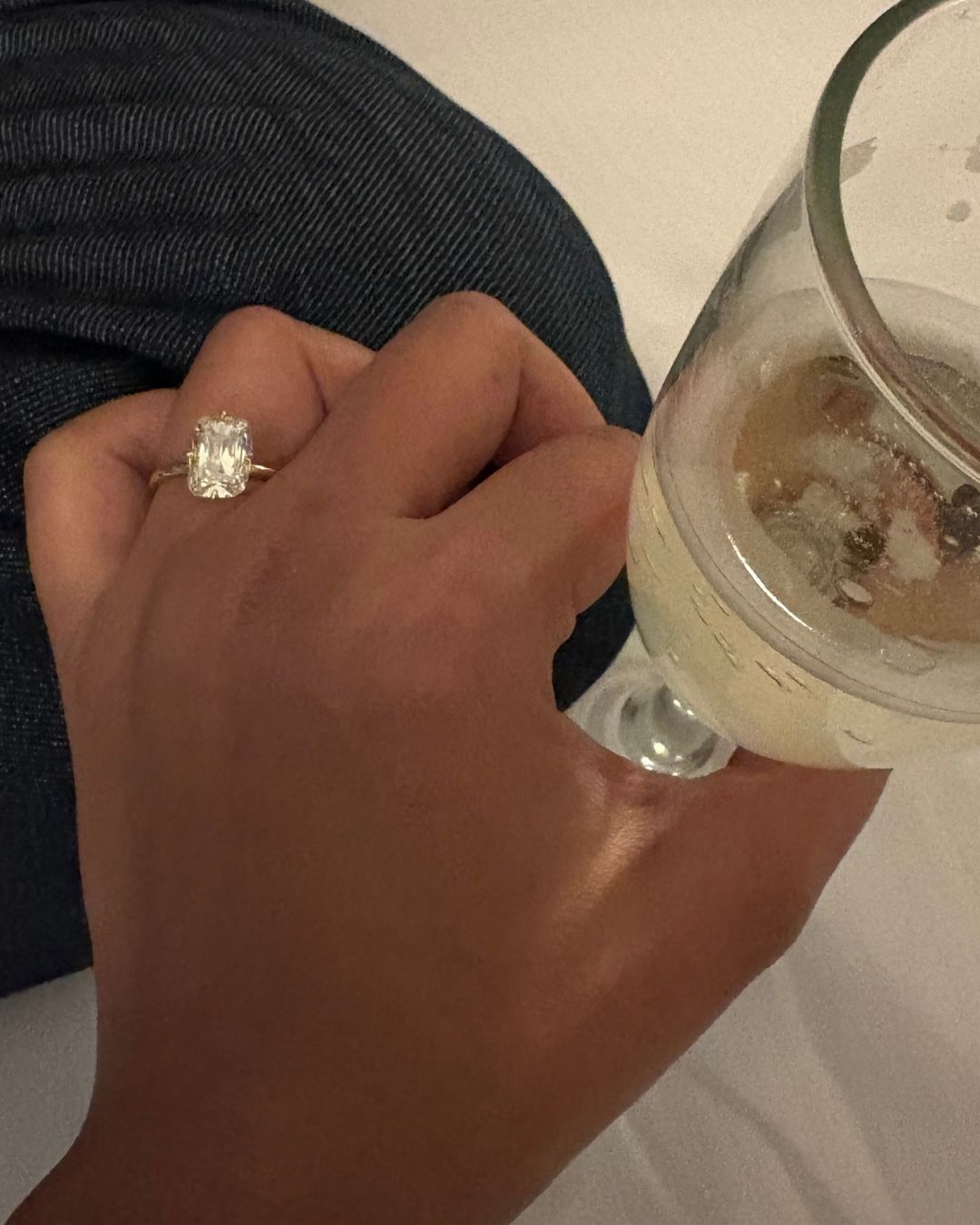
For Belmonte, finding her diamond wasn’t about optimizing every grade on a report. She knew the feeling she wanted. “I didn’t want to have much input in my engagement ring. I really wanted the surprise,” she said. “The only thing I told Marko was that I wanted a warmer color diamond and an elongated cushion cut. The rest was up to him.”
The result exceeded everything she’d pictured. “When he finally proposed, and I saw the ring, I couldn’t believe it. It was way better than anything I even imagined,” she said. “I am still constantly distracted by it, and the compliments are never-ending.”
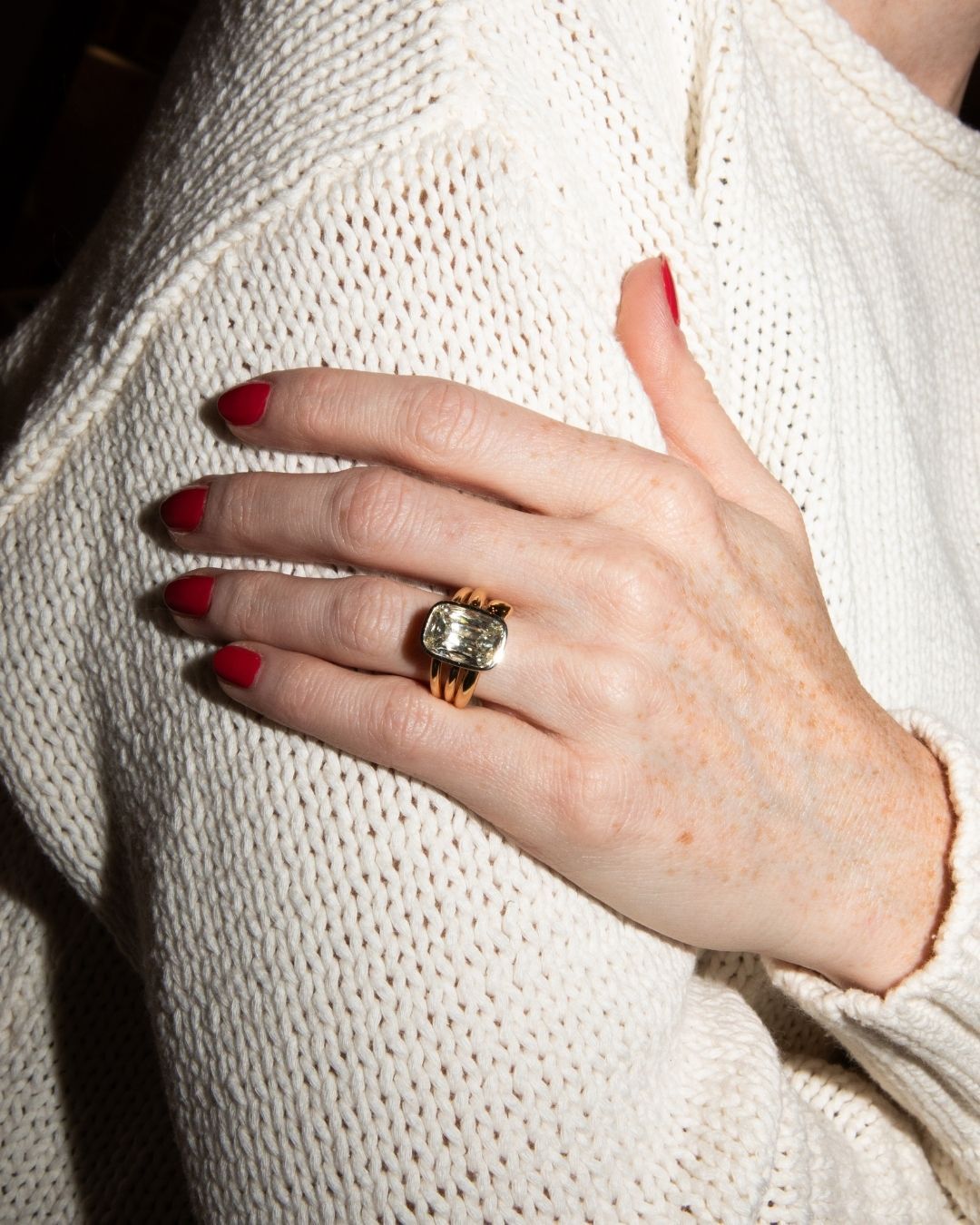
If the rise of warm diamonds says anything, it’s that the old rules around what makes a diamond “perfect” are losing their grip. “I think we’re only at the beginning,” Kothari said. “As consumers become more educated about natural diamonds, they’ll continue moving away from standardized ideas of beauty and toward stones that feel personal, natural, and impossible to replicate. I think the future of bridal is less about chasing a grading report and more about finding a diamond that tells your story.”
Because a diamond isn’t a test score. The numbers and letters on a grading report describe its characteristics; they don’t decide whether you’ll be obsessed with it. After decades of chasing the top of the scale, buyers are realizing there’s another option: a stone with character, individuality, and soul. It’s a far more romantic way to fall in love with a diamond.