She rejected royal convention, inherited extravagant diamonds, and built a jewelry collection fit for an empress. Then the Russian Revolution changed everything.
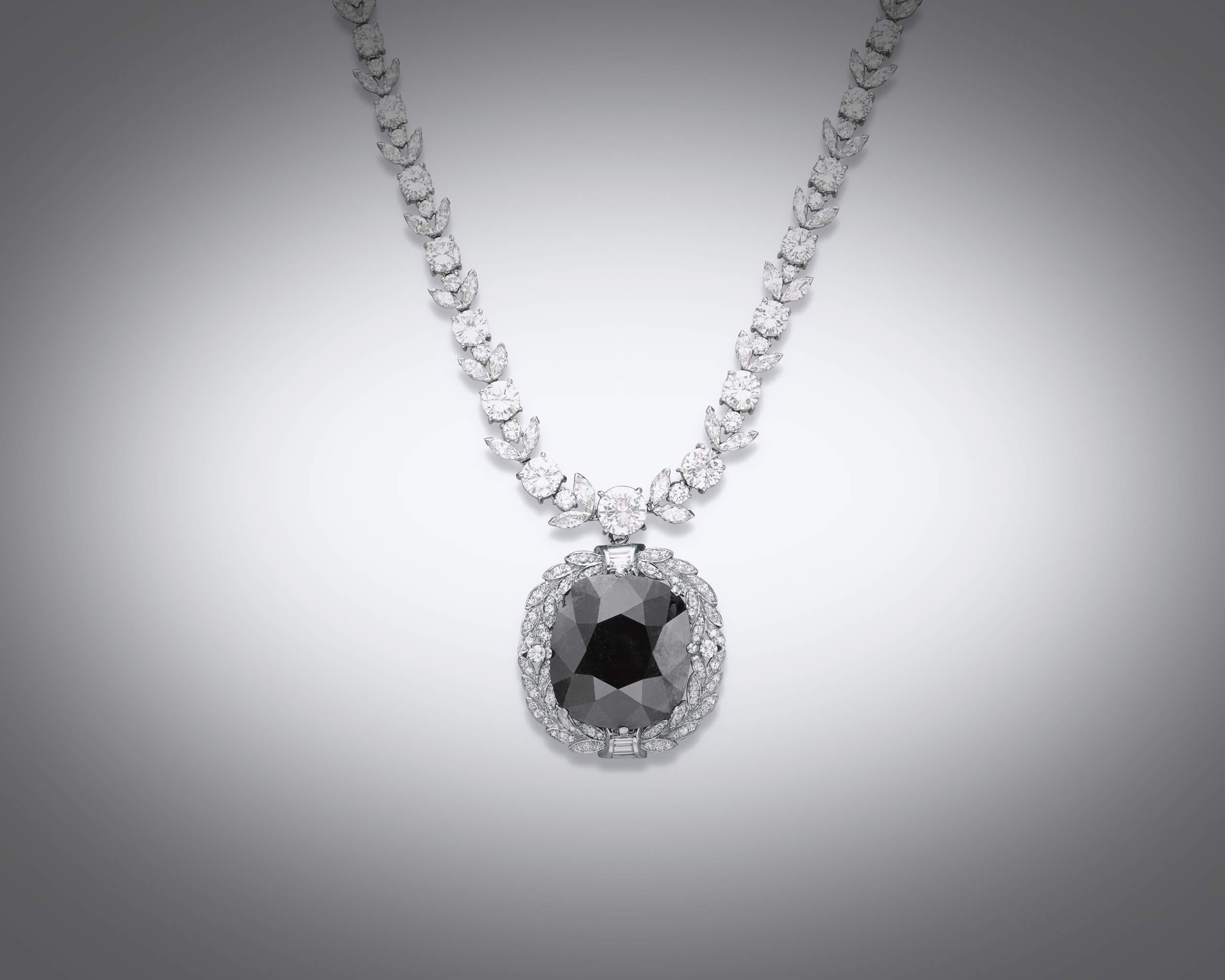
The Black Orlov Diamond (Courtesy of Christie’s)
The Lore Behind the World’s Most Famous Cursed Diamonds
Forget ghost stories. These diamonds come with royal scandals, mysterious deaths, and alleged curses. But how much is fact, and how much is folklore?
The stories behind the world’s most famous cursed diamonds have all the drama of a Greek tragedy: fallen dynasties, mysterious deaths, and centuries of chaos. But if given the chance, would you tempt fate and wear one?
What if it were the Hope Diamond, a 45.52-carat blue diamond whose owners were said to have suffered everything from financial ruin to untimely deaths and even beheadings? Or the Sancy Diamond, a 55.2-carat yellow diamond that, according to legend, was once swallowed whole by a servant determined to keep it out of the wrong hands? (Don’t worry, both diamonds are now safely housed in museums. Their alleged curses, however, are another story.)
Diamonds have been associated with mystical powers for centuries. And when you consider that these extraordinary stones formed billions of years ago deep within the earth, it’s not hard to see why. Traditionally believed to offer protection, courage, and good fortune, diamonds have long held a special place in folklore. But not every legend comes with a happy ending.
From royal scandals to ancient superstitions, the stories surrounding these so-called cursed diamonds blur the line between history and mythology. And honestly, that only makes them more fascinating.
The Hope Diamond’s Infamous Reputation
Over its 350-year history, the Hope Diamond has become one of the most famous cursed diamonds. After being stolen and recut, it is said to have contributed to the downfall and death of its owners. Discovered in India in 1673, it was originally a 115-carat blue diamond. Its owners included King Louis XIV and Marie Antoinette (both of whose stories didn’t end well).
In 1839, the stone was purchased by Henry Philip Hope after whom it was named. Upon his untimely death, his family sold it to pay off his gambling debts. Jeweler Wilhelm Fals acquired the natural diamond, and soon after, his son killed him, took the stone, and later committed suicide.
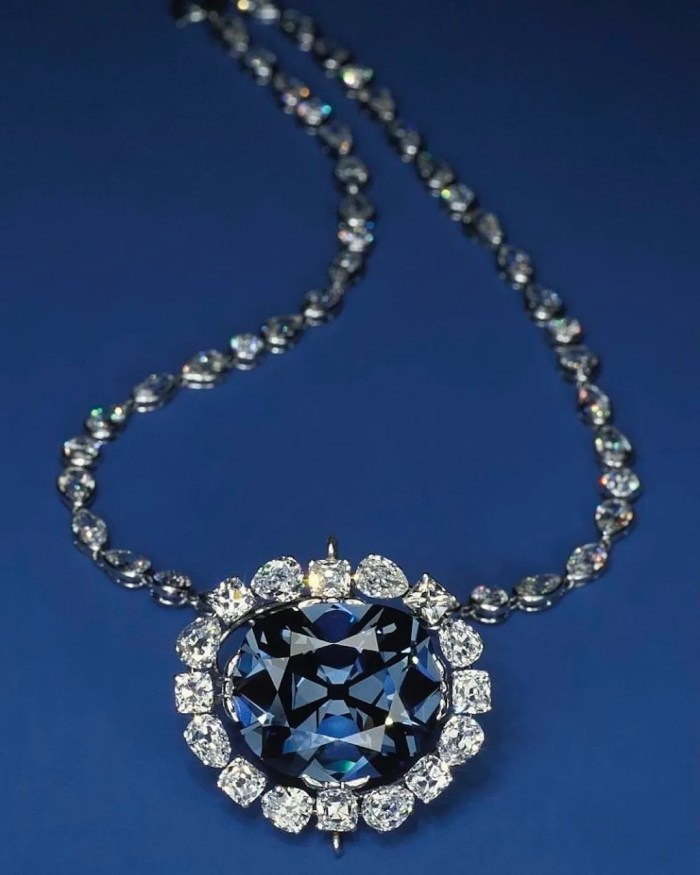
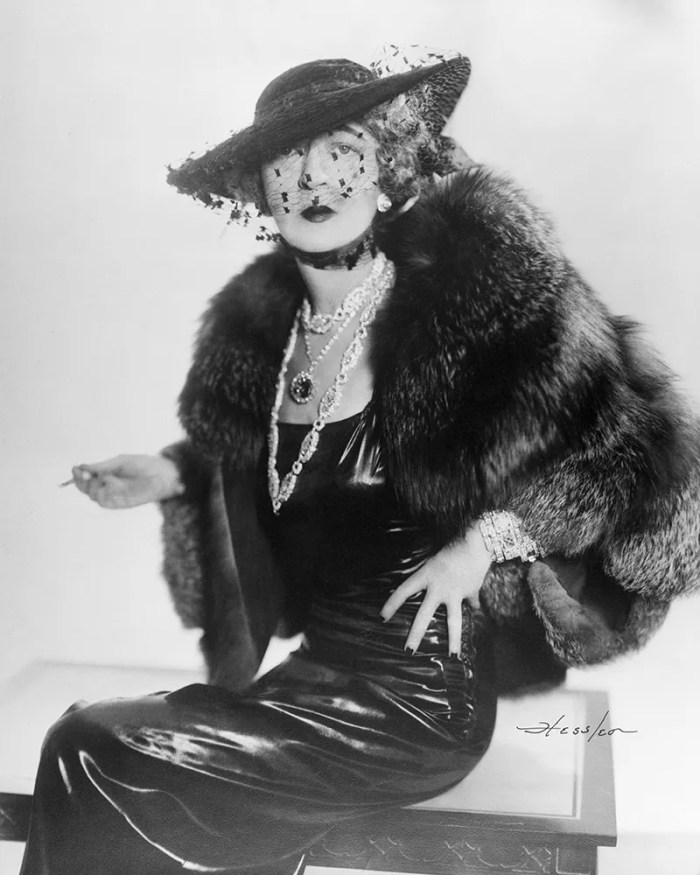
That didn’t scare off the young heiress Evalyn Walsh McLean. Quite the opposite. The eccentric Washington socialite believed that objects considered unlucky by others would bring her good fortune. After purchasing the Hope Diamond from Cartier, she made it her signature jewel, wearing it to lavish parties and reportedly even letting her Great Dane sport it on his collar.
But buyer beware: Her extraordinary life was not without tragedy. Her son died in a car accident at age 9, her daughter died at 25, and her marriage unraveled as her husband struggled with alcoholism and mental illness.
Walsh McLean’s heirs sold the stone to Harry Winston, who, after touring the infamous diamond around the country, made the wise decision to donate it to the Smithsonian. He famously mailed the priceless diamond to the museum via U.S. mail for $2.44 postage. Maybe he just wanted it off his hands.
The Controversy of the Koh-i-Noor Diamond
Discovered in the 14th century, the Koh-i-Noor passed through the hands of several ruling maharajahs, none of who held power for too long. The stone gained notoriety when it belonged to the famous Mughal ruler, Shah Jahan, who built the Taj Mahal. He had the enormous 186-carat diamond placed into his famous Peacock Throne.
But before he could enjoy it, he was overthrown and imprisoned by his own son. A century later, when Persian commander Nadir Sjah took over the region, he declared it ‘Koh-i-Noor’ (or, the mountain of light). He wore the diamond in his armband.
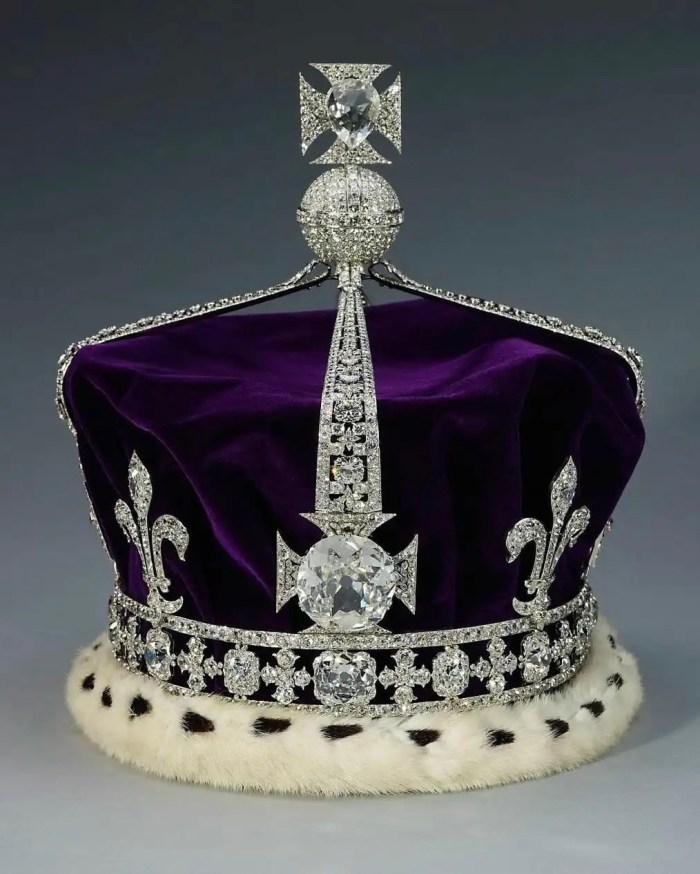

The diamond’s journey took another dramatic turn in 1849, when the British annexed Punjab and acquired the Koh-i-Noor under the Treaty of Lahore. It was subsequently presented to Queen Victoria and became part of the British Crown Jewels, although its ownership remains contested to this day.
Then there’s the centuries-old superstition that the Koh-i-Noor brings misfortune to any man who wears it. According to legend, only a god or a woman could wear the stone without consequence. Perhaps fittingly, the diamond went on to adorn the crowns of British queens, including Queen Mary and Queen Elizabeth the Queen Mother.
But its complicated history made headlines again in 2023. Queen Camilla notably did not wear the Koh-i-Noor at King Charles III’s coronation, opting instead for Queen Mary’s Crown, set with diamonds from the Cullinan diamond. The decision came amid renewed scrutiny of the Koh-i-Noor’s colonial history and calls for its return to India. Centuries later, the diamond remains as culturally significant as it is extraordinary.
The Royal Intrigue of the Sancy Diamond
The Sancy Diamond’s gruesome history as one of the most iconic cursed diamonds dates to the 16th century. Three of its royal owners—Burgundy’s Charles the Bold, England’s Charles I, and France’s Louis XVI—faced horrific deaths after taking possession of the stone. Over the centuries, it was pawned to finance wars, stolen, and went missing for decades.
In the early 1600s, the diamond was named for its then-owner Nicolas de Harlay, Seigneur de Sancy, who served as King Henry IV’s finance minister. When Sancy’s loyal servant was delivering the diamond to its next owner, King James I, he was attacked by robbers, and rather than forfeit the treasure, he swallowed it. Poor fellow was murdered anyway, and the diamond was later removed from his corpse.
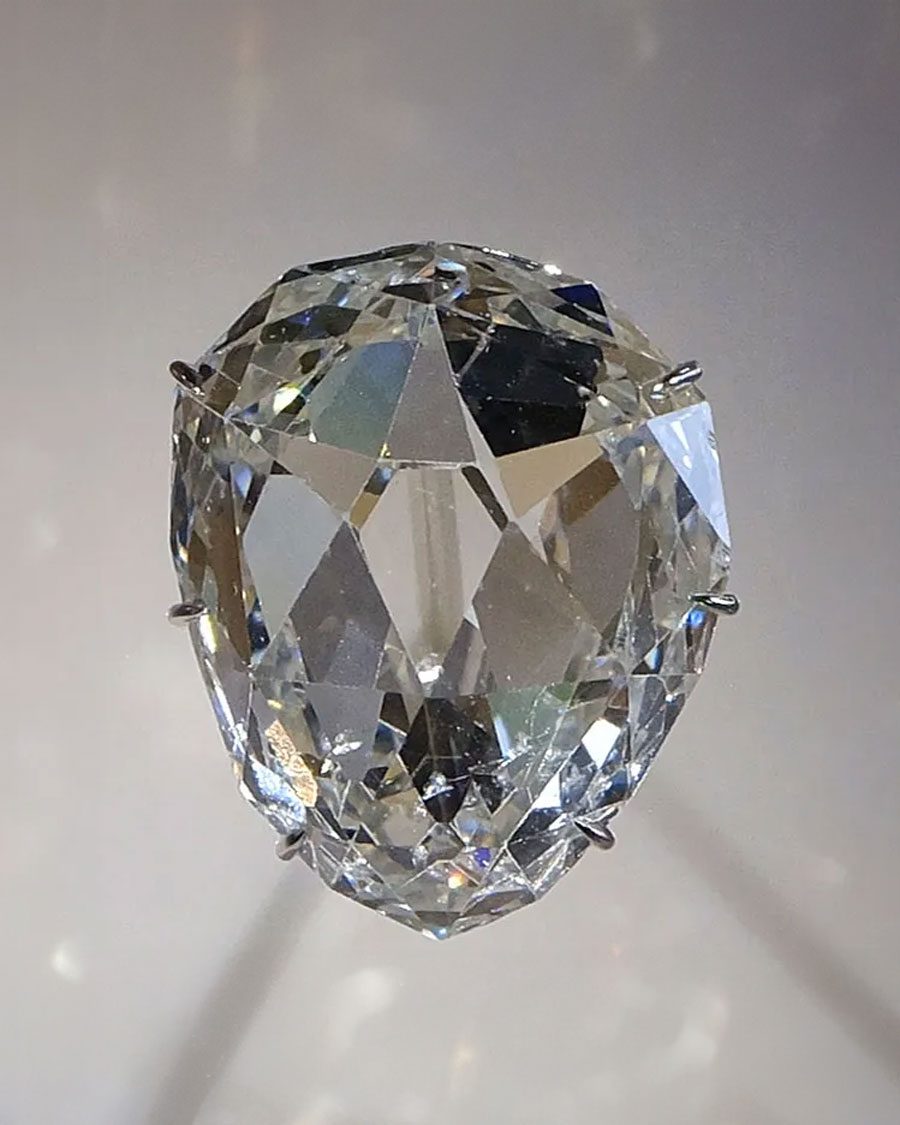
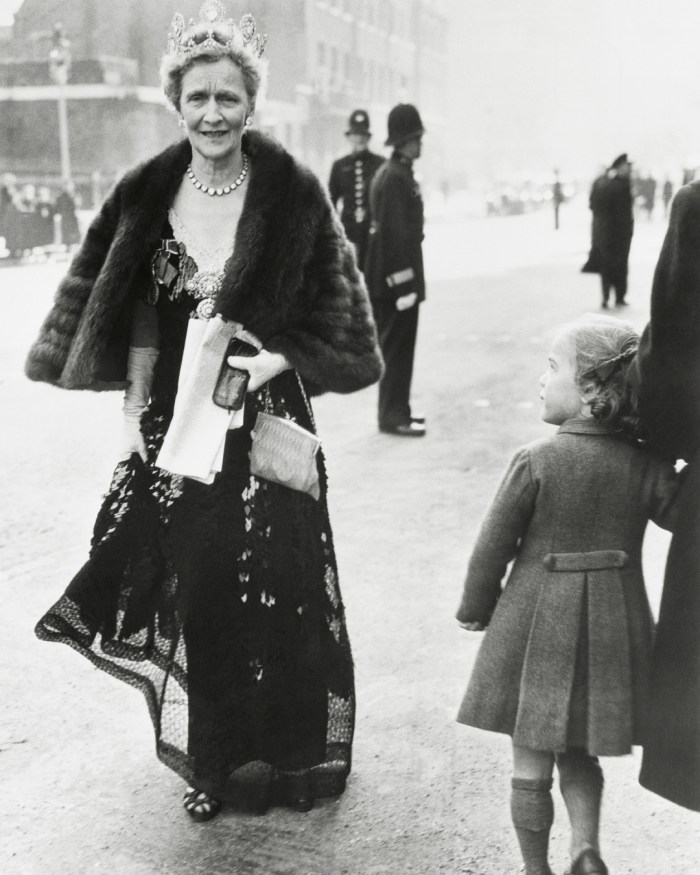
When King James I needed cash, he sold it to the French royal family, and during the French Revolution, it was stolen. It reappeared in the hands of a Russian prince, changed hands several more times, and in 1906 was acquired by William Waldorf Astor as a wedding gift for Lady Astor, who wore it on a tiara.
In 1978, the Astor family sold the diamond to the Louvre for $1 million, where its dramatic history nearly gained another chapter in 2025. During the infamous daylight heist at the museum’s Galerie d’Apollon, thieves made off with eight pieces of the French Crown Jewels—but left the Sancy untouched, along with the Regent and Hortensia diamonds.
The Curious Luck of the Regent Diamond
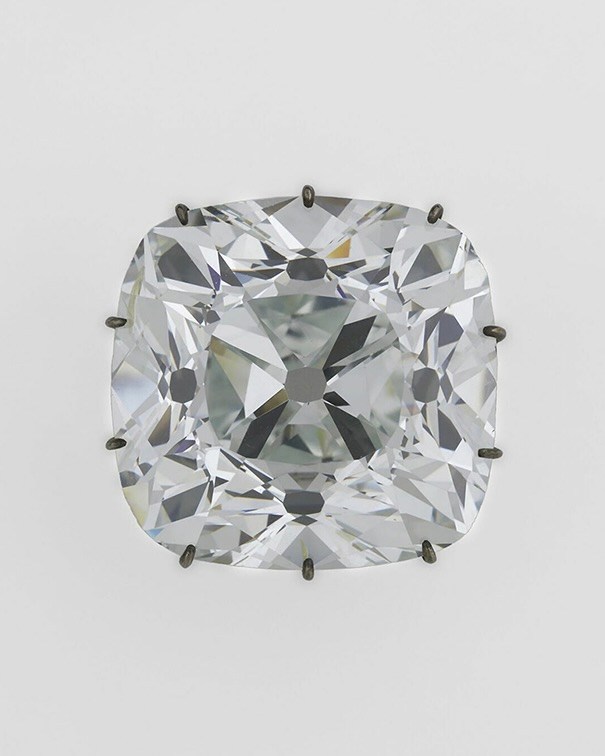
The Regent diamond had a macabre start, like many other cursed diamonds. The Regent Diamond‘s extraordinary history begins with a tale of intrigue and betrayal. According to legend, an enslaved man discovered the stone in an Indian mine in the early 18th century and concealed it inside a self-inflicted wound to smuggle it to freedom. But the story took a tragic turn when an English sea captain, who had promised to help him escape, allegedly murdered him and claimed the diamond for himself.
The 140.64-carat diamond was later acquired by Philippe II, Duke of Orléans, and became one of the most celebrated treasures of the French Crown Jewels. It adorned the crowns of French kings before disappearing during the French Revolution, only to reemerge as the centerpiece of Napoleon I‘s ceremonial sword. (That must have been a heavy weapon).
Interestingly, Napoleon is said to have considered the diamond a lucky charm. Whether it brought him good fortune is another matter: Following his defeat at Waterloo, the emperor was exiled to the remote island of Saint Helena, where he died at 51.
More than three centuries after its discovery, the Regent’s remarkable history nearly gained another chapter. During the daring 2025 heist at the Louvre, thieves made off with eight pieces of the French Crown Jewels, but left the Regent untouched. Perhaps this legendary diamond does have a little luck of its own.
The Black Orlov’s Mysterious Origins
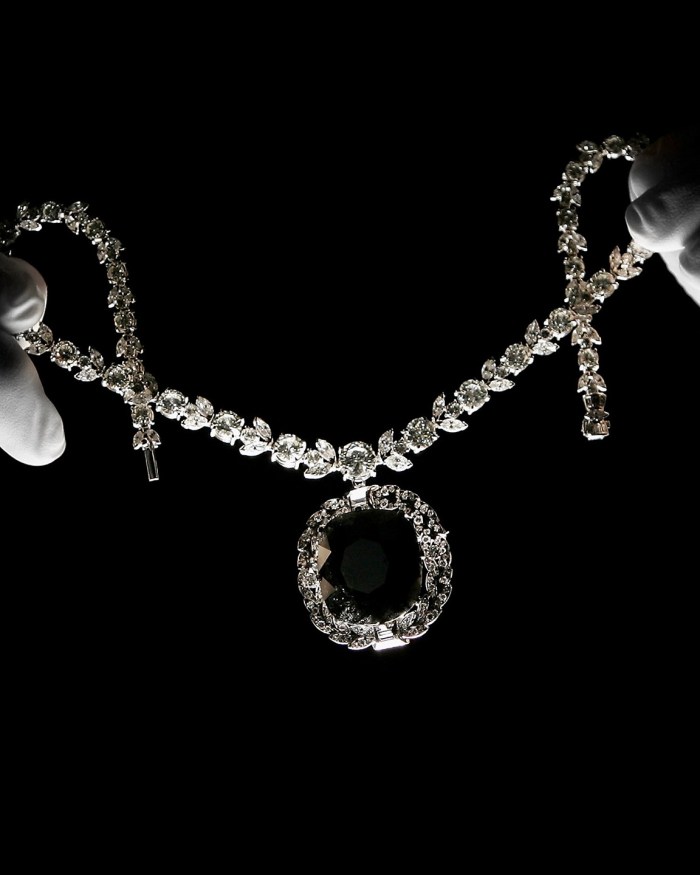
The Black Orlov‘s mysterious reputation begins with an extraordinary legend. According to folklore, the original 195-carat black diamond was once set into the eye of a Hindu statue of Brahma, until a monk stole the stone and allegedly met a violent end. Whether fact or fiction, the tale helped establish the diamond’s reputation for bringing misfortune to anyone who possessed it.
The legend only grew stranger from there. After disappearing from the historical record for decades, the diamond reportedly resurfaced in 1932 in the possession of jewelry dealer J.W. Paris, who is said to have died by suicide after his business failed. Two Russian princesses were also rumored to have suffered similarly tragic fates, although the historical evidence connecting them to the diamond remains elusive.
Perhaps the most curious chapter in the Black Orlov’s history came in the 1950s, when the diamond was reportedly recut in an attempt to break its curse. The resulting 67.50-carat stone retained its extraordinary beauty, along with the legends that had followed it for generations. It later appeared at a Christie’s auction in 2006. Whether its supposed curse was ever broken remains a matter of folklore, but its mystique has proved remarkably enduring.
The Moon of Baroda’s Hollywood Mystique
The story goes if the Moon of Baroda diamond crosses the sea or ocean, it will bring bad luck to its owner. Sadly, the rumors appear to be true, earning it a notorious place among history’s most famous cursed diamonds.
Originally discovered about 500 years ago in India’s Golconda region, the fancy yellow diamond was shaped into a 24.04 carat pear-shaped stone. For centuries, it was held by the Gaekwads of Baroda, a royal Indian dynasty that ruled much of the western country for some 200 years.
In the mid-1700s, it was briefly owned by the Empress Marie Thérèse of Austria, the mother of the ill-fated Marie Antoinette. After her death, it was returned to the Gaekwad family. Some believe her demise was because of the cursed diamond crossing the sea.
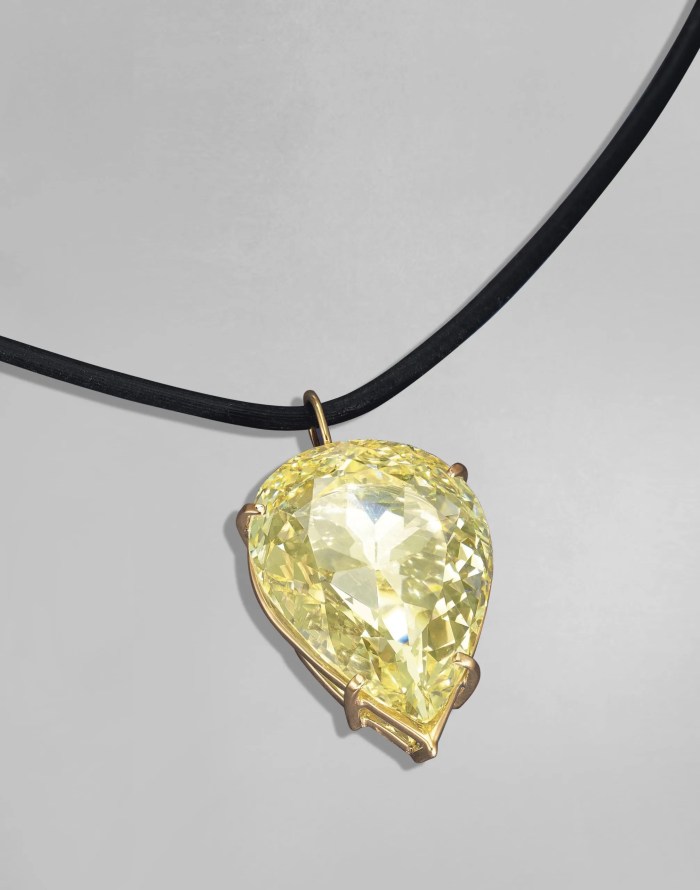

In 1953, the Moon of Baroda was purchased by Meyer Rosenbaum of Meyer Jewelry Company in Detroit. A clever marketing man, he placed the exceptional diamond on a leather cord (a rebellious move at the time) and offered it to Marilyn Monroe to wear while filming the 1953 movie Gentlemen Prefer Blondes. The blond bombshell made the diamond famous. But that same year, Monroe’s career and personal life took a downward spiral.
The Moon of Baroda was recorded in auction sales in 1990 and 2018, and its owners chose to remain anonymous, so we don’t know their fate.
The legends surrounding cursed diamonds may be chilling, but they only add to the allure of these extraordinary natural treasures. With beauty matched only by their dark reputations, cursed diamonds continue to captivate collectors, historians, and romantics alike. Whether you believe in their bad karma or not, one thing’s certain: these stones make for unforgettable stories—and unforgettable jewels.
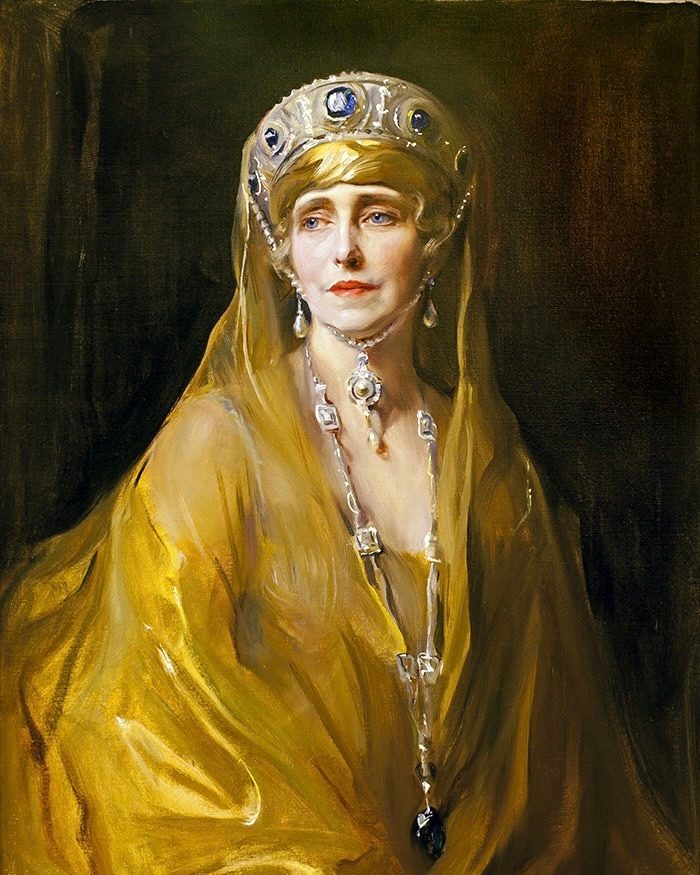
The Lore Behind Queen Marie of Romania’s Lost Diamonds

The Diamonds That Deserve Their Own IMDb Pages
From Audrey Hepburn to Zendaya, diamonds have played some unforgettable roles on the big screen. Consider this their long-overdue screen credit.
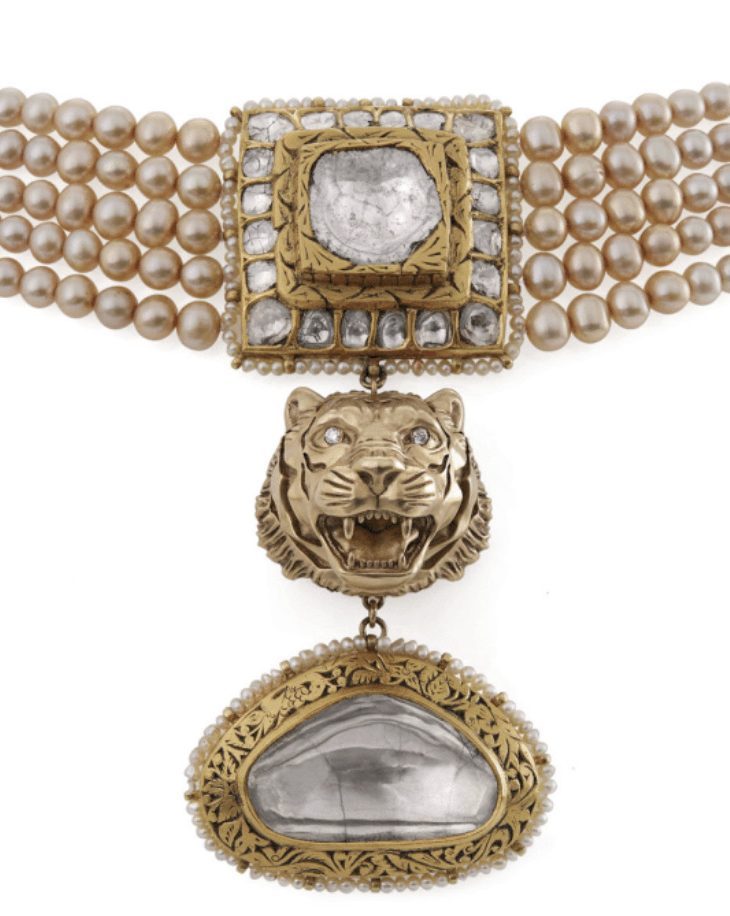
The World’s Oldest Diamond Cut Is Now Everyone’s Favorite
Soft glow, organic shapes, and not a perfect facet in sight. After 2,500 years, polki diamonds still do things their own way.
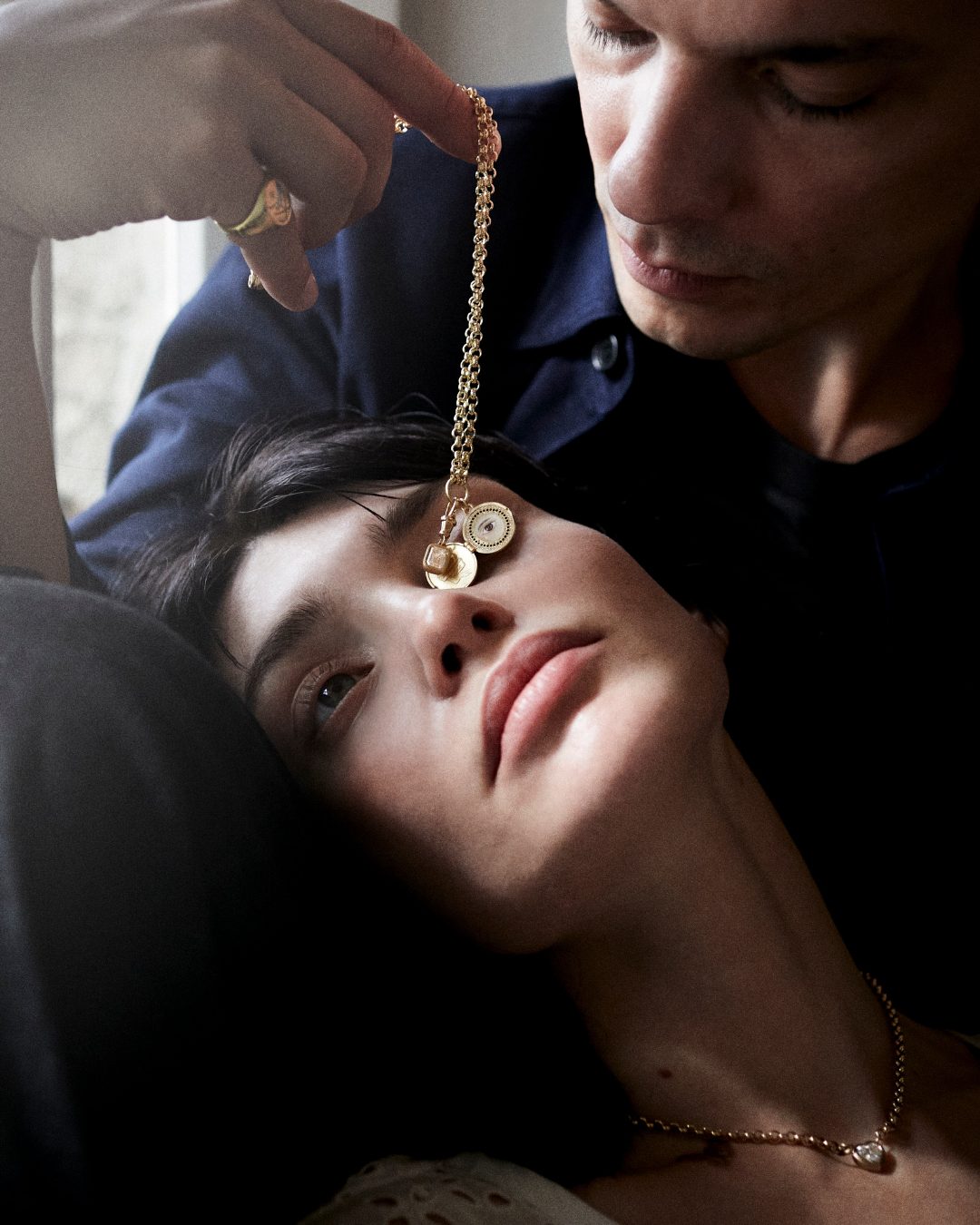
Love at First Sight
The Lover’s Eye jewelry motif took off in the 18th century as a secretive way to keep your beloved close. Now, the trend has bewitched jewelry designers, reinterpreting it through a modern lens.
Get the Newsletter
Sign up for the latest diamond news, delivered directly to your inbox.