Centuries after her death, Marie Antoinette’s diamonds still draw fierce bidding wars, and record-breaking prices. What is it about her jewelry that has such a hold on us?
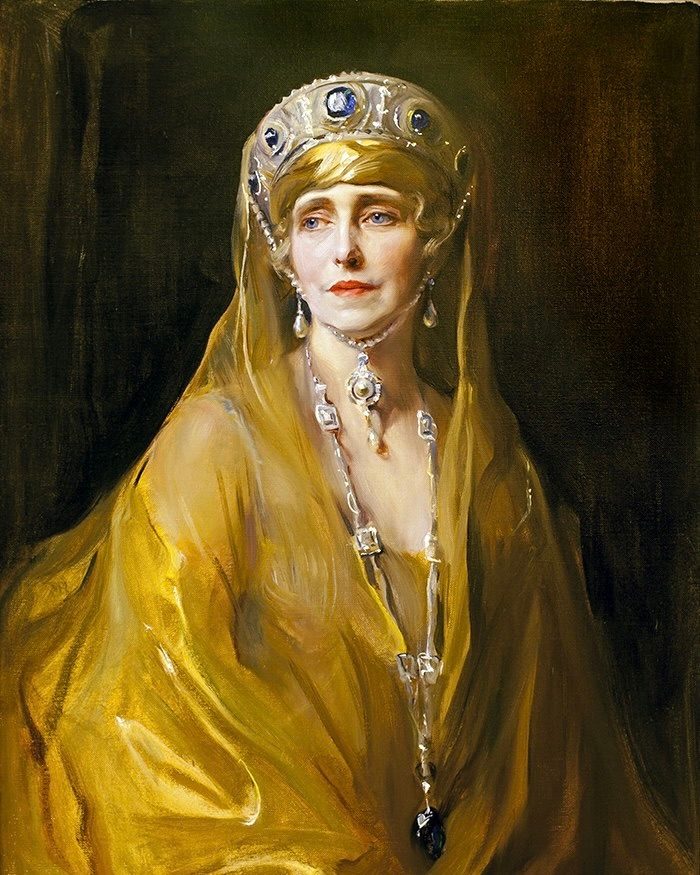
Queen Marie of Romania poses for a painting by Philip de László. (Wikimedia Commons / Public Domain)
The Lore Behind Queen Marie of Romania’s Lost Diamonds
She rejected royal convention, inherited extravagant diamonds, and built a jewelry collection fit for an empress. Then the Russian Revolution changed everything.
If there was ever a Queen who loved the sparkle and glamour of fine heirloom jewelry, it was Queen Marie of Romania. A granddaughter of Queen Victoria on her father’s side, Marie’s mother was the only surviving daughter of Emperor Alexander II of Russia, and the Russian royals had the most impressive jewels in the world.
In her autobiography, “Story of My Life,” Marie proclaimed, “I was a true daughter of Eve and loved clothes, furs, and precious gems.”
Throughout her life, Queen Marie of Romania proved this to be true by reveling in adorning herself with the latest fashions and the most luxurious jewels. She was born in the UK and raised there, as well as in Malta and Coburg, Germany (with regular trips to her mother’s native Russia).
When Marie married the Crown Prince of Romania, she eventually adopted an historical Byzantine style that was more Empress Theodora than Queen Victoria. Marie’s mother hated what she considered this sartorial affectation, begging her daughter to dress more like other princesses, to no avail.
Marie became Queen in 1914 on the death of her husband’s uncle, King Carol I. Under Carol, who was born a German prince, Romania tried to remain neutral but eventually entered the war on the side of the Allies: Britain, France, and Russia.
Marie, being born a British princess, was determined to join the Allies. While Marie got her way in 1916, Romania was quickly occupied by the Germans, and in an effort to protect the country’s valuables, Romania’s gold and the royal family’s jewels were sent for safekeeping to Moscow, Russia.
The Crown Jewel She Coveted
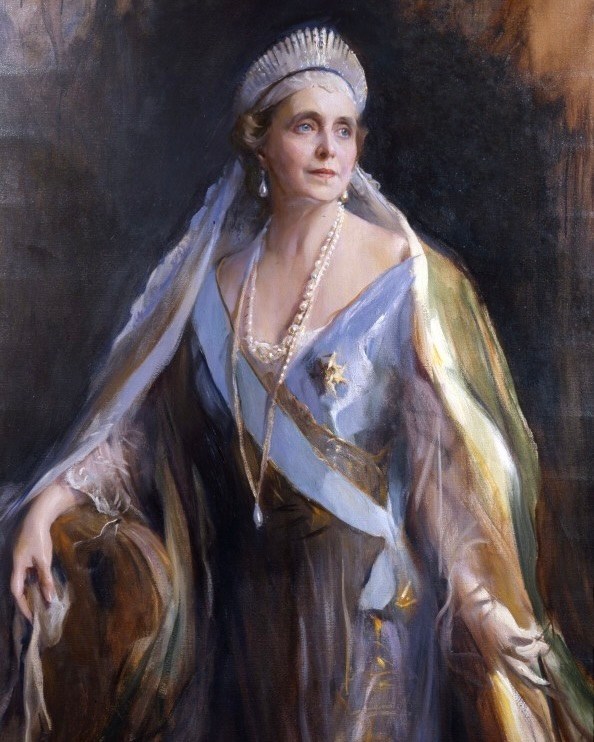
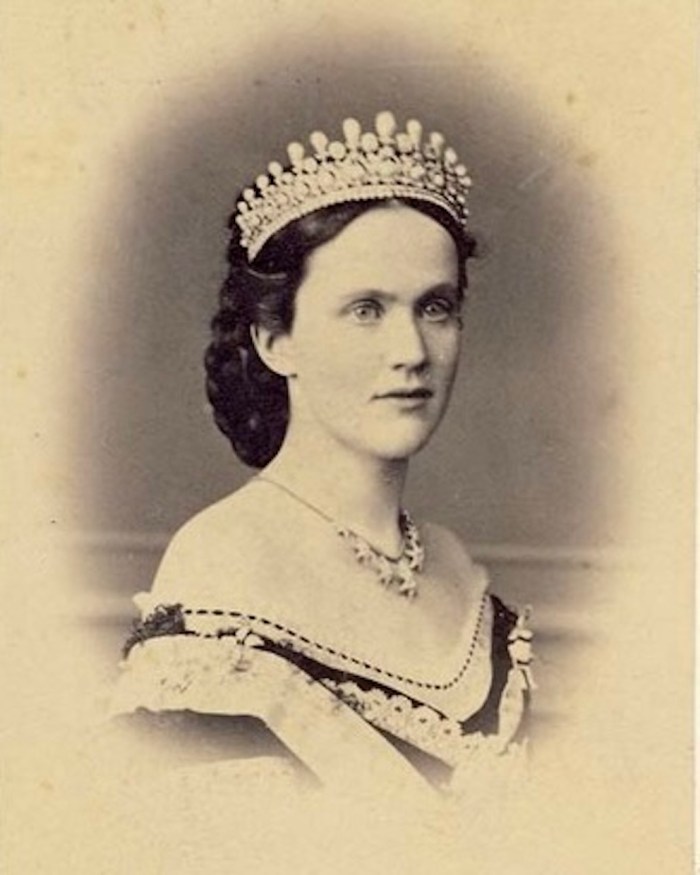
Those jewels included the gifts Marie received from her family when she married the Crown Prince of Romania in 1893. Also included was the Massin tiara, which had belonged to Marie’s predecessor, Queen Elisabeth.
The pearl and diamond tiara had become the signature tiara of the Romanian royal ladies. It was given to Elisabeth by the Association of Aristocratic Women of Bucharest, which in 1869 collectively raised money and commissioned Oscar Massin, a well-known French jeweler, to make a tiara for the Princess who was marrying the then-ruling Prince Carol of Romania. (He was named King in 1881.)
Elisabeth was not particularly fond of jewelry and rarely wore the tiara, but as we’ve seen above, her successor, Marie, adored fine jewelry, which led Elisabeth to loan the tiara to Marie for special occasions like the coronation of Marie’s uncle, King Edward VII of Great Britain, in August 1902.
After the death of King Carol in October 1914, the Dowager Queen Elisabeth decided to gift the tiara to the new Queen of Romania — who was turning 39 on October 29th.
The gift was registered in Monitorul Oficial, the official journal/newspaper of the Romanian government: “My beloved niece, 45 years ago, our beloved Bucharest offered me this beautiful tiara as a wedding present… Today, as a birthday gift, I offer it to you alongside my well-wishes. May you wear it for many years in good health and with a heart full of gratitude. Safeguard this gift as a tender remembrance of the love of our good people for its first King and Queen. Never forget that our people’s love is the most precious jewel one could ever wish for. I embrace you with all my love, Elisabeth.”
You can see that the tiara was so much more than a beautiful diamond- and pearl-encrusted accessory. It was a symbol of the country, the royal family, and the bond between a queen and her people.
The Diamonds Lost to Revolution
Other jewels Marie sent to Russia include the diamond loop tiara, which had been a gift from her mother and had been Marie’s most-worn tiara. Marie had also been given a parure of turquoises and diamonds by her father as a wedding gift.
Queen Marie of Romania had recently had the turquoise parure reconstructed, writing to her mother, “October 29th. My dear Mamma, I woke up with glorious sunshine today after many nasty wet days, and it does make everything so much more cheery! I am 29. Mama, it seems so old. I got some awfully nice presents and many, many beautiful flowers. Nando [King Ferdinand] did not give me anything, as I asked him to have my turquoises mounted as a Xmas & birthday present combined. I want to have my turquoises mounted into a bigger diadem, as the other was so small that it disappeared in my hair, so I put the necklace and old diadem into one new piece.”
The new tiara was in line with Marie’s passion for Art Nouveau and what her mother disparagingly called the “Byzantine Queen” aesthetic. The new tiara consisted of 7 detachable crosses reminiscent of the Teutonic Order — or the Knights of the Cross.
Sadly, Queen Marie of Romania wasn’t able to enjoy the redesigned tiara for long. On January 30th 1918, Marie wrote in her diary: “It seems the Bolsheviks have declared us war and have laid hands upon our treasury at Moscow & with it upon all my jewels that had been sent there during the retreat from Bucharest.” The jewels, along with Romania’s gold reserves, were collateral war damage.
On December 1st, 1918, when Transylvania united with Romania, and the King and the Queen returned victorious to Bucharest after two years of exile, Marie wrote: “We are back! — actually back after two long years of exile! And back — I hardly dare pronounce the word, but all the same it must be said because whatever may follow, today this is the truth: we are back triumphantly! (…) I cannot quite describe what an emotion it was to see the Allied troops [in Bucharest]; it seems so evidently an end of all our troubles, friends at last!”
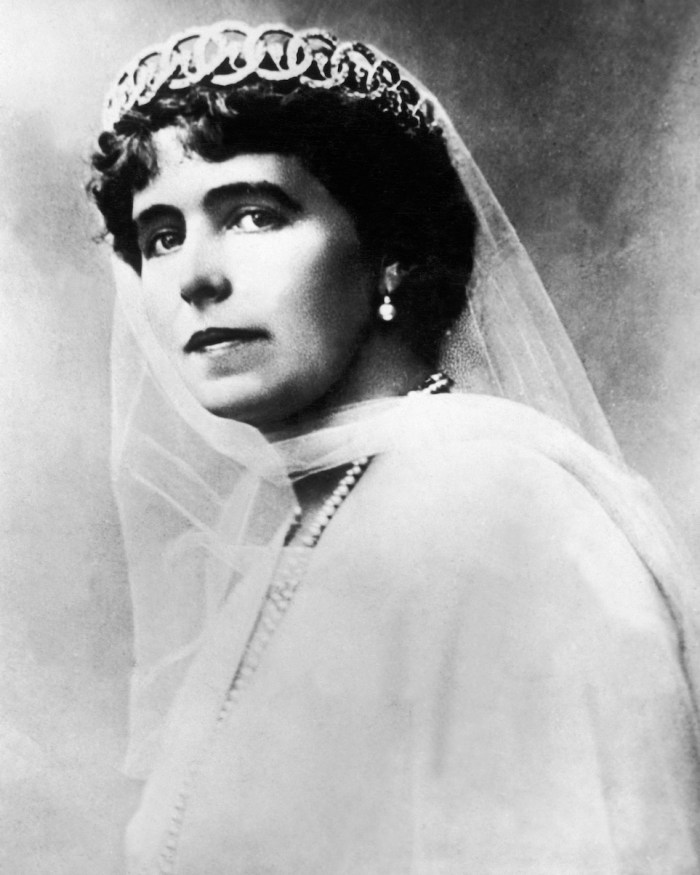
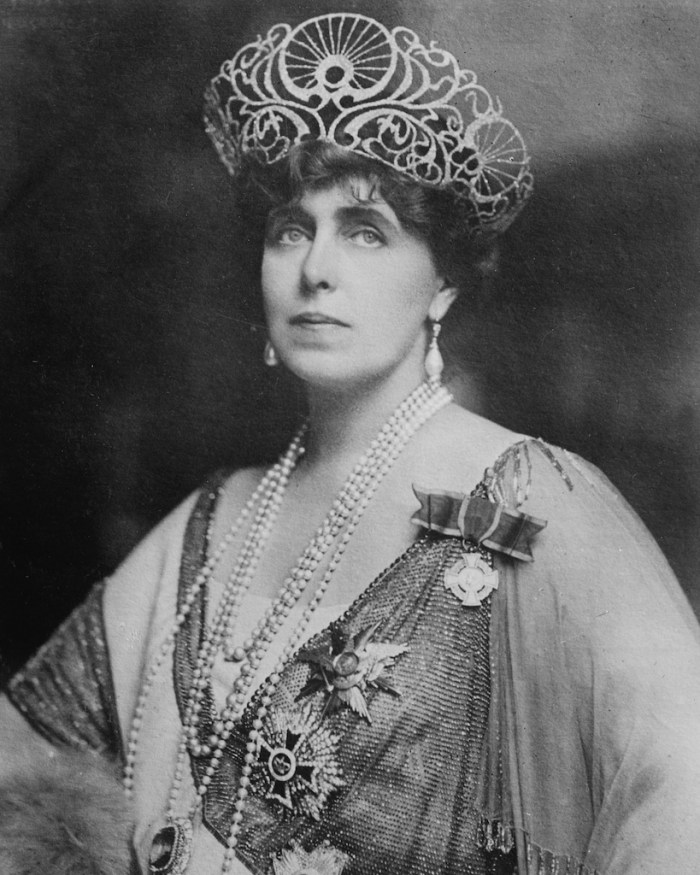
She continued, “We had never seen any Allied troops before, except the Russians, and one knows what sort of allies they were! (…) The church ceremony was short and solemn. A curious feeling of satisfaction came over me as I looked around upon the church filled with French and English officers. It was very wonderful, and I thanked God from the depth of my heart. (…) I made myself as smart as I could [for the gala dinner], but having no jewels of any kind, I cannot give to myself those bright final touches which certainly aid to the dignity of a Queen’s attire. All my jewels are — or are not? — at Moscow. It may be that I shall never see them again.”
Not surprisingly, the Bolsheviks ‘lost’ the Romanian jewels. The new Russian regime established the State Repository of Valuables to catalog the Romanov jewelry. Some jewels were dismantled to sell the stones, and others were sold at Christie’s and Sotheby’s years later when the regime needed money. We can assume the Romanian jewels were also dismantled and sold off.
Sadly, Queen Marie of Romania wasn’t the only one to lose her jewels to the Bolsheviks.
A Royal Heirloom Reimagined
Her cousin, Victoria of Hesse, Marchioness of Milford Haven, was visiting her sister, Empress Alexandra of Russia, and ended up leaving her jewels in Russia for safekeeping. Among the jewels she lost was the Mountbatten Pearl Star tiara, which had been a wedding gift from Queen Victoria.
It was this tiara that Victoria Milford Haven’s daughter, Princess Alice of Battenberg, wore at her 1903 wedding to Prince Andrew of Greece. Of course, these were the future parents of Prince Philip, Duke of Edinburgh. After losing the star tiara to the Bolsheviks, her aunt, Princess Louise, Duchess of Argyll, gifted Victoria another diamond and pearl star tiara, which is still in the family.
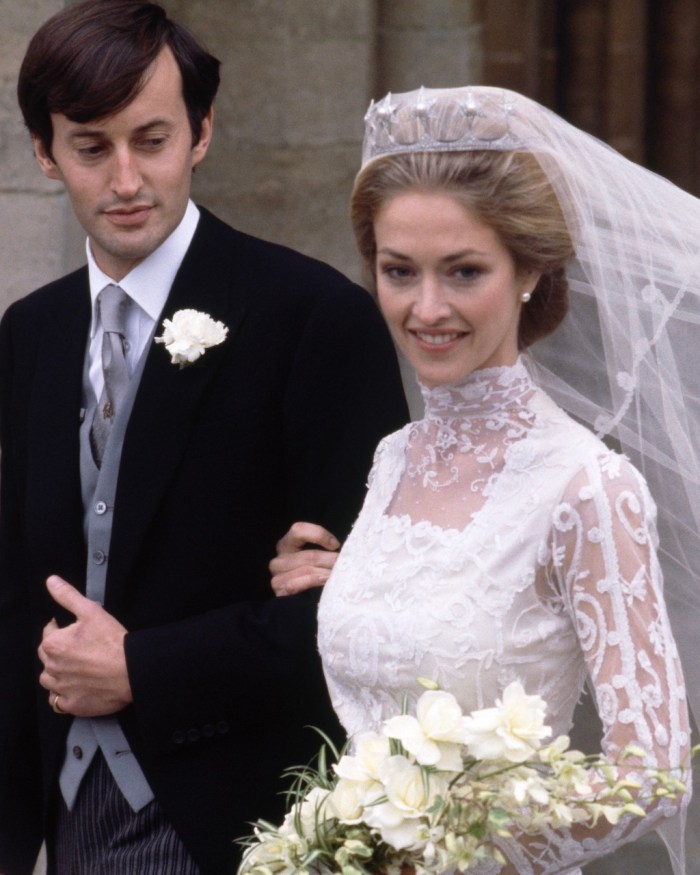
The new tiara went on to become a Mountbatten family wedding tradition. Victoria’s granddaughter, Patricia Mountbatten, wore it when she married Lord Brabourne in 1946. More than three decades later, Patricia’s daughter-in-law, Penelope Eastwood, wore the same tiara for her 1979 wedding to Lord Romsey. It made another appearance in 2016, when Penelope’s daughter, Lady Alexandra Knatchbull, chose it for her wedding to Thomas Hooper.
If there is a silver lining to this story, it’s that Romania was on the winning side of the war and Marie was able to buy new jewels.
Her Russian family, who escaped the revolution, managed to bring out some of their incredible jewels. Marie was able to pay them a fair market rate, which was a blessing to the royal refugees.
Also, Marie’s mother, the Dowager Duchess of Coburg, passed away in 1920, leaving her legendary jewels to her 4 daughters. Still, it’s heartbreaking when historic heirloom jewels are lost, particularly as was the case with most of the pieces expropriated by the Bolsheviks; they were broken up, with the stones sold individually.
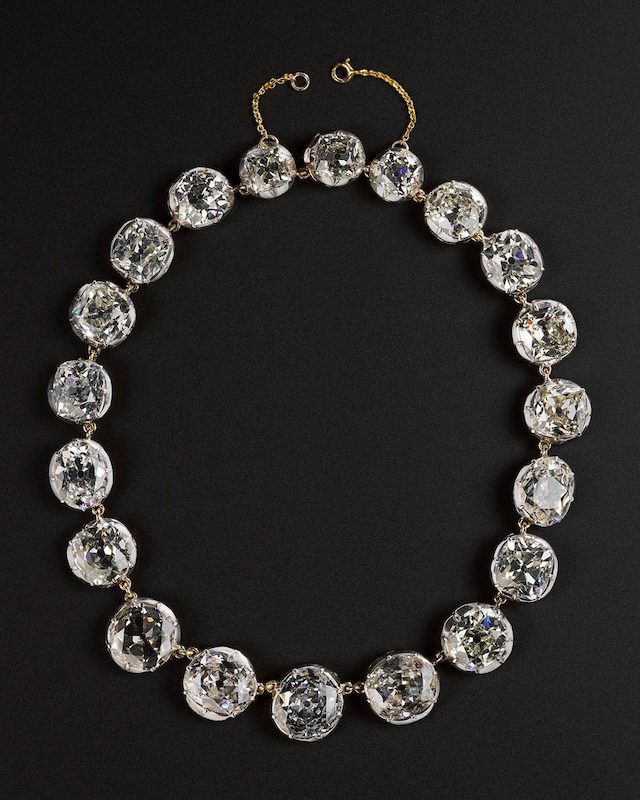
The Secret Lives Of Marie Antoinette’s Diamonds
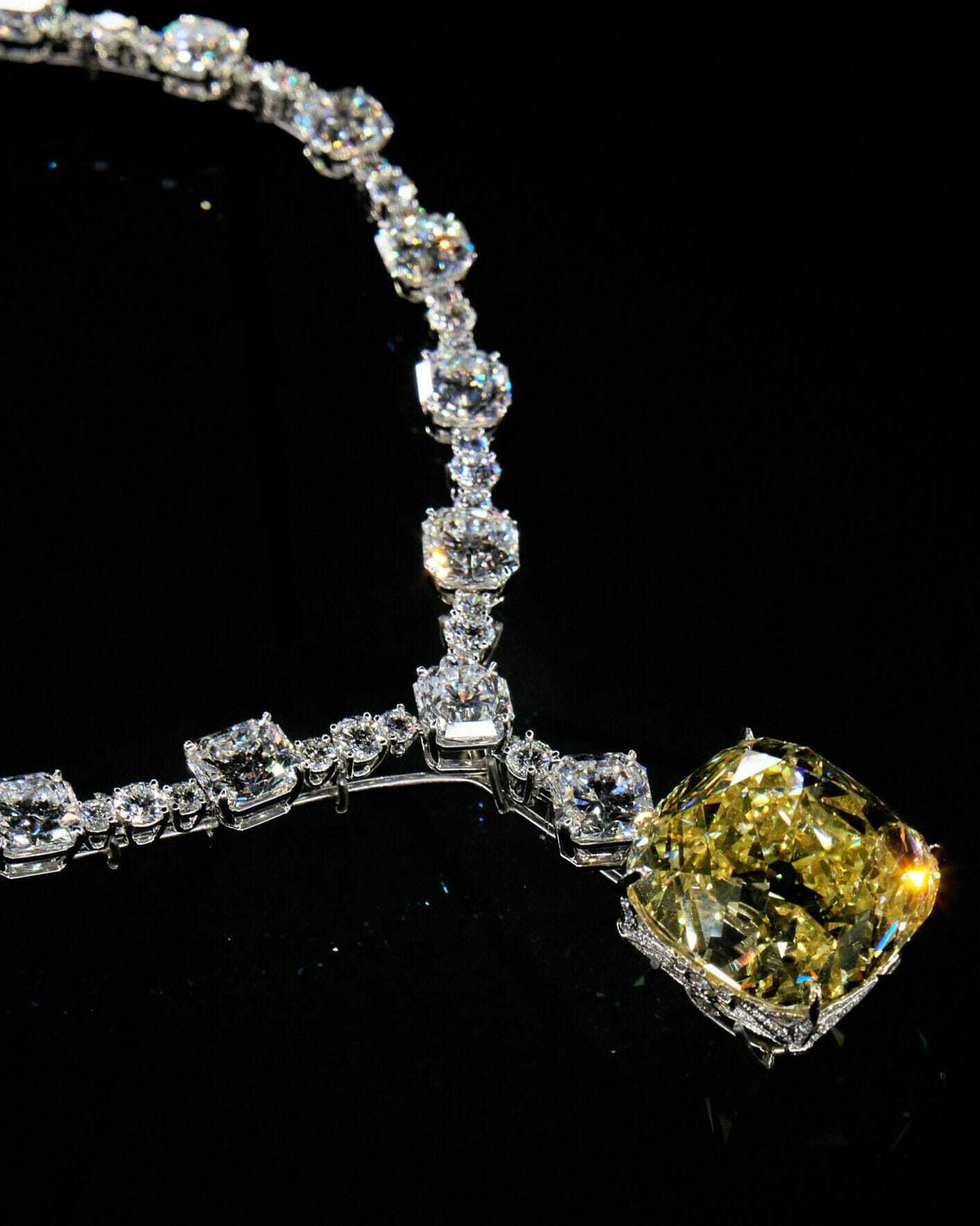
Just Four Women Have Ever Worn the Iconic Tiffany Diamond
One socialite. One Hollywood icon. One Mother Monster. One Sasha Fierce. Meet the legendary yellow diamond that only four women have ever worn.
168 Years of Boucheron Just Landed in New York
Diamond-covered ivy, couture-inspired jewels, and surprises from the archives. Boucheron teams up with Christie’s to show New York what it’s made of.
The Return of Shaun Leane: McQueen’s Most Daring Jewelry Collaborator
As a close friend and collaborator of the late Lee Alexander McQueen, the fine jeweler brought his goldsmithing techniques to fashion. Seán McGirr just tapped him for a new partnership.
Get the Newsletter
Sign up for the latest diamond news, delivered directly to your inbox.