Portrait of Queen Marie Antoinette of France with her daughter Marie-Thérèse and son, the first Dauphin Louis Joseph Xavier Francois, by Adolf Ulrich Wertmuller (Getty Images)
The Secret Lives Of Marie Antoinette’s Diamonds
Centuries after her death, Marie Antoinette’s jewelry still draw fierce bidding wars and record-breaking prices. What is it about her that has such a hold on us?
Vincent Meylan held Marie Antoinette‘s diamond bracelets near the window, watching them sparkle and dance in the afternoon light with an almost otherworldly radiance. “They might be the finest jewelry pieces I’ve ever held,” said the historian, author, and royal jewelry expert, who had custody of the jewels on several occasions during his research.
It seems Marie Antoinette’s jewelry cast an irresistible spell on people—even seasoned experts who have handled the world’s most exquisite jewels. “To hold something that once belonged to Marie Antoinette is to hold a piece of history,” says Rahul Kadakia, the International Head of Jewelry at Christie’s. “It’s deeply emotional. My immediate response was one of profound respect—not only for the jewels themselves but for the extraordinary journey they had taken to arrive at that moment.”
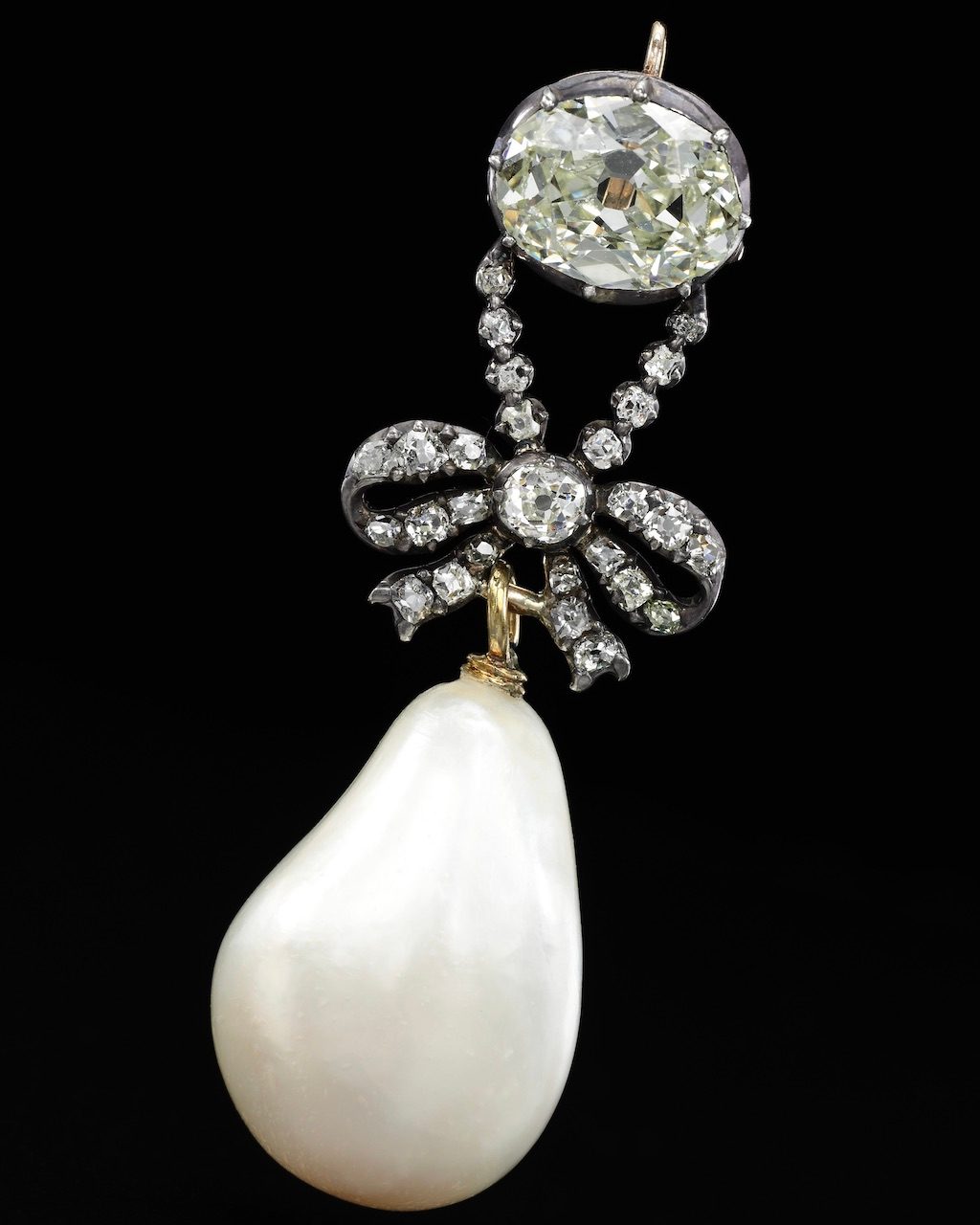
At Sotheby’s, the reaction has become so familiar that it has a name: the “Marie Antoinette effect.” The phenomenon was on full display in 2018, when the auction house sold a diamond and pearl pendant for a staggering $36 million, more than 36 times its pre-sale estimate.
So what is it about Marie Antoinette and her diamonds that still sends collectors into a frenzy? More than 200 years later, the answer is part style, part history and part enduring mystery.
The Marie Antoinette Effect Is Legit
“We use the term Marie Antoinette effect when bidding goes completely wild because people realize they’re not simply buying a jewel or accessory—they’re acquiring a piece of history,” explains Andrés White Correal, Sotheby’s Chairman for Jewelry in Europe and the Middle East, who leads the house’s Royal and Noble Jewels auctions. “There’s an aura surrounding these pieces, and something happens that no one can quite predict.”
While countless royal and celebrity jewels have crossed the auction block over the years, nothing has captured the public imagination quite like Marie Antoinette’s jewelry. We’ve witnessed this phenomenon repeatedly over the past decade as several of her jewels have surfaced at auction, often commanding record-breaking prices and generating extraordinary media attention.
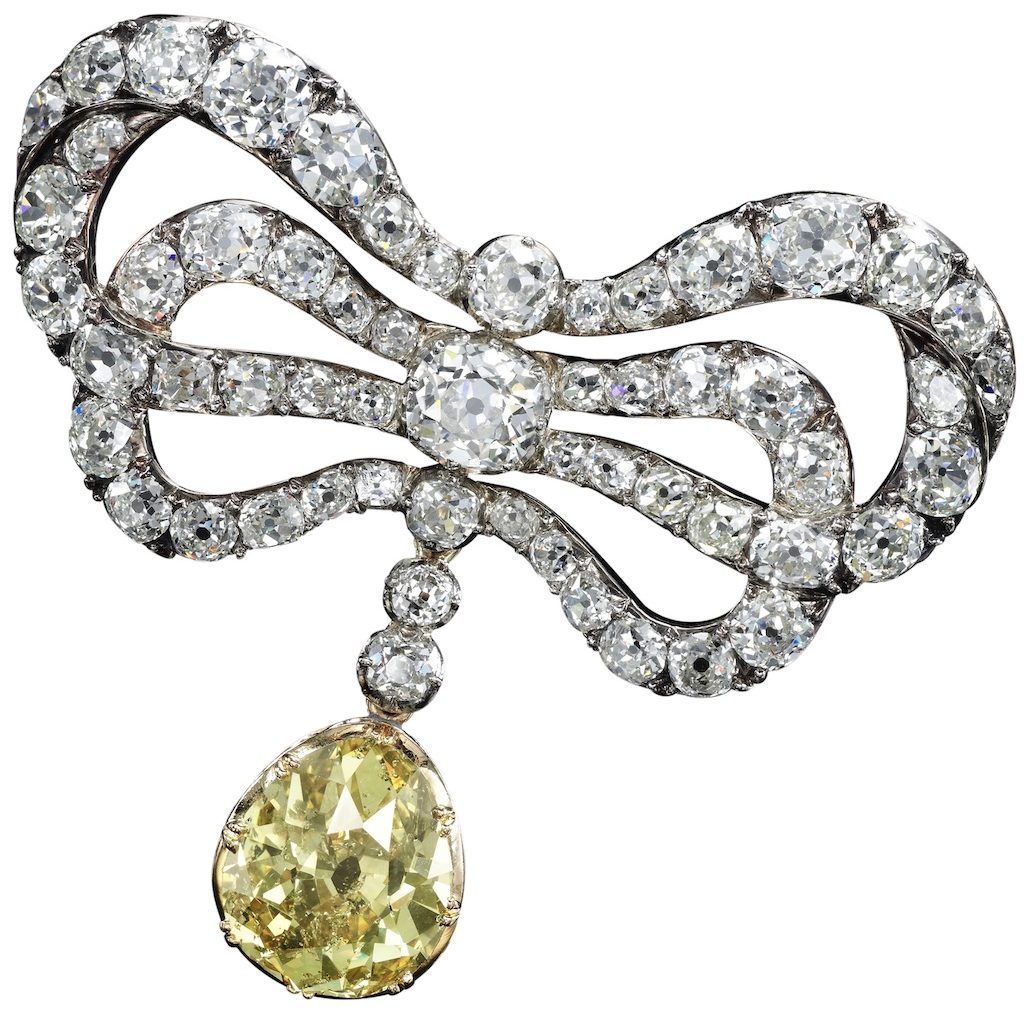
Marie Antoinette’s Yellow Diamond Brooch from the 18th Century (Courtesy of Sotheby’s)
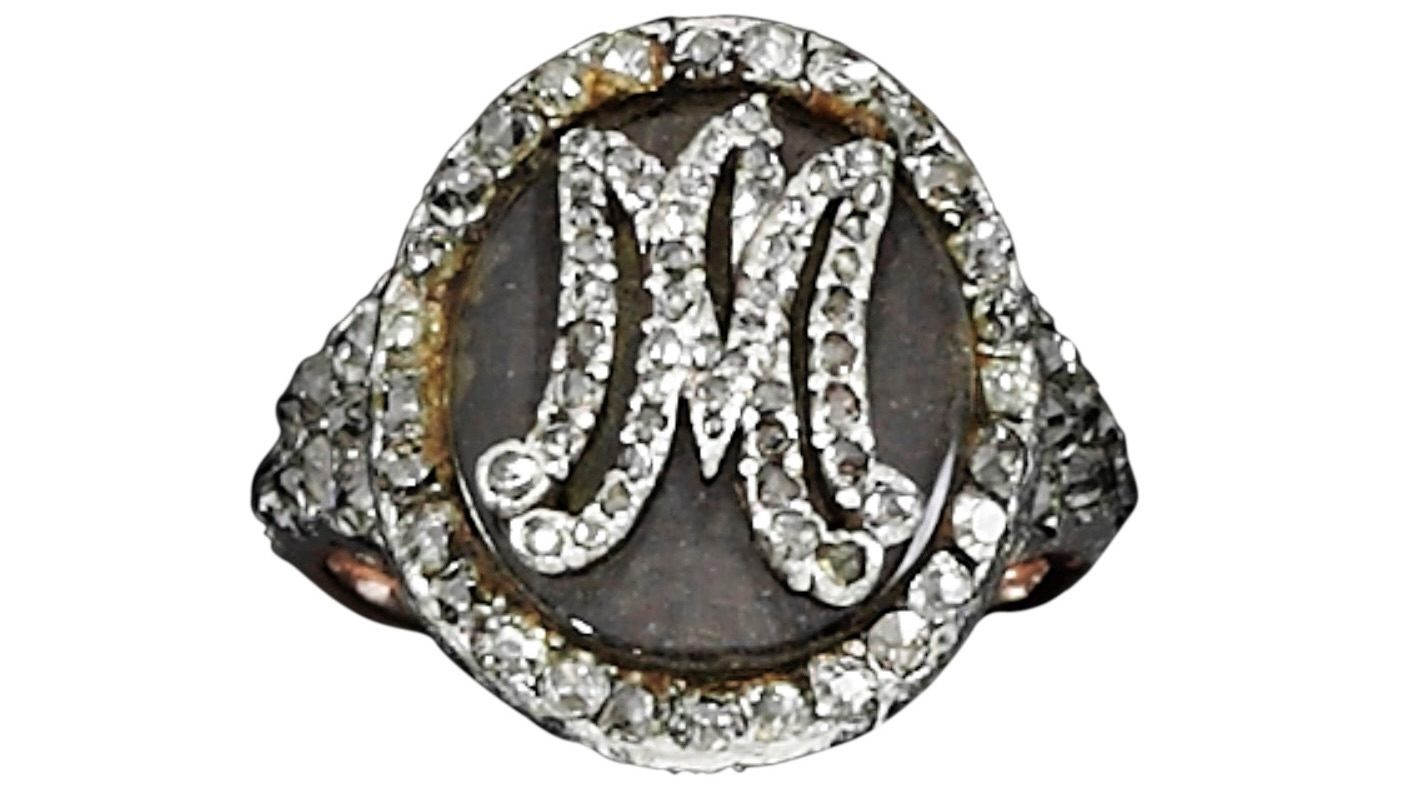
Diamond and Woven Hair ring with rose-cut diamond monogram MA for Queen Marie Antoinette. (Courtesy of Sotheby’s)
Her Jewels Were Way Ahead of Her Time
Forget the idea of royal jewelry as heavy, formal, and impossible to imagine wearing now. Marie Antoinette’s pieces could feel remarkably personal. The queen’s jewels were stylish, timeless, and elegant, but not over-the-top as one might expect. A pair of large, breathtaking natural pearl drop and diamond earrings, for instance, are just as timely today as they were 200 years ago.
She commissioned graceful diamond bow brooches, each magnificently articulated, a testament to her eye for quality craftsmanship and exceptional diamonds. A standout was the double-ribbon diamond brooch featuring a large cushion-shaped yellow diamond drop.
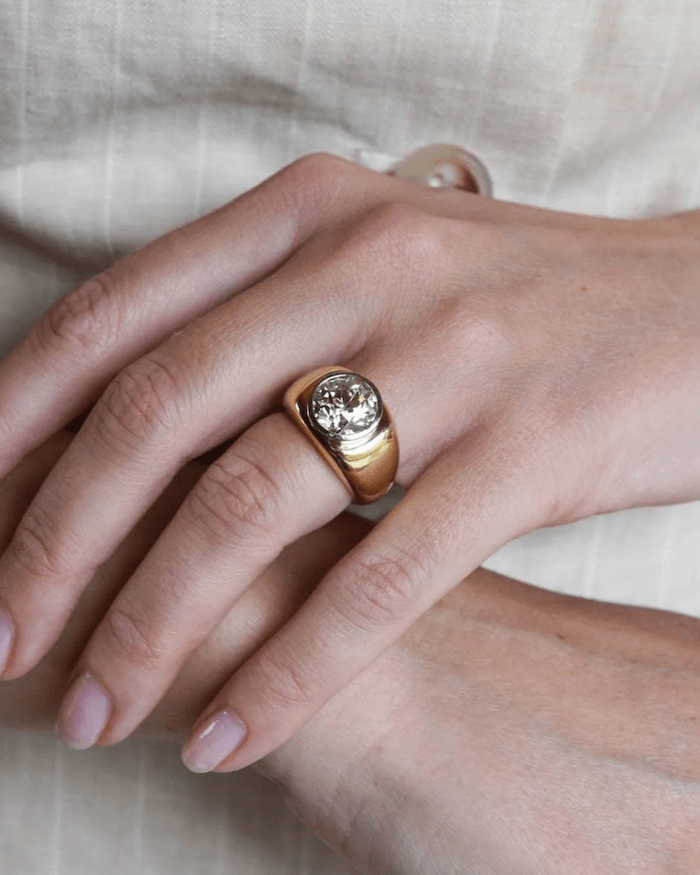
She even had her initial M emblazoned in diamonds on a signet ring, something as popular as ever today. One of the most poignant pieces was a diamond ring featuring her painted portrait.
How Marie Antoinette Became an Eternal It Girl
The enduring fascination with Marie Antoinette’s jewelry speaks to something deeper than mere material value—it’s the allure of a tangible connection to one of the most captivating and controversial figures of the 18th century.
Had Marie Antoinette lived a long and happy life, would we still be as captivated by her? Perhaps not, says Meylan, who believes her rise and tragic fall contributed to the world’s endless attraction with the royal, who at age 37, was convicted of treason and executed by guillotine in 1793.
“In France, we have two contrasting images of Marie Antoinette,” Meylan explains. “One is an awful, foolish woman who bought too many dresses and diamonds, and the other is a courageous woman who changed after she had children seven years into the marriage; she became quieter and enjoyed family life. The day she died, when she was paraded in the streets of Paris, she became an icon of dignity and courage.”
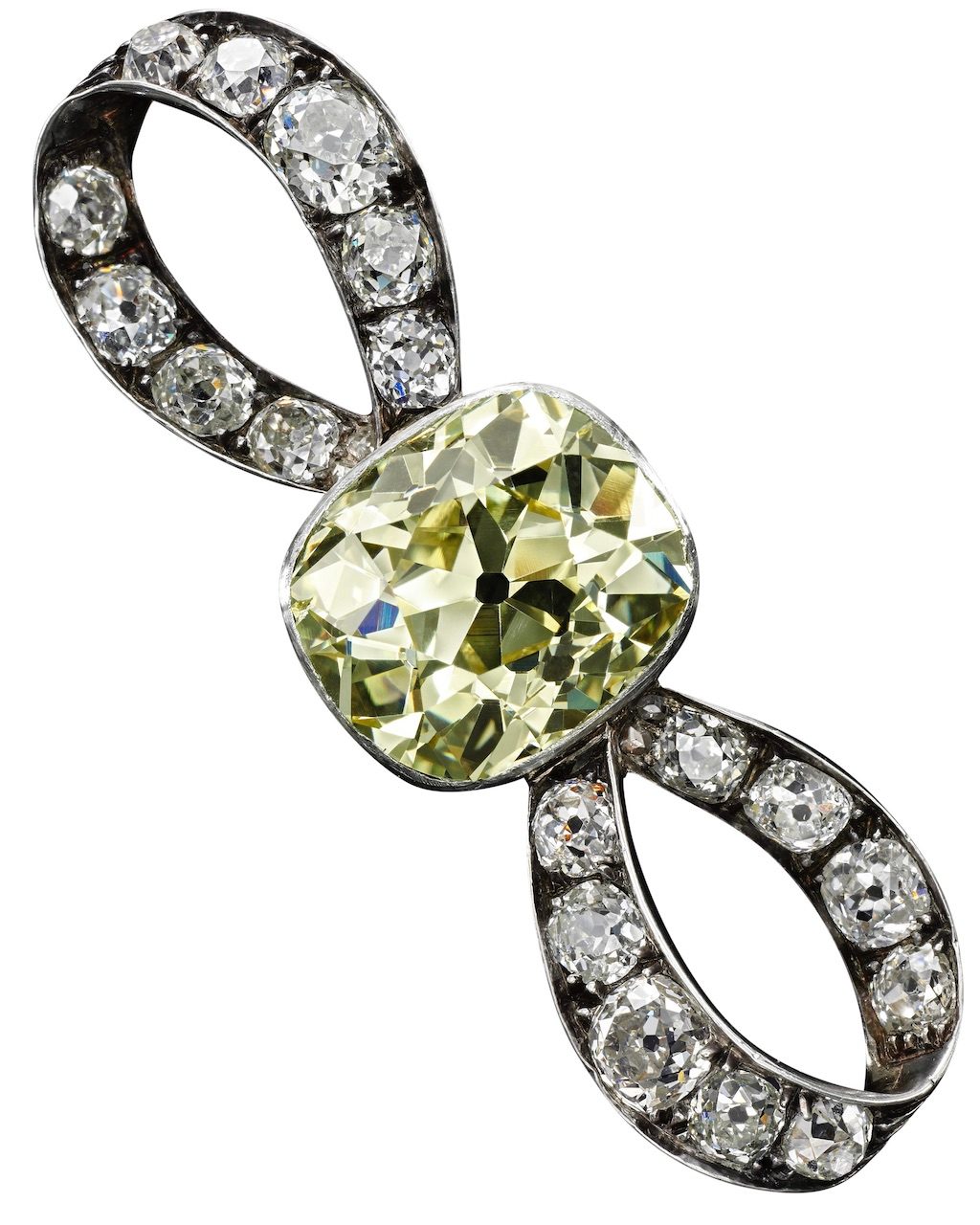
Yellow Diamond Brooch (Courtesy of Sotheby’s)
Whether you are in the camp of the queen as heroine or hedonist, she no doubt had fabulous taste. Two hundred years after her death, the attraction continues, as evidenced by the new exhibit at London’s Victoria & Albert Museum, “Marie Antoinette Style,” sponsored by Manolo Blahnik, who also created a capsule collection for the occasion inspired by the fanciful footwear he designed for Sophia Coppola’s 2006 film Marie Antoinette. The exhibit features 250 objects, including Marie Antoinette’s jewelry, clothing, and personal belongings, on view until March 22, 2026. The exhibit features the $36 million natural pearl and diamond pendant, as well as the double-ribbon bow brooch with a yellow diamond, which sold at Sotheby’s.
The queen’s legendary appetite for jewels is remarkably well-documented—miraculously, the receipts survived centuries. She personally commissioned many pieces, revealing her penchant for feminine, fashionable jewelry with a particular passion for diamonds. Her lavish aesthetic was memorably captured in Coppola’s film, a visual feast that presented the young queen in layers of satin, lace, and jewels, surrounded by dreamy pastel-hued cakes. Now a cult classic, the movie depicted her as a frivolous, trendsetting figure.
The Diamond Bracelets That Survived A Revolution
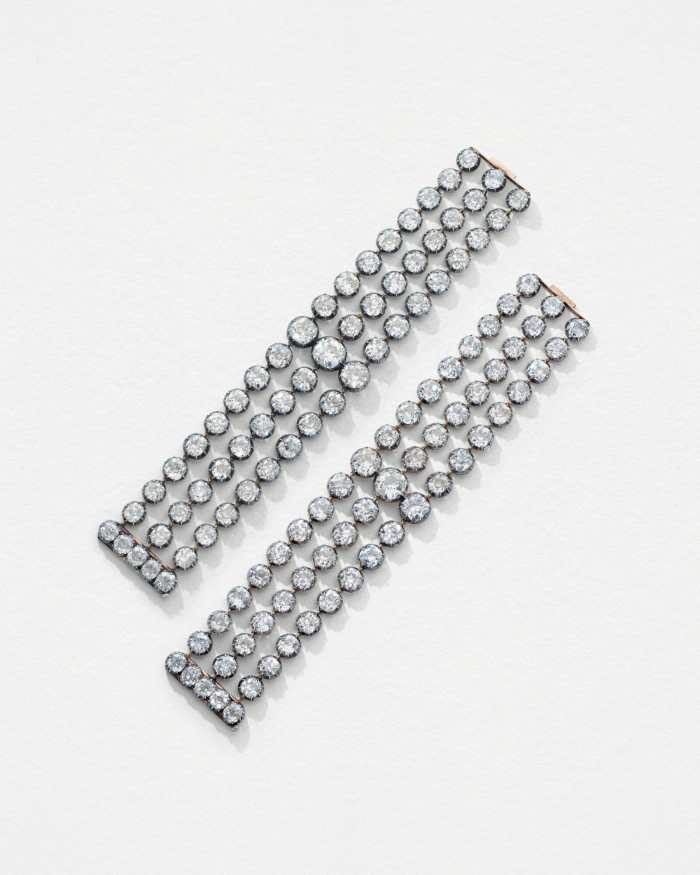
Among the jewels that survived her extraordinary story, few capture her taste quite like her diamond bracelets. More than two centuries later, they barely look their age.
“Marie Antoinette’s taste in jewels was, quite simply, exceptional,” says Kadakia at Christie’s. “Her collection reflected both the opulence of the French court and her personal sensibility—a refined blend of elegance, modernity, and understated luxury. While the pieces were undoubtedly lavish in materials—diamonds, pearls, and the finest craftsmanship of the time—they also conveyed a certain lightness and femininity. I would describe her taste as timeless and confident.”
That brings us back to the exquisite diamond bracelets, which Meylan, who researched their provenance for Christie’s and his book on Marie Antoinette’s jewelry, describes as “magnificent and quite modern.” He discovered the receipt for the bracelets in King Louis XVI’s personal papers, for which he paid Boehmer jeweler 250,000 livres (about $4.6 million today) in 1776. The set of matching three-strand diamond bracelets features 112 diamonds weighing a total of about 145 carats. In 2021, Christie’s sold the bracelets for $8.2 million, well above the $2 million to $4 million estimate.
“The diamonds are of such high quality,” says Meylan. “You could easily make 70 very nice engagement rings from these bracelets.”
So who paid $8.2 million for them? It’s still a secret. “Whether they are wearing them or keeping them in a vault, I can’t say,” says Kadakia. “But I do know that the decision to acquire them was born of a true passion for history, heritage, and beauty—not merely for bragging rights, but to become a custodian of legacy.”

“Marie Antoinette’s taste in jewels was, quite simply, exceptional.”

The Earrings That Kept Traveling
Marie Antoinette’s eye for exceptional diamonds is also exemplified by a pair of earrings now housed in the Gem Gallery at the National Museum of Natural History in Washington DC.
“The pear-shaped diamonds in Marie Antoinette’s earrings are 14.25 and 20.34 carats each, which are very large by today’s standards—and enormous by the standards of the day,” says Gabriela A. Farfan, Ph.D., Coralyn Whitney Curator of Gems and Minerals at the Smithsonian Institution.
Their journey to Washington was anything but direct. These earrings were part of the French crown jewels. Napoleon III gave them to his wife, Empress Eugénie, at their wedding, and she later sold them to the Russian royal family. In 1928, Pierre Cartier purchased them. That same year, American socialite and heiress Marjorie Merriweather Post acquired them, commissioning Harry Winston to create new platinum settings for the historic stones. The earrings found their permanent home at the Smithsonian in 1964, when Post’s daughter, Eleanor Barzin, donated the earrings with their original settings to the museum.
“Even though we are a Natural History collection, iconic pieces of jewelry with rich histories like the Marie Antoinette earrings are excellent at engaging visitors and introducing them to gems and minerals,” Farfan notes.
How Her Jewels Escaped the Revolution
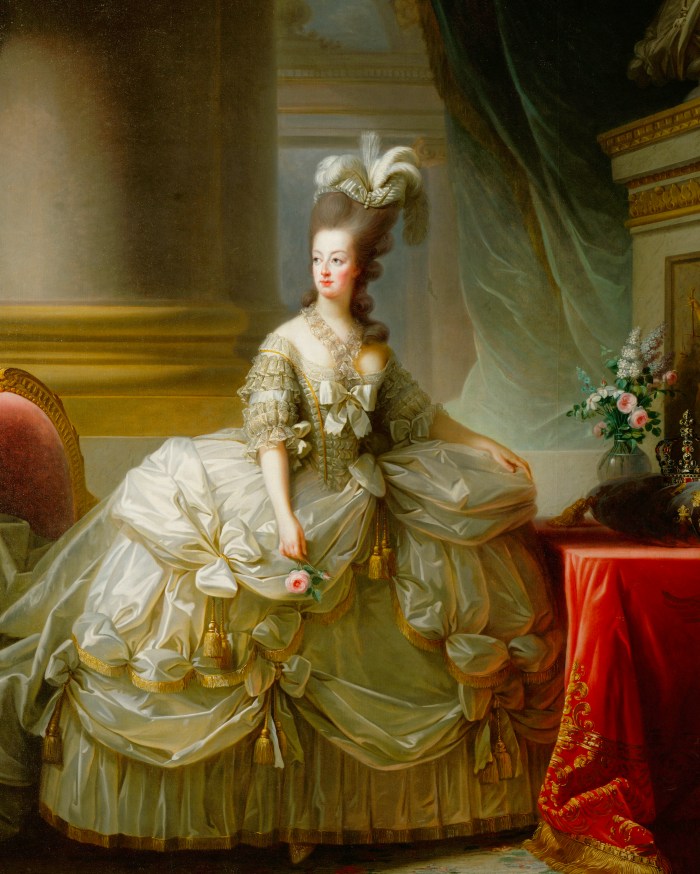
The fact that so much of Marie Antoinette’s jewelry survives at all is remarkable. In 1791, while imprisoned in the Tuileries Palace, she smuggled her jewelry out in a wooden chest, which was sent to Vienna in the care of Count Mercy-Argenteau. Marie Antoinette’s jewelry was given to the king and queen’s only surviving child, Marie-Thérèse of France, later Duchess of Angoulême. Upon her death in 1851, she bequeathed them to her niece, the Duchess of Parma. Over the next 175 years, they passed down through the royal House of Bourbon-Parma, and remarkably, most stayed within the family.
Then, in 2018, the vault effectively opened. The Bourbon-Parma family put 100 treasures up for auction at Sotheby’s in Geneva, including 10 pieces of Marie Antoinette’s jewelry. The sale’s value surpassed $53 million, setting a record for a royal jewelry auction. The star was the queen’s pearl pendant, followed by a three-strand necklace strung with pearls from the queen’s personal collection for $2.3 million, a yellow diamond brooch for $2.1 million, and a monogrammed diamond ring bearing the initials MA and containing a lock of her hair for $443,786, 50 times its estimate.
The auction was a highlight of Correal’s 25-year career at Sotheby’s. His client purchased nine of the 10 items belonging to the queen, he said. “The jewelry makes people dream,” he says of the queen’s pieces. “Historically, people saw those jewels when kneeling before crown heads, and now they have a chance to own them, to hold history in their hands.”
The 300-Carat Necklace Marie Antoinette Never Even Bought
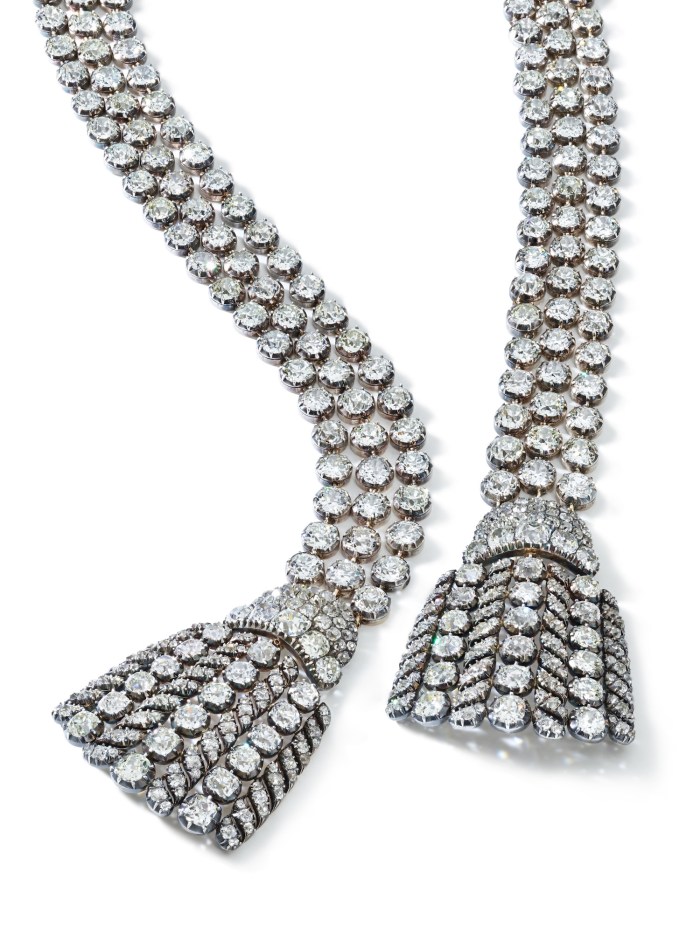
Even a jewel merely linked to Marie Antoinette can cause a stir. Sotheby’s sold a diamond necklace in November 2024 for $4.8 million. The Georgian necklace, featuring approximately 500 diamonds and known as the Anglesey necklace, has been associated with one of the most infamous scandals of the French court.
She was falsely accused of purchasing the necklace and refusing to pay, when in reality, a woman posing as Marie Antoinette and a cardinal orchestrated the scheme and implicated the queen. Over the decades, the scandal has been retold in books and inspired the 2001 film The Affair of the Necklace.
The 10.38-Carat Pink Diamond with a Royal Mystery
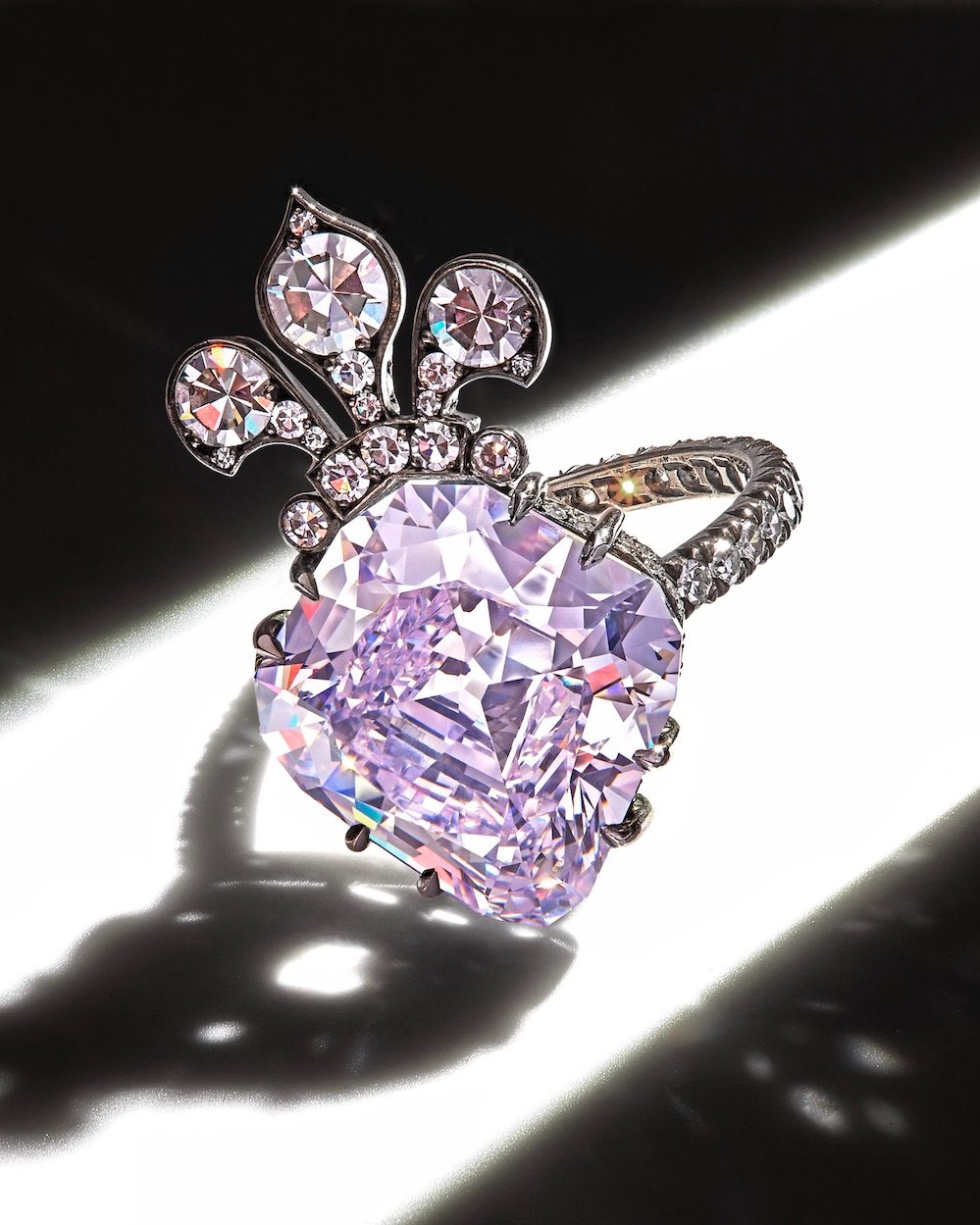
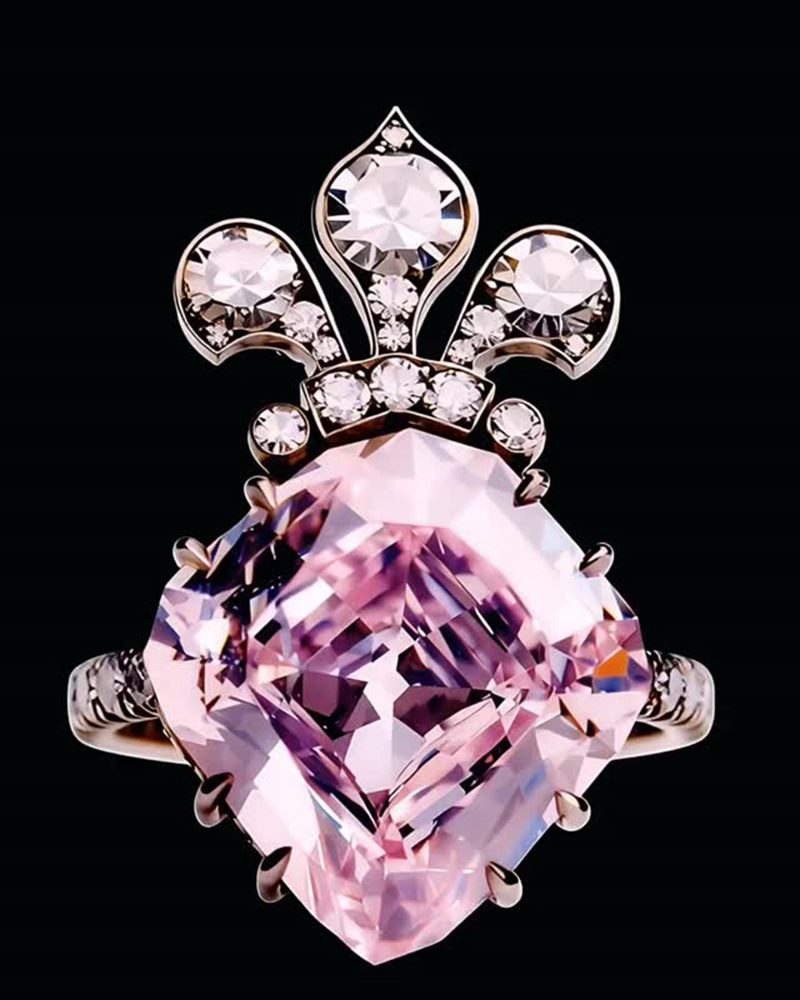
Last June, Christie’s offered an extraordinary 10.38-carat fancy purple-pink diamond ring, which commanded $13.98 million. Known as the Marie-Thérèse Pink, it may have been owned by Marie Antoinette and was clearly documented as part of her daughter’s jewels. That tantalizing, if unconfirmed, connection was enough to send collectors into a frenzy.
Its more recent history is almost as intriguing. The previous owner had Joel Arthur Rosenthal, JAR, reimagine the diamond in a new ring crowned with a diamond-studded fleur-de-lis, the French monarchy’s emblem.
Meylan says there’s still more of Marie Antoinette’s jewelry that could come to market, and if history is any indication, collectors will be waiting. Because, as Correal says, “she was the original ‘it girl.’”