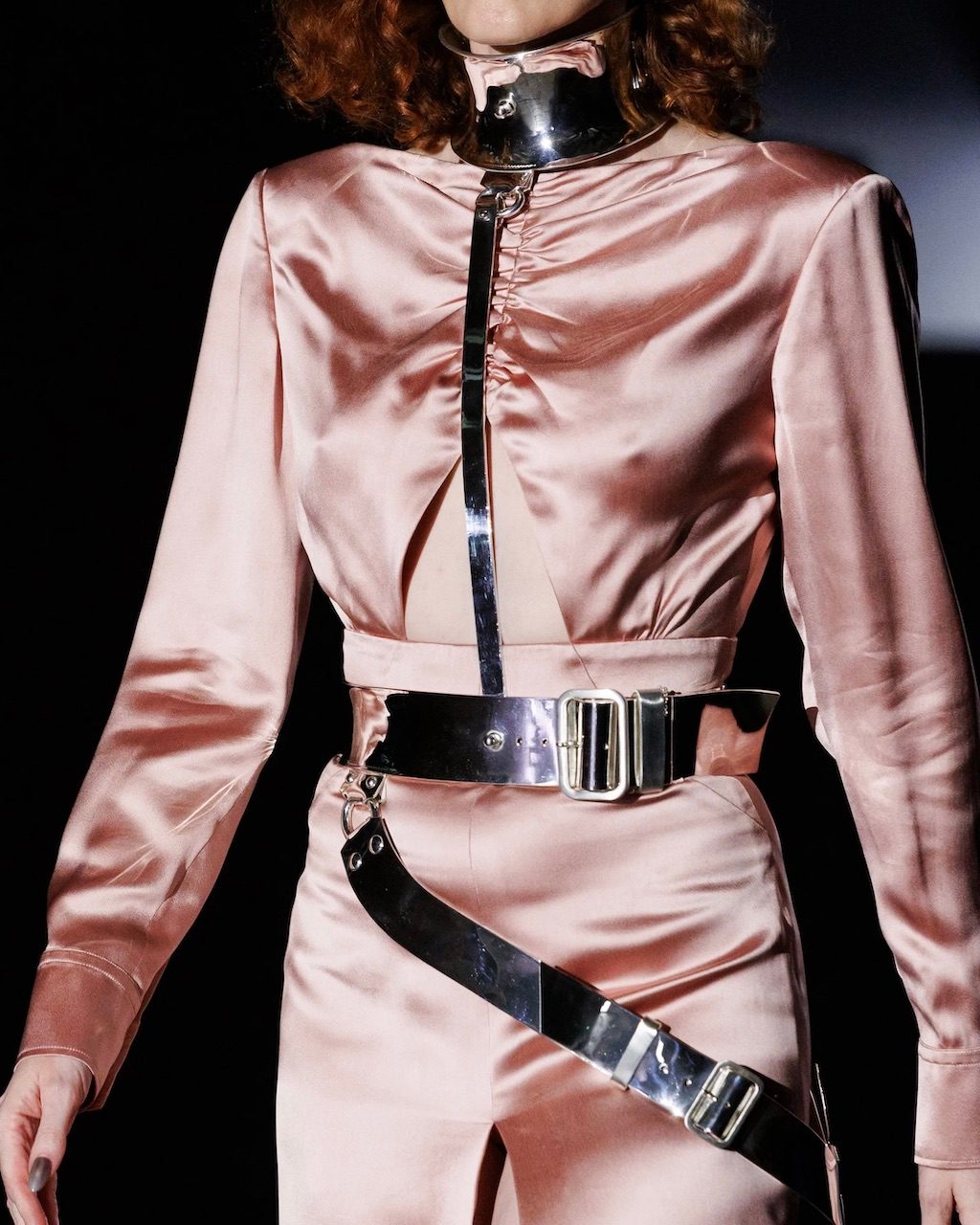
As a close friend and collaborator of the late Lee Alexander McQueen, the fine jeweler brought his goldsmithing techniques to fashion. Seán McGirr just tapped him for a new partnership.
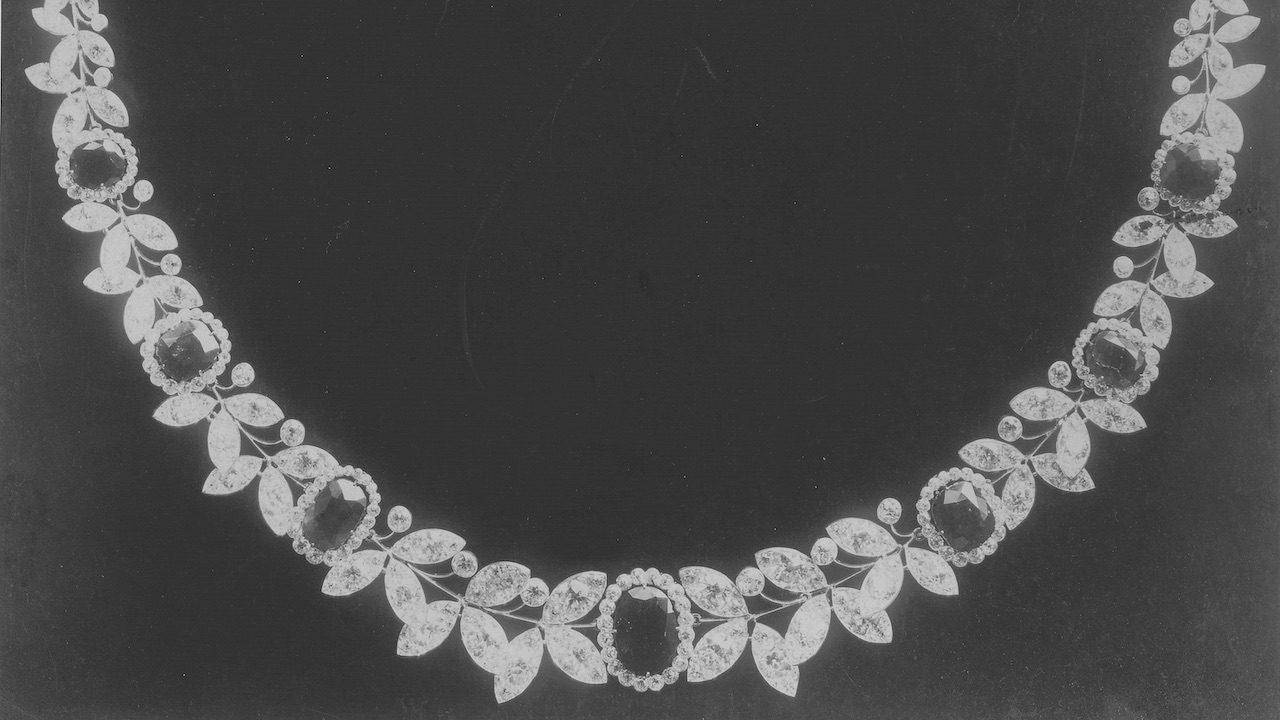
Mrs. Marie Louise MacKay Ruby and Diamond Necklace on display at the “Boucheron: In Focus, A Monograph of a Visionary” Exhibition in collaboration with Christie’s New York (Courtesy of Boucheron)
168 Years of Boucheron Just Landed in New York
Diamond-covered ivy, couture-inspired jewels, and surprises from the archives. Boucheron teams up with Christie’s to show New York what it’s made of.
Jewelry fans adore Paris. In haute joaillerie, nothing compares to the artistry and craftsmanship of the long-established maisons of the exclusive Place Vendôme, a jewelry mecca thanks to the vision of founder Frédéric Boucheron, who moved his namesake brand there in 1893. Until 2024, Americans wishing to buy these jewels had to visit its 26 Place Vendôme store.
As the brand furthers its stateside presence, a partnership with Christie’s New York invites visitors to learn more about the French jeweler, established in 1858. “Boucheron: In Focus, A Monograph of a Visionary,” at the auction house’s Rockefeller Center headquarters, offers an in-depth journey through the brand’s signature codes by introducing local visitors to one of the City of Light’s biggest treasures. The Diamond Collective attended a pre-opening preview of the exhibition, which features 86 works.
Boucheron’s American Love Affair Goes Way Back
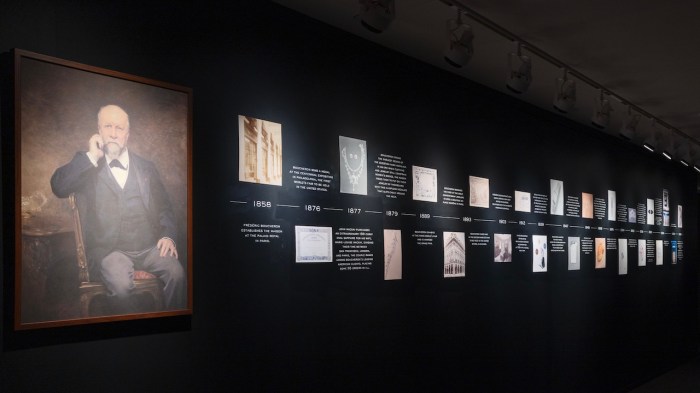
A timeline greets visitors at the entrance to the auction house’s second-floor gallery. It traces the brand’s connection to the United States. Although the 2024 Madison Avenue store was its first retail location, its American ties predate that. In 1903, it opened a New York office to serve its growing US clientele. One client, Mrs. Marie Louise MacKay, a Gilded Age socialite who conquered the American West and Parisian society, placed more than 100 orders. Boucheron also had a presence at prominent US expositions: the 1876 Philadelphia World’s Fair, the 1893 Chicago World’s Fair, the 1939 New York World’s Fair, and the 1924 Exposition Française de New York, which showcased French savoir-faire across disciplines.
CEO Hélène Poulit-Duquesne acknowledged this connection. “Our history with the United States precedes our physical presence there. The first American clients appeared in the jeweler’s order books as early as 1865. This exhibition marks an important new milestone in our American journey.”
168 Years Later, Still Ahead of Its Time
Poulit-Duquesne also explained the exhibition’s aim to explore the brand’s timeless designs.
“It was conceived as a monograph, devoted to a single subject and exploring it in depth: rather than following dates, it lets us curate around meaning, around the ideas and the spirit that define who we are. That is the whole idea behind this immersive journey: to let visitors see how a piece from 1858 and a piece created today sit in the very same conversation.”
“What I hope they take away is a real understanding of who Boucheron is – not a museum of the past, but a Maison whose pioneering spirit has been consistent for 168 years. If American visitors leave feeling that Frédéric Boucheron’s audacity is still alive in what we create today, then we will have told our story exactly as we wished,” she continued.
Four Ways Boucheron Broke the Rules
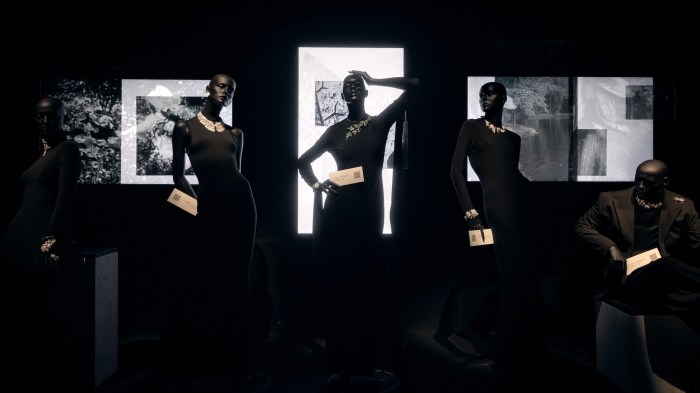
The exhibition space was cloaked in black, from the walls to the carpeting to the mannequins, which were painted black and dressed in black, so the jewelry would shine brightest. (Fun fact: Legend has it Frédéric Boucheron chose number 26 Place Vendôme because it was the sunniest spot on the plaza.) Behind the mannequins, rotating historical photos set the stage for each subject, and QR codes on each look gave an audio explanation behind the creation on display. Unlike most jewelry exhibitions, there were no glass cases. Visitors could stand feet from the pieces, giving clients a closer view of some items that, per the labels, were available for sale.
The sections were divided into four house codes: Nature, Couture, Architecture, and Innovation.
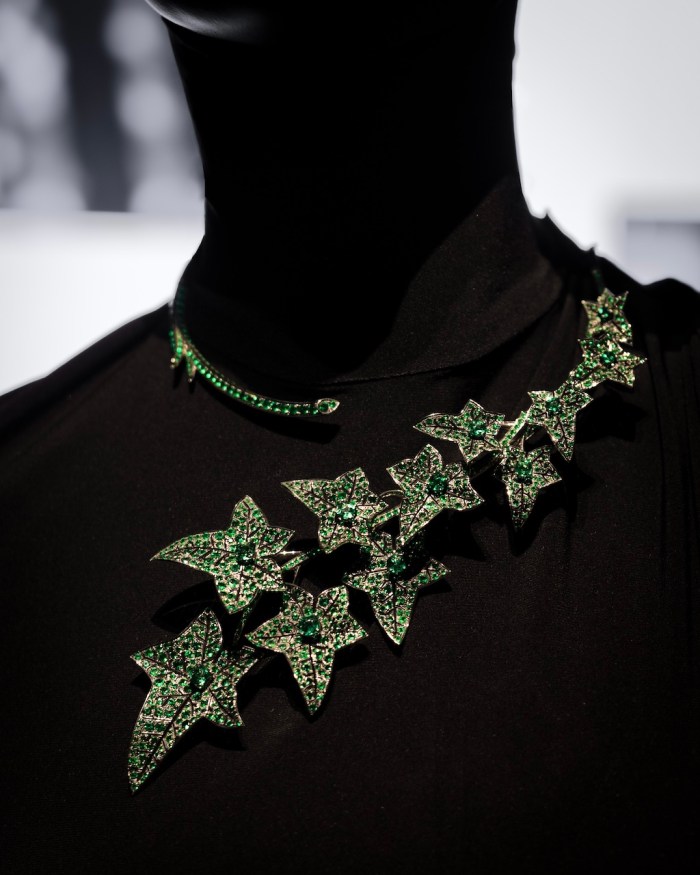
Nature
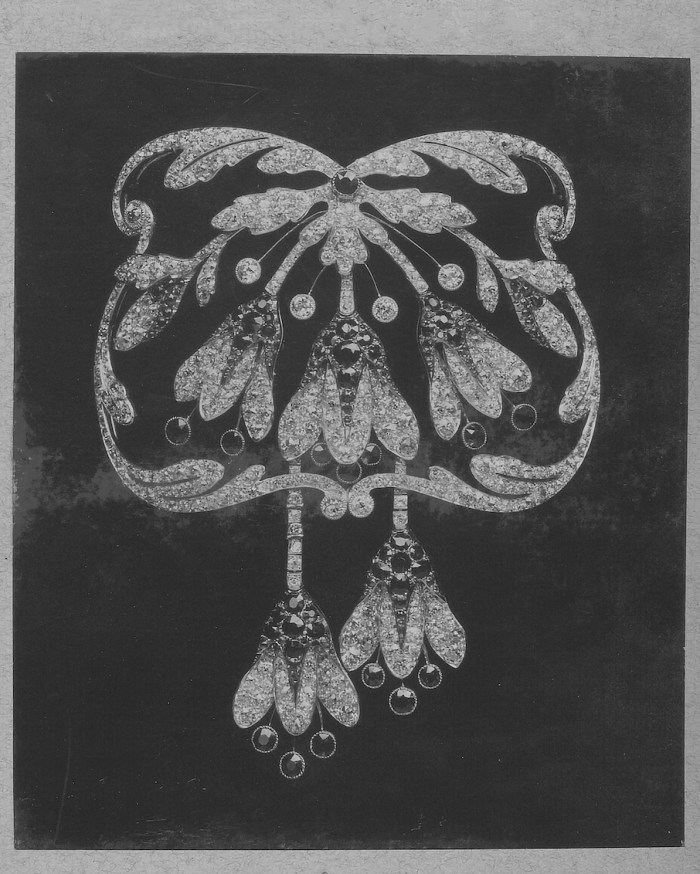
Boucheron set himself apart from the designers of his era in his approach to flora and fauna. While Belle Époque depictions of nature leaned toward the stylized and idealized, he pursued realism, rendering ivy, thistles, dandelions, and even flies in their truest form in precious metals and diamonds. Historical pieces, such as an 1893 Lily of the Valley necklace and a 1905 ruby and diamond floral brooch, were displayed alongside contemporary designs: the “Battement d’Ailes” (flapping wings) feather collar of mother-of-pearl, diamond, white gold and steel, and the “Lierre de Paris” (Paris Ivy) necklace in emerald and white gold, recreating the original diamond-covered Question Mark Ivy necklace.
Couture
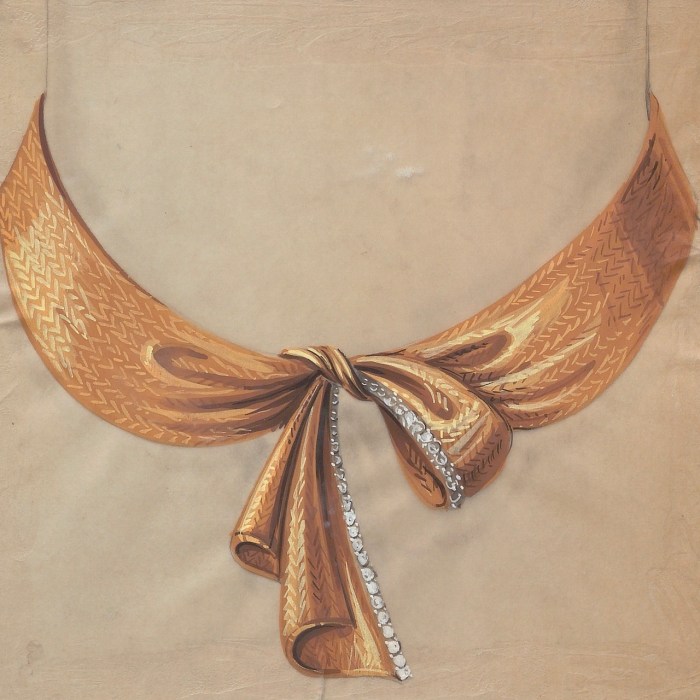
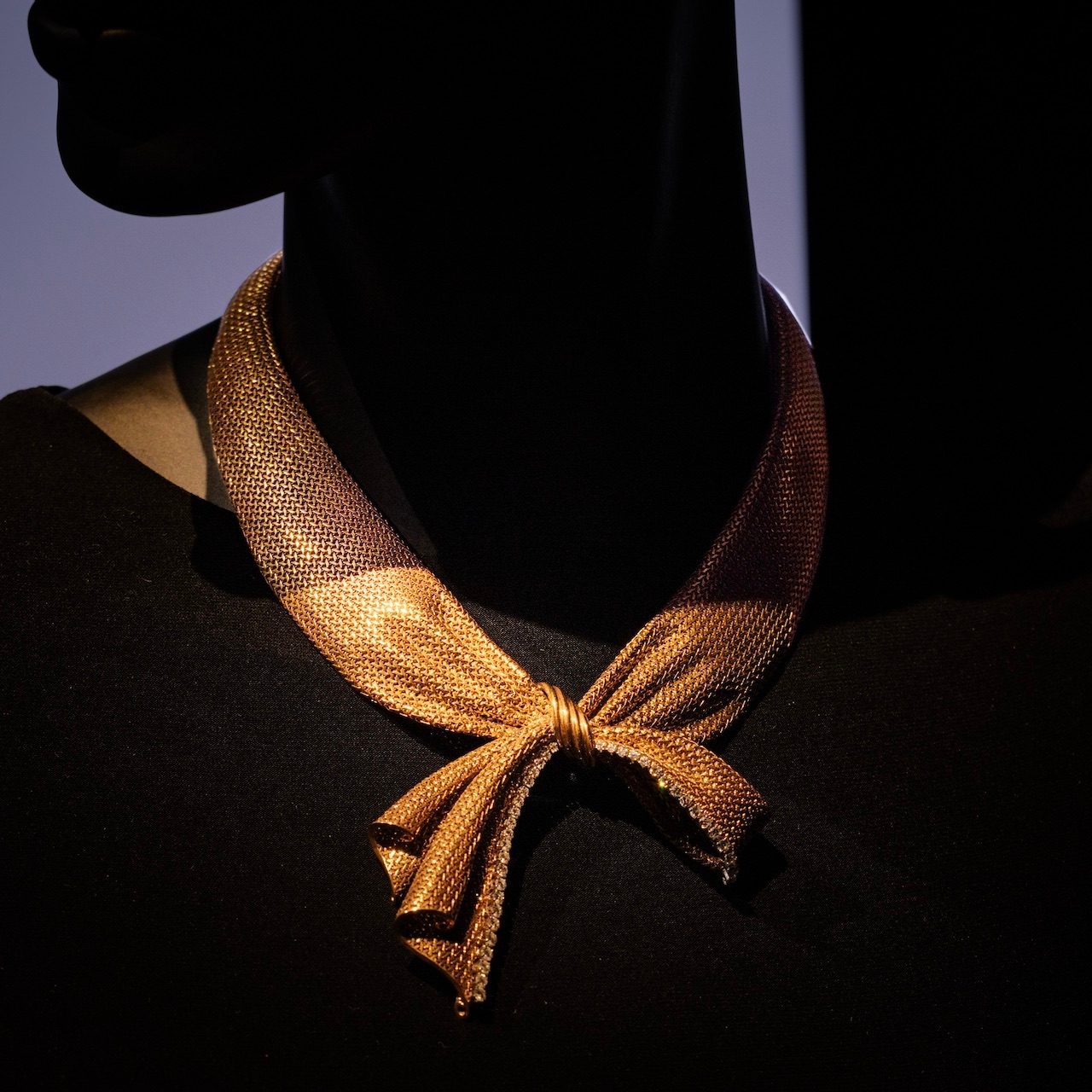
Frédéric Boucheron was a draper’s son, surrounded by the lace and silk his father sold. His understanding of textiles and clothing informed a perspective in which jewelry and fashion intersected, guided by fluidity and transformation. Fashion terms mark the designs: tassel, ribbon, bow, tricot, grosgrain and silhouette. The latter informed a choker from which seven layers of looped diamond chain cascaded over the shoulders like a Victorian blouse. A symmetrical collar of green aventurine glass, Cacholong opal, diamonds and white gold mimicked the ribbing of grosgrain ribbon.
Architecture
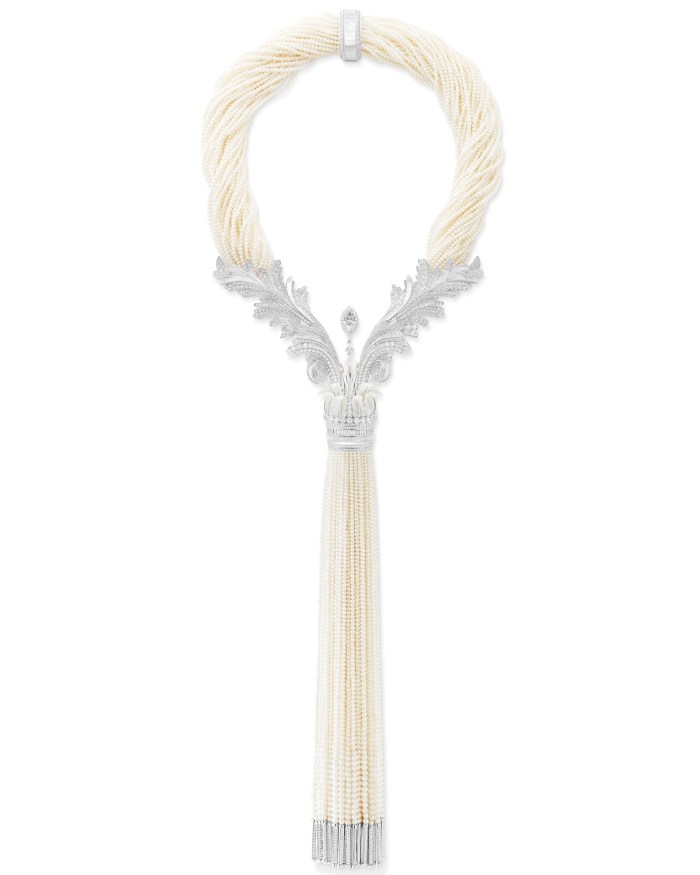
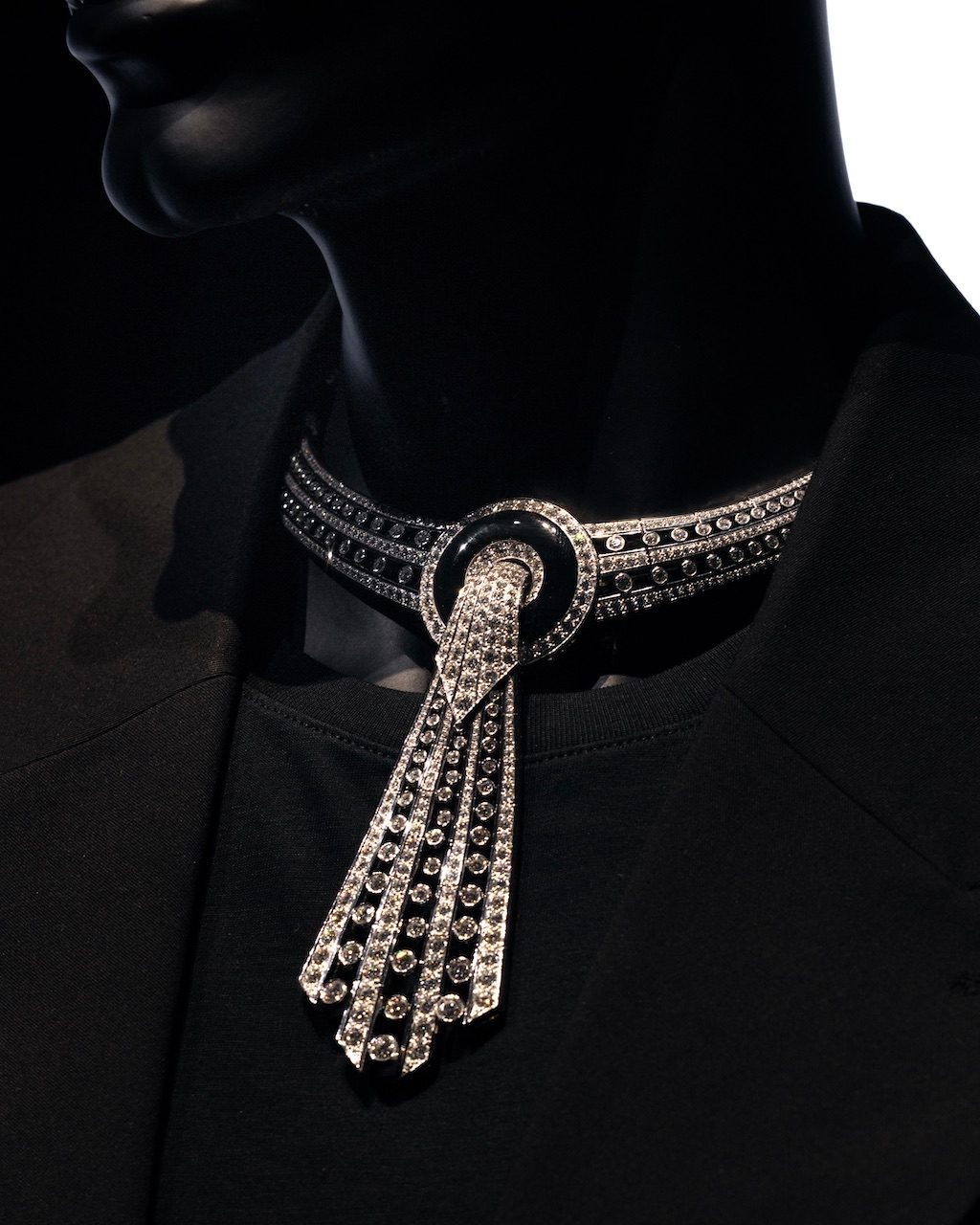
By some accounts, Boucheron couldn’t have picked a better place for architectural inspiration: the vaulted arcades of the Palais-Royal, Place Vendôme’s geometry, emerald-cut-inspiring shape, Art Deco vibes, and Paris’ 19th-century Haussmannian design delivered endless ideas. The 2019 Colonne d’Acanthe necklace of diamond, pearl, mother-of-pearl, and white gold draws on the acanthus columns of the Palais Garnier, while Vendôme collection pieces with octagonal designs in diamond, black lacquer, and emerald cuts channel Art Deco designs.
Innovation
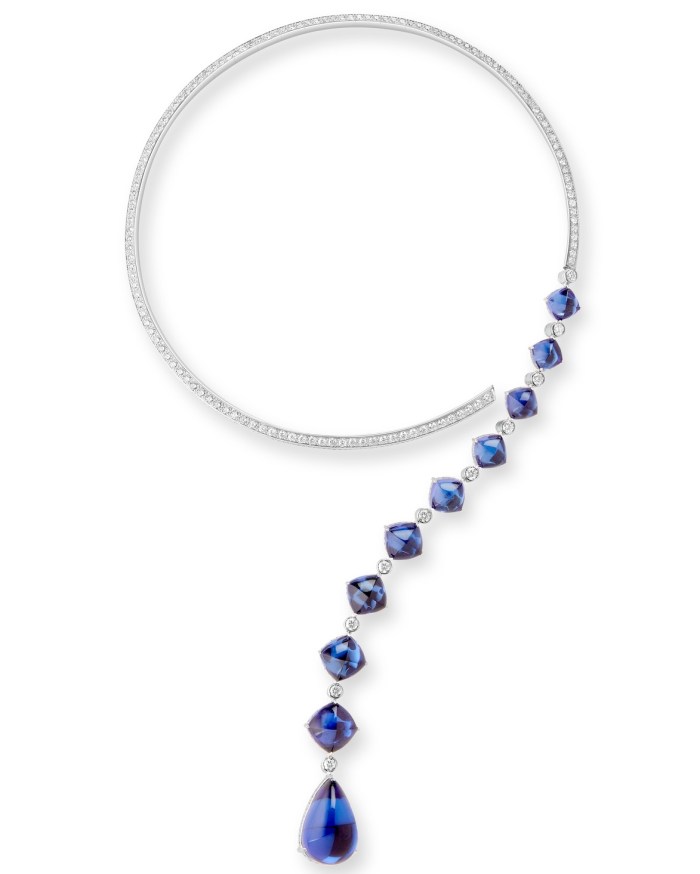
This code focused on the brand’s unique ideas in high jewelry, from materials like shells, rock crystal, and wood to designs that advanced progress, like the Question Mark necklace, made so women could put it on themselves. To wit, a symmetrical Usekh-style collar of mother-of-pearl, diamonds, and white gold resembled feathers. A necklace of lacquer and resin paired with diamonds mimicked an oversized chain, and diamonds, onyx, lacquer, and white gold formed a pocket-style clothing jewel.
The Next Act Is Anything but Ordinary
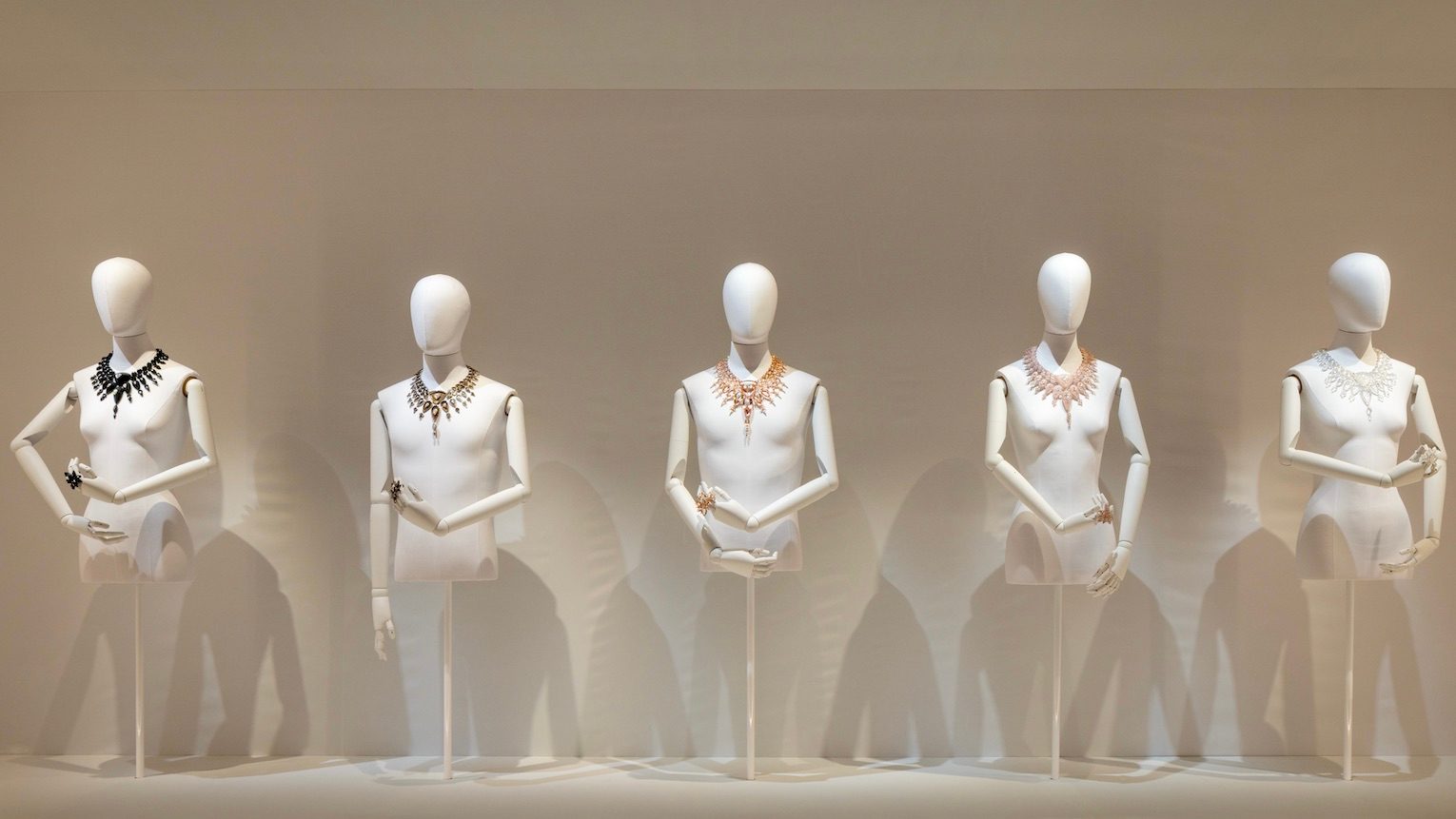
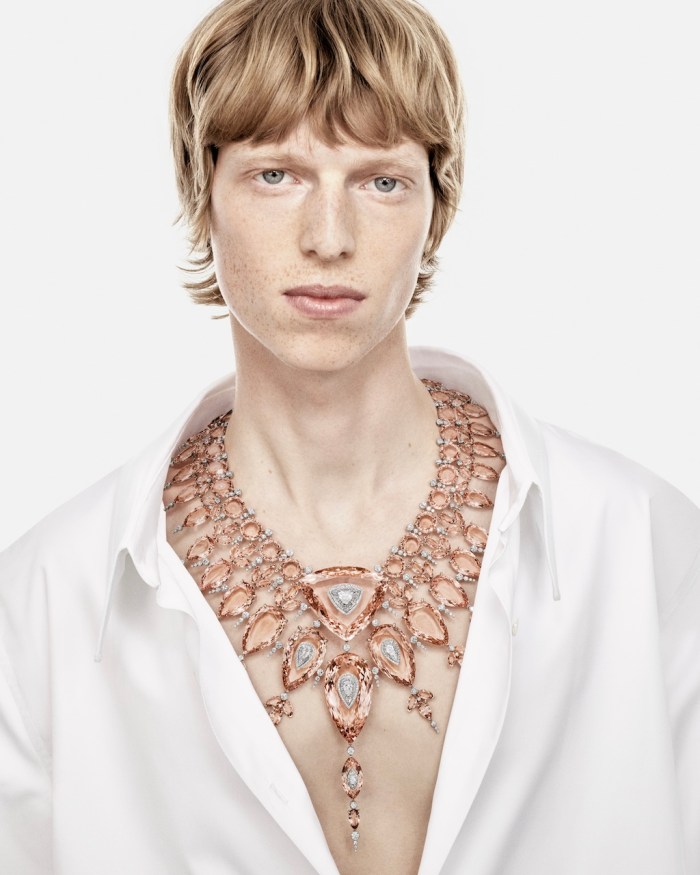
The exhibit closed with the latest Carte Blanche High Jewelry collections, “Impermanence” and “Human Being,” shown stateside for the first time since their July 2026 Paris debut. The former features six botanical Ikebanas, which can be dissected and worn as individual pieces captured in a frozen state for a realistic effect. The latter explores the idea of “looking at what connects us, then drawing in closer to discover what sets us apart” through five identical oversized necklaces with coordinating earrings, each made from different materials, showing that though different in expression, we are the same beings.
The exhibition is free with registration and open to the public October 9 through 18, 2026.
The Return of Shaun Leane: McQueen’s Most Daring Jewelry Collaborator
The Secret Lives Of Marie Antoinette’s Diamonds
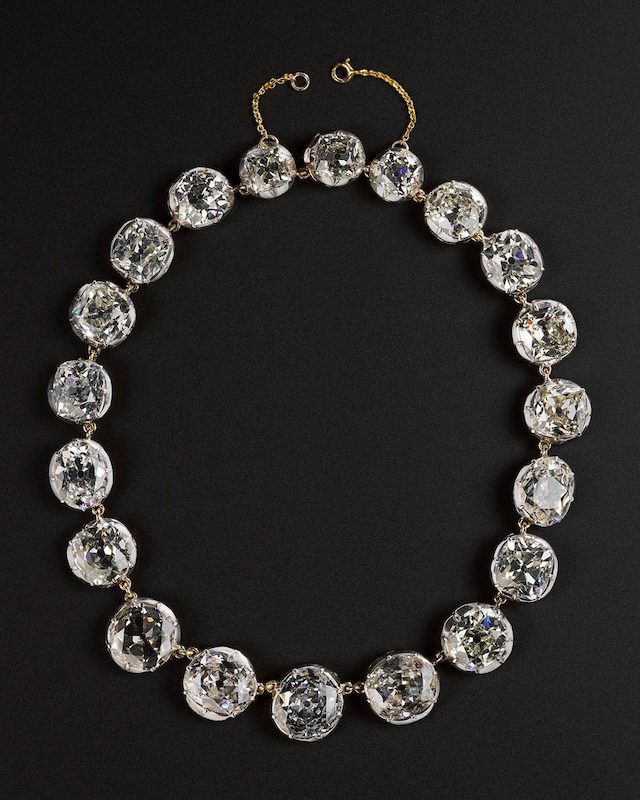
Centuries after her death, Marie Antoinette’s diamonds still draw fierce bidding wars, and record-breaking prices. What is it about her jewelry that has such a hold on us?
The Lore Behind Queen Marie of Romania’s Lost Diamonds
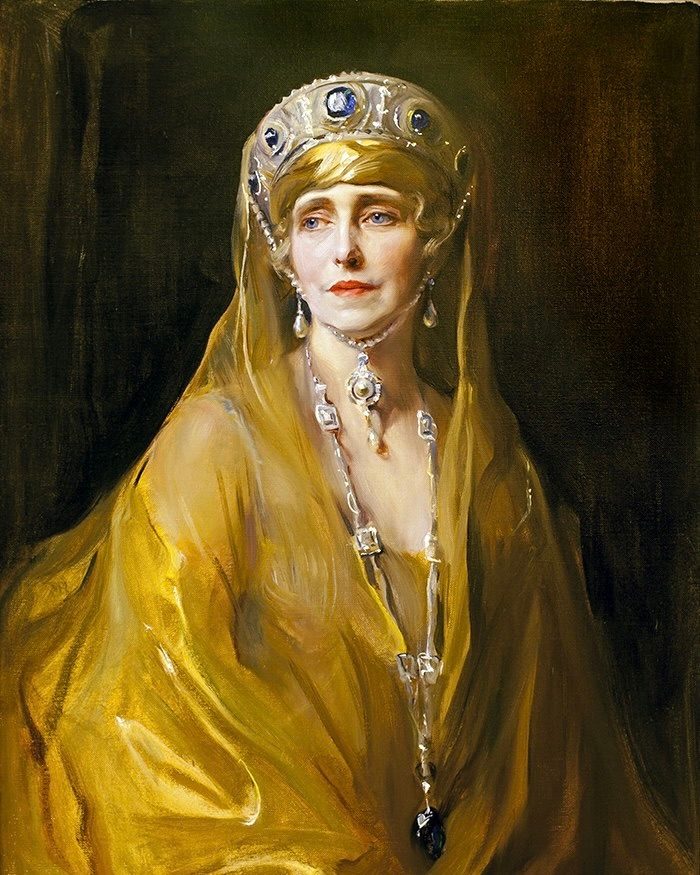
She rejected royal convention, inherited extravagant diamonds, and built a jewelry collection fit for an empress. Then the Russian Revolution changed everything.

Ali Larter Is Not Holding Back
On Landman, she goes full Texas glamour. Offscreen, it’s Jersey grit, jeans, a white shirt, and diamonds she never takes off.
Get the Newsletter
Sign up for the latest diamond news, delivered directly to your inbox.