What happens when nature breaks its own rules? A diamond so rare, so strangely beautiful, that even scientists are still trying to understand it.
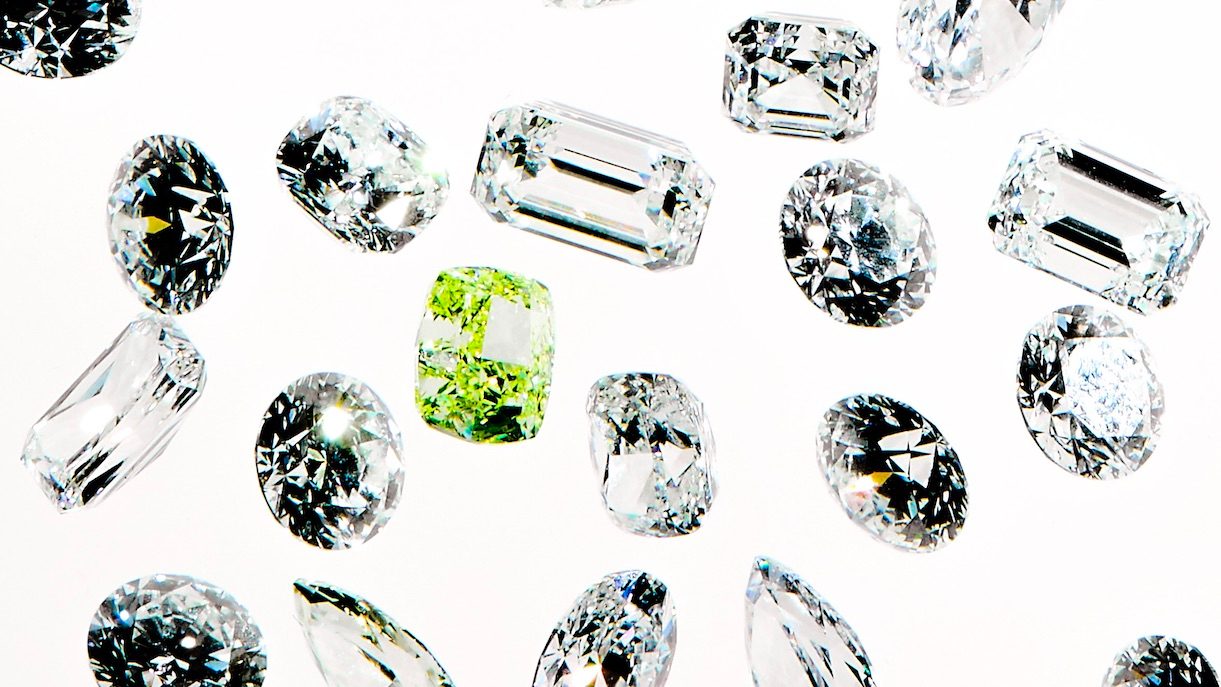
(Photographed by Mark Lim for the Diamond Collective)
Green Diamonds Have a Radioactive Origin Story
Looking this good is actually a result of atomic damage. Green diamonds have one of the wildest origin stories in the gem world.
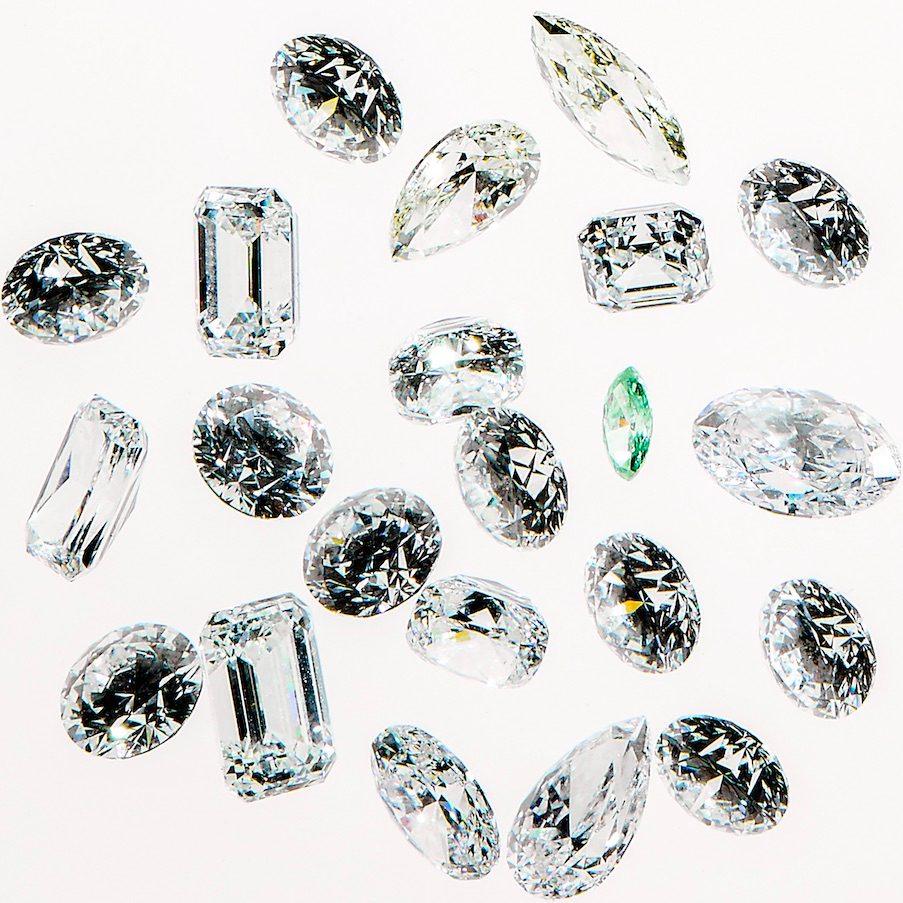
Green diamonds are rare. Really rare. They account for less than 0.1% of all fancy color diamonds graded by gemological labs like the GIA. That’s fewer than 10 in every 10,000. And the most intensely saturated greens? Even harder to find.
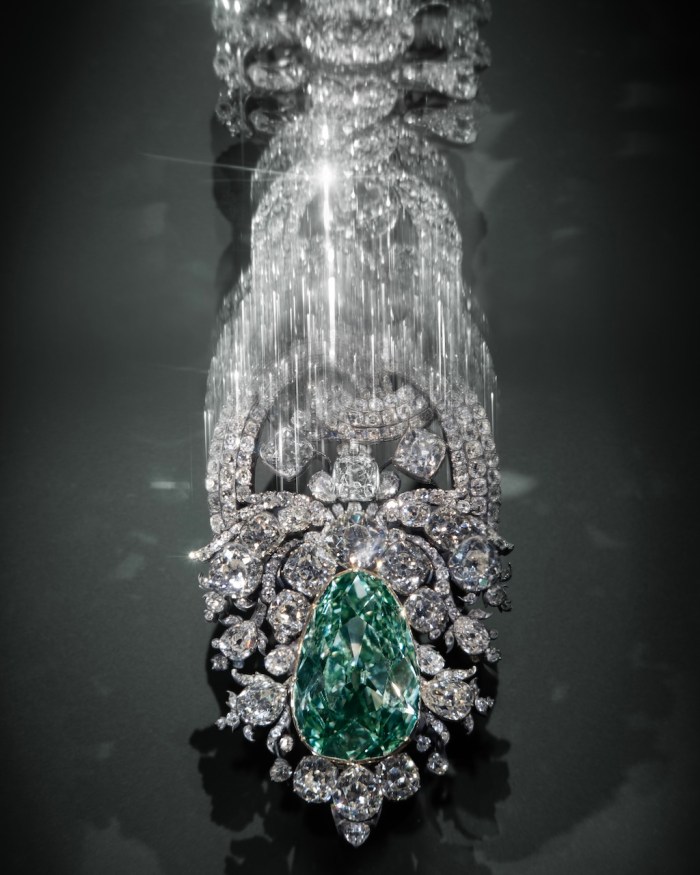
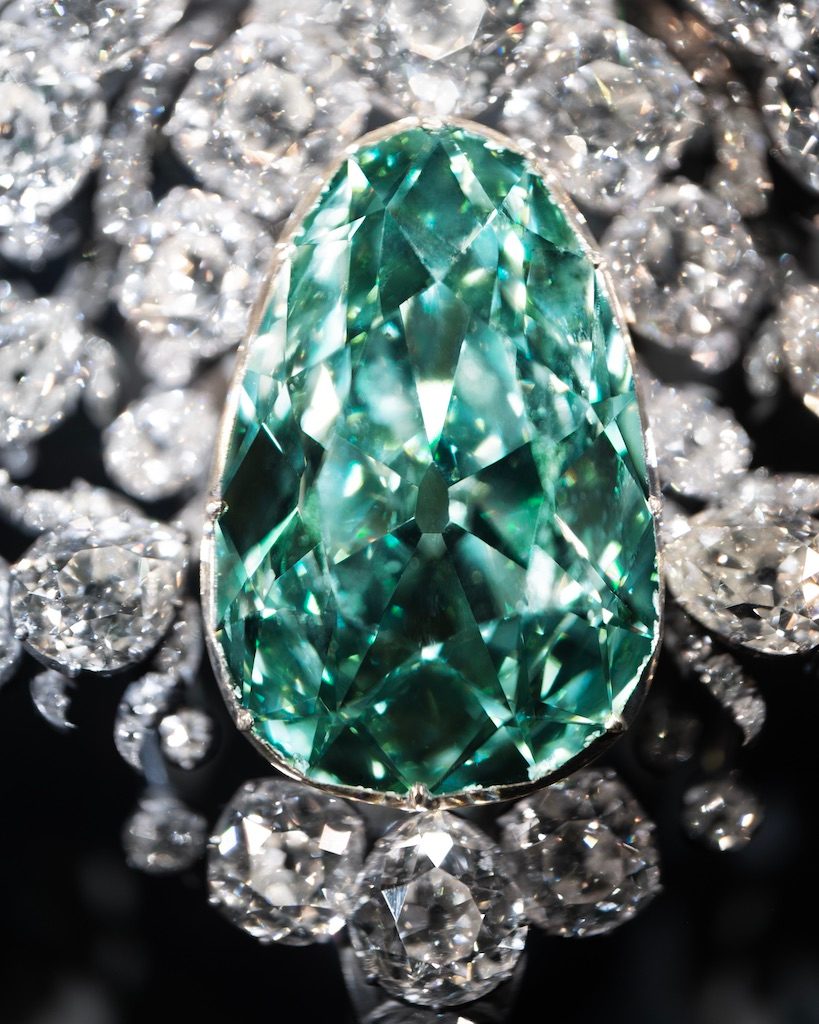
But rarity is only half the story. Take the famous 41-carat Dresden Green, one of the most extraordinary examples in existence. Its color is remarkable, but how it got that way is even more interesting.
Many colored diamonds get their hues from trace elements in their crystal structure. Boron can make a diamond blue, while nitrogen can turn it yellow. Green diamonds, however, often get their color from something that happened long after they formed. And this is where the science gets weird.
The Surprising Reason Green Diamonds Are Green
For green diamonds, the color often comes from something peculiar: exposure to radioactive minerals or fluids in nature, or artificial irradiation in a laboratory. Such radiation knocks carbon atoms out of place in the crystal structure, as shown below.
This creates vacancies, essentially vacant sites where carbon atoms are absent. The cause of color in many green diamonds is the vacancy defect, also known as the GR1 center in diamond. Other defects involving nitrogen, hydrogen, or nickel impurities can also cause green colors; these are less common.
A Million-Year Encounter With Radiation
Natural irradiation happens at Earth’s surface. Think of it as a late-stage embellishment for some lucky diamonds that have already come a long way from their birthplace deep in the mantle. Diamonds eroded from their primary volcanic host rocks and washed down rivers into secondary, alluvial deposits are much more likely to be exposed to naturally occurring radioactive materials.
In this geological setting, diamonds can be deposited alongside certain crustal minerals that contain radioactive isotopes of elements such as uranium and thorium. Over thousands or even millions of years, diamonds sitting near these materials are exposed to radiation that can impart a green color.
The Green Spots That Tell a Diamond’s Story
One of the most distinctive features of irradiated diamonds is the presence of conspicuous green “stains” on the rough surface, as seen on the two Brazilian diamonds below. Individual spots mark where radioactive mineral grains sat nestled against the diamond, while more irregularly shaped stains may be caused by radioactive fluids or many fine-grained radioactive particles. This staining results from radiation damage by alpha particles, which cannot penetrate deeply into the diamond.

Chameleon Diamonds Are the Ultimate Color-Changers
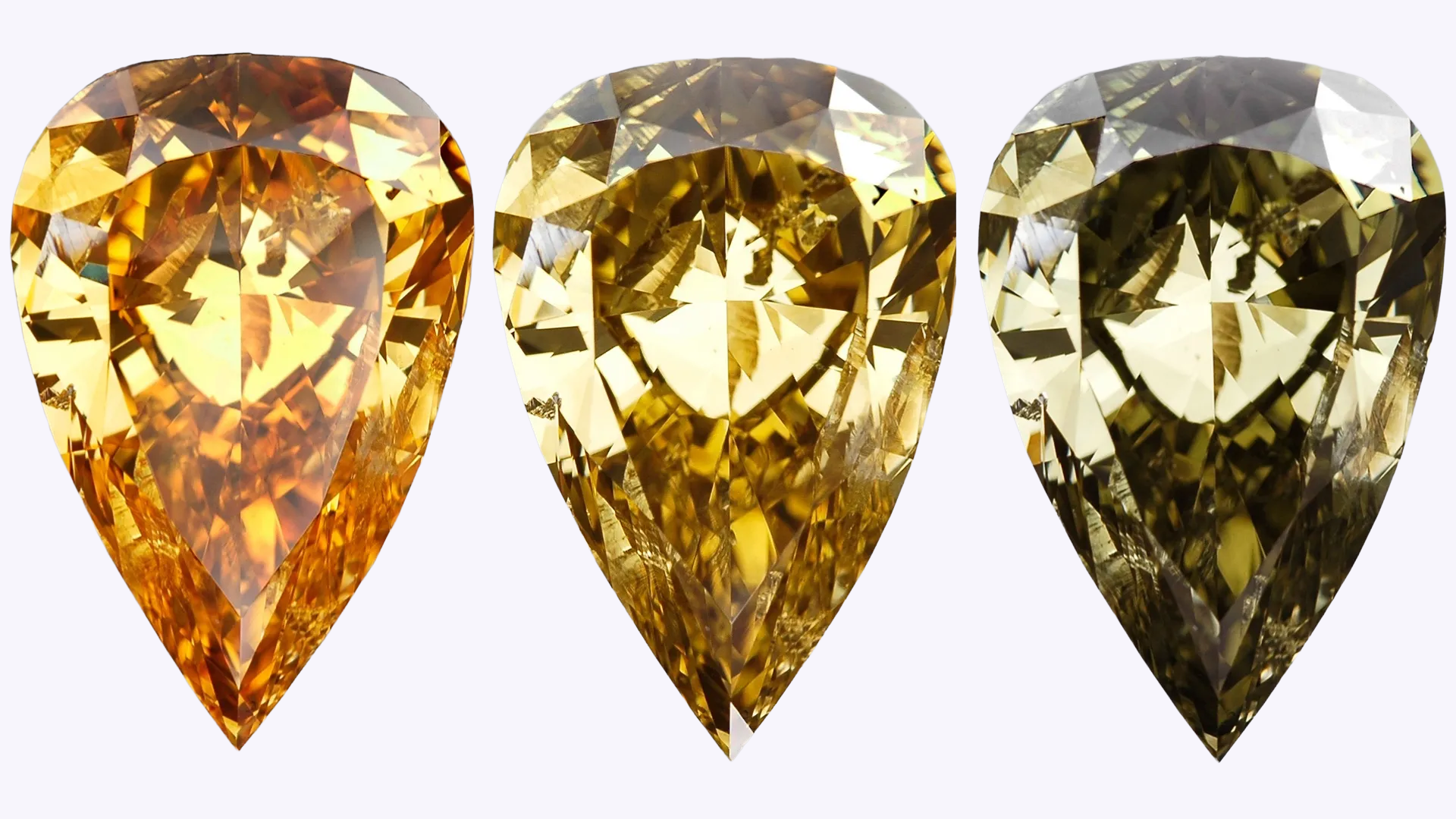
Chameleon diamonds can appear green or yellow-green under normal lighting, but they temporarily change color when exposed to heat or kept in darkness—often shifting to a brownish or orangey hue. Unlike standard green diamonds, their color change isn’t due to irradiation (natural or artificial) but is likely linked to a complex combination of hydrogen, nitrogen, and nickel impurities; the exact mechanism is still not fully understood.
So, while chameleon diamonds may look green at times, they are categorized separately because of their thermochromic and photochromic properties. They’re incredibly rare and highly collectible—but not considered true green diamonds
Why Cutting a Green Diamond Is So Tricky
Radiation stains usually only reach a few micrometers into the diamond, and this green “skin” can be lost during cutting and polishing. Skilled cutters plan to retain the green stains as much as possible to control the color and overall faceted appearance. Although stains from alpha decay are relatively shallow, natural irradiation can also come from beta or gamma decay, AKA more energetic forms of radiation that can penetrate farther into the diamond to cause green body colors.
Some radiation stains appear brown or as a mix of green and brown stains. The brown stains were initially green, but they have deteriorated with natural exposure to heat. Experiments show this change can occur quickly at temperatures above 500 to 600 °C, although it may occur at slightly lower temperatures in nature over thousands to millions of years.
The green color’s instability at high temperatures raises concerns for polishing; manufacturers must not let the diamond get too hot during the process. A conservative guideline is that if the diamond becomes too hot to touch, the color is at risk of diminishing. Below, a diamond held firmly in a device called a dop is carefully examined during polishing. The finished 1.42-carat diamond results from slow, careful polishing without excessive heating.
Can You Turn a Diamond Green?
While natural irradiation can produce stunning green colors, laboratories can also mimic the process with electrons, neutrons, or gamma rays to generate vacancies and impart a synthetic green color to diamonds. And rest assured: the diamond carries no residual radioactivity.
In both cases, the physical cause of color is the same, and it results from the same type of process, whether natural or artificial irradiation. Though history can sometimes point to a natural origin, it’s generally difficult to determine where a diamond’s green comes from. That said, color origin ultimately affects a green diamond’s value, so advanced testing by a gemological laboratory is crucial.
The Dresden Green Is 41 Carats of Pure Wonder
Today, many green diamonds on the market are the product of artificial irradiation treatments dating back to the 1940s. Logically, green diamonds documented before this time must be natural. A prime example is the largest and most famous green diamond, the Dresden Green Diamond, recovered from the historic Golconda mines of India. The Dresden Green is a 41-carat, pear-shaped stone graded as a Natural Fancy Green diamond with even color distribution—a classification that underscores its rarity.
Green diamonds are true geological marvels—extraordinarily rare, visually striking, and steeped in mystery. Whether formed through natural irradiation over millions of years or enhanced in a lab, their vivid color sets them apart from all other gemstones. As collectors and connoisseurs continue to seek these captivating stones, green diamonds remain one of the most intriguing and coveted treasures of the natural world.
Purple Diamonds Are a Geological Fever Dream
The Red Diamond Is the Rarest of All
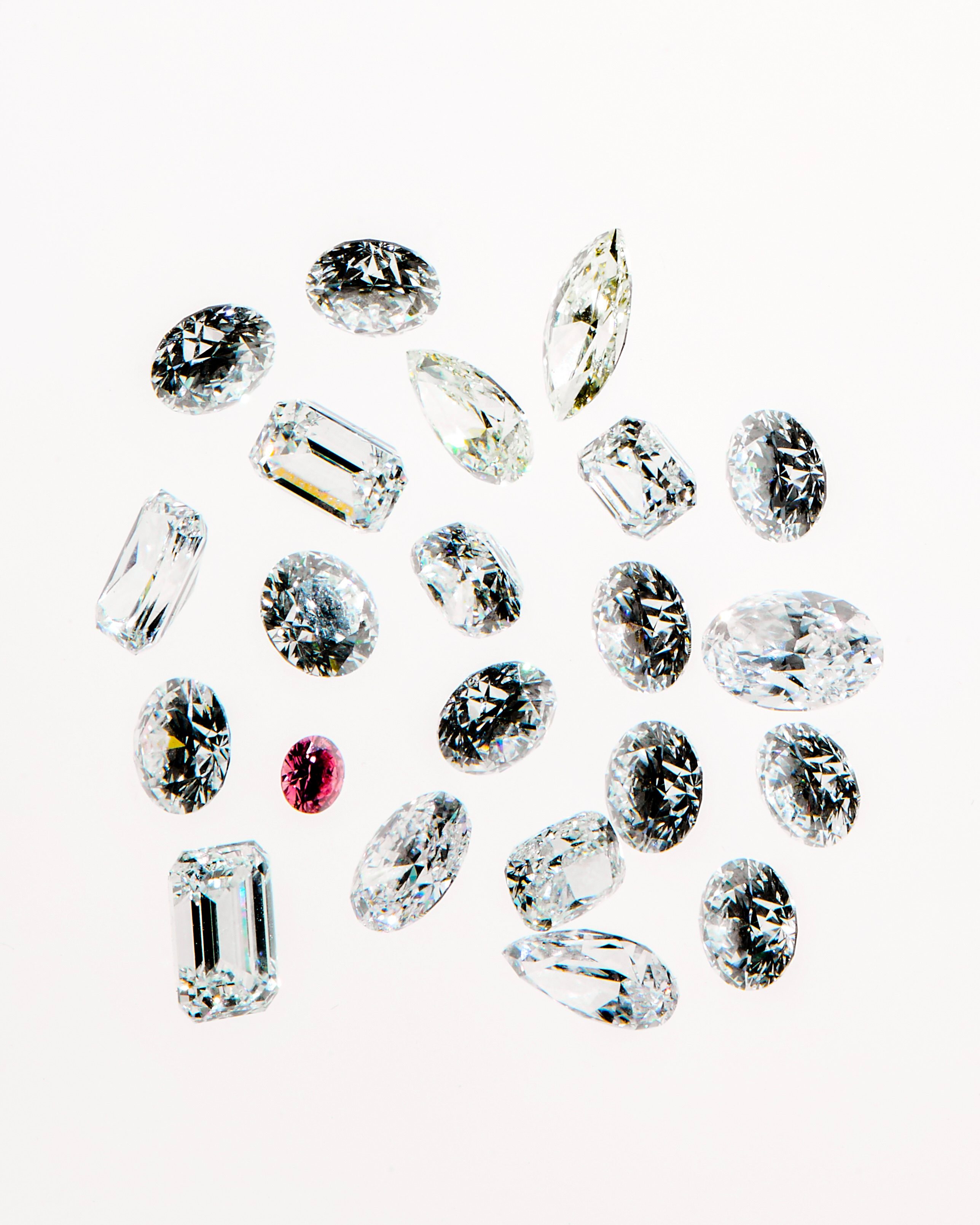
What makes a diamond red? Even scientists don't have the full answer. Meet the impossibly rare stones making history and commanding millions.

What’s Really Happening With Diamonds from Sierra Leone?
A game-changing program offers a safe, ethical and profitable path forward in Sierra Leone.

Botswanamark Diamonds Have Nothing to Hide
Botswanamark is making diamond provenance the new luxury.
Get the Newsletter
Sign up for the latest diamond news, delivered directly to your inbox.