
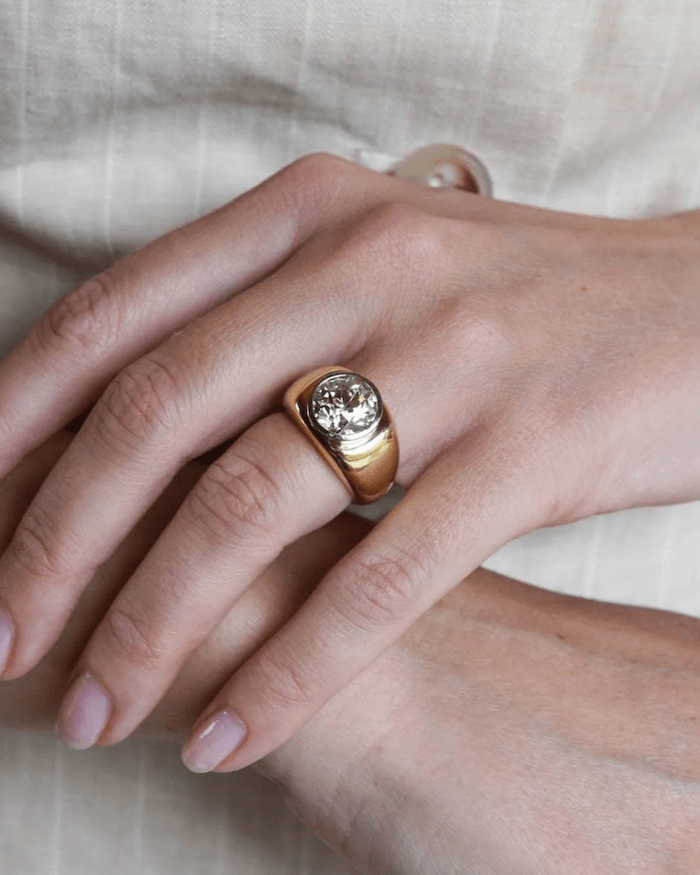
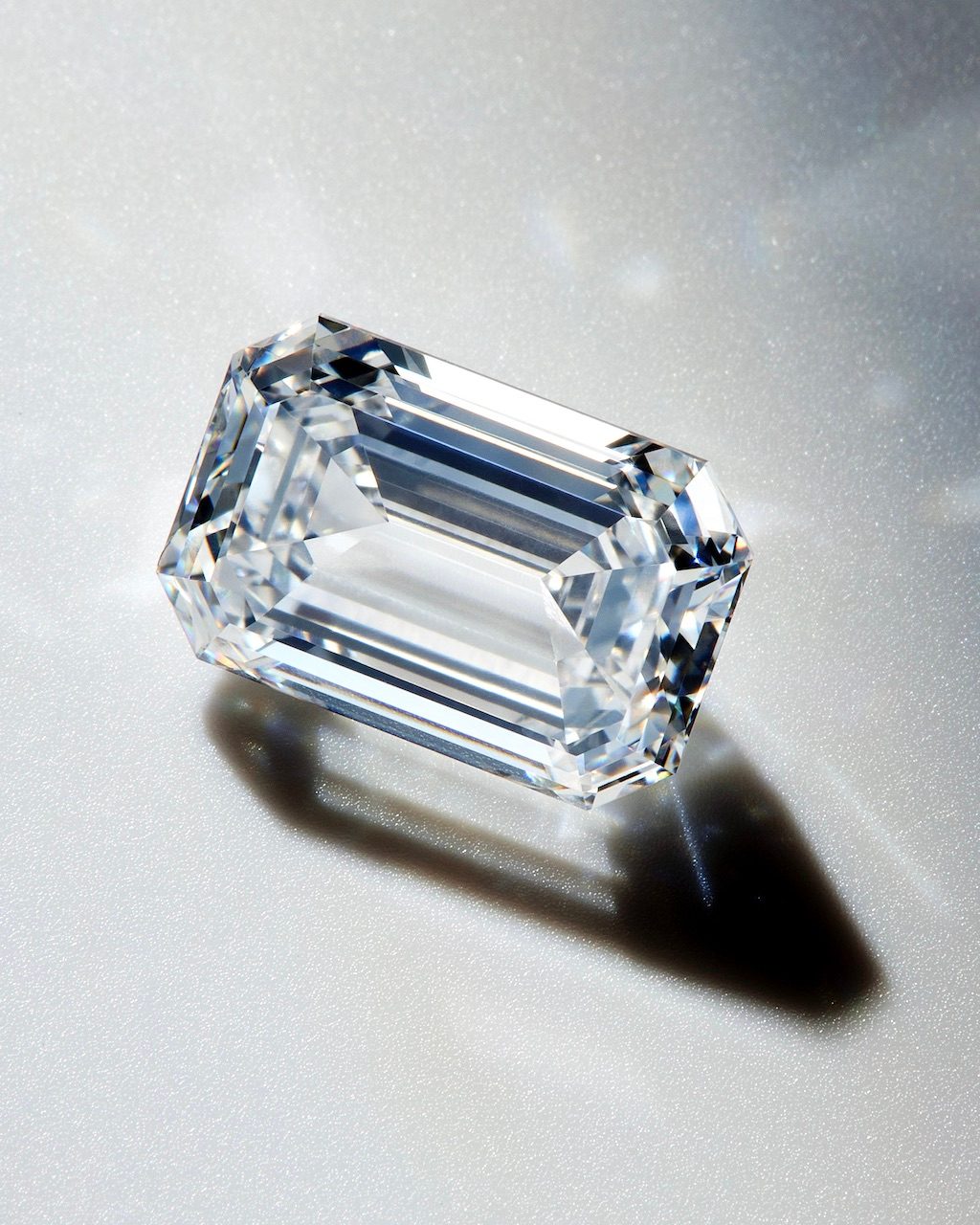
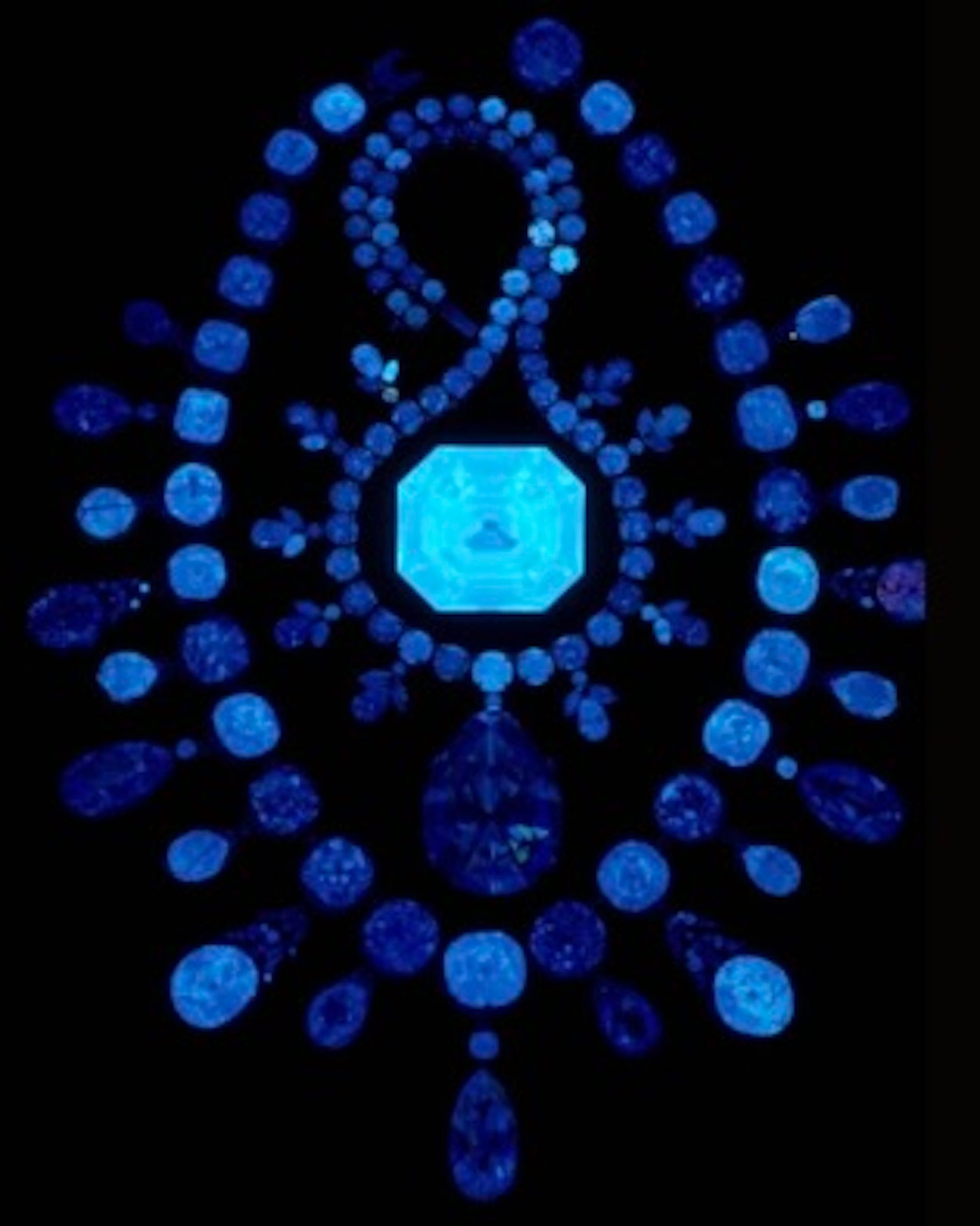
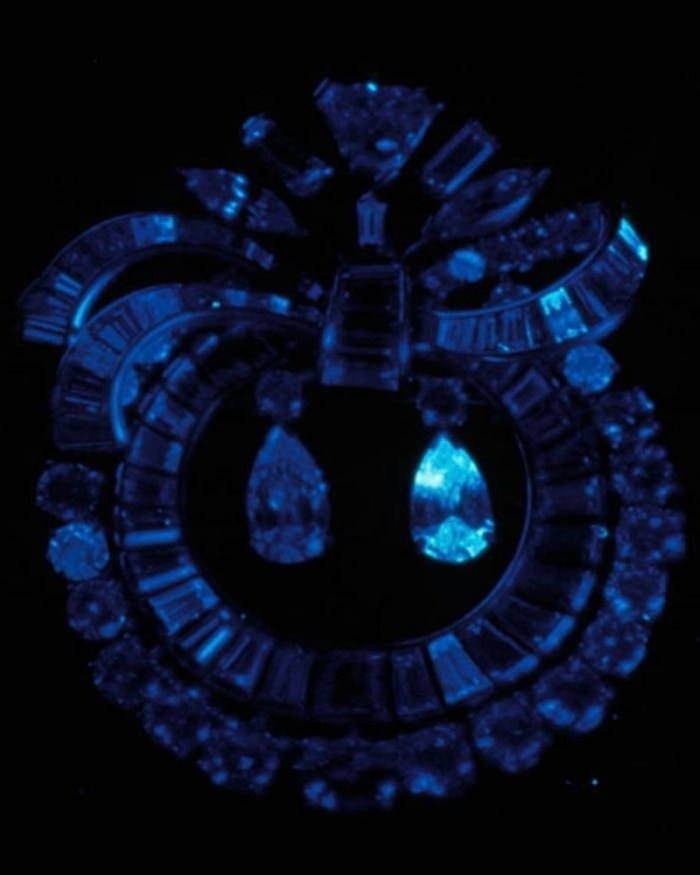
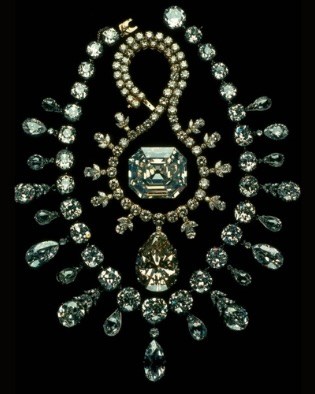
Vintage diamond necklaces in natural light and UV light showing their fluorescence. (Courtesy of GIA)
Why Do Some Diamonds Have a Secret Glow?
What makes some diamonds glow? It all comes down to fluorescence, a natural phenomenon with an unexpected upside.
A diamond can look completely different depending on the light around it. In ordinary daylight, it may flash white, throw off rainbow-colored sparks or seem almost icy in its brilliance. But place some diamonds under ultraviolet light and something unexpected happens: they glow. This strange little phenomenon and it’s one of the most fascinating things about natural diamonds. It’s not a treatment, enhancement or an imperfection. It’s a microscopic reaction written into the diamond’s crystal structure during its formation deep inside the Earth.
In other words: some diamonds have a hidden side you cannot see—until the right light comes along.
That hidden glow has a name: fluorescence. You might spot the word on a grading report or hear it while shopping for a diamond, but it’s one of those details that tends to raise more questions than answers. Does it change how a diamond looks? Is more fluorescence better? Should you even care?
The short answer is, it depends on the diamond. Fluorescence is one of the more misunderstood characteristics of natural diamonds, and also one of the most intriguing. In some stones, it can subtly influence appearance. In others, you may never notice it at all. And for a savvy shopper, it can even open up interesting possibilities when it comes to beauty, rarity and price. Here’s what that glow is really telling you.
Why Do Some Diamonds Glow?
Here’s where it gets interesting.
Fluorescence is the glow some diamonds give off when exposed to ultraviolet (UV) light, like a blacklight. Blue is by far the most common color, but some diamonds can glow yellow, green, orange or even red. Take away the UV light and the glow disappears.
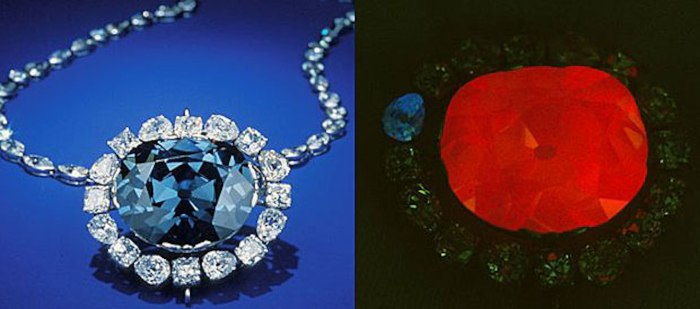
And then there’s the Hope Diamond. One of the world’s most famous diamonds is known for an exceptionally rare red phosphorescence, an afterglow that lingers briefly even after the UV light is switched off.
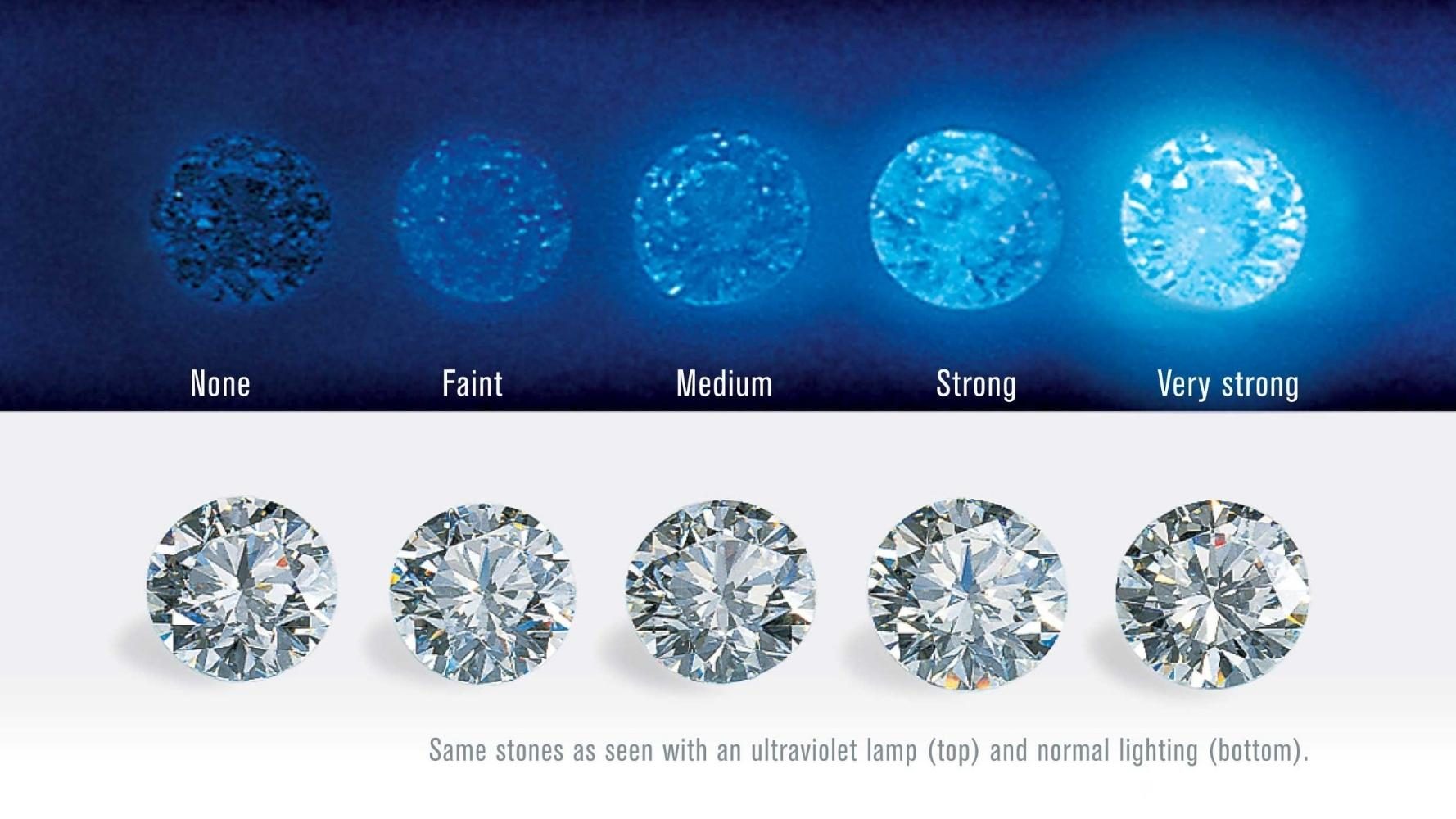
Fluorescence isn’t one of the 4Cs, but you’ll still find it on a diamond grading report. It’s graded by intensity, from none and faint to medium, strong and very strong, along with the color of the fluorescence, which is almost always blue. Once the ultraviolet light source is switched off, the diamond’s glow vanishes. Fun fact: The most famous diamond in the world, the Hope Diamond, exhibits an extremely rare red phosphorescence.
Fluorescence does not belong to one of the 4Cs on a diamond grading report, but it is still noted as a key characteristic of the diamond. The grading report lists both the fluorescence intensity level—none, faint, medium, strong or very strong—and its distinctive color, which is almost always blue.
Fluorescence Is a Diamond’s Hidden Signature
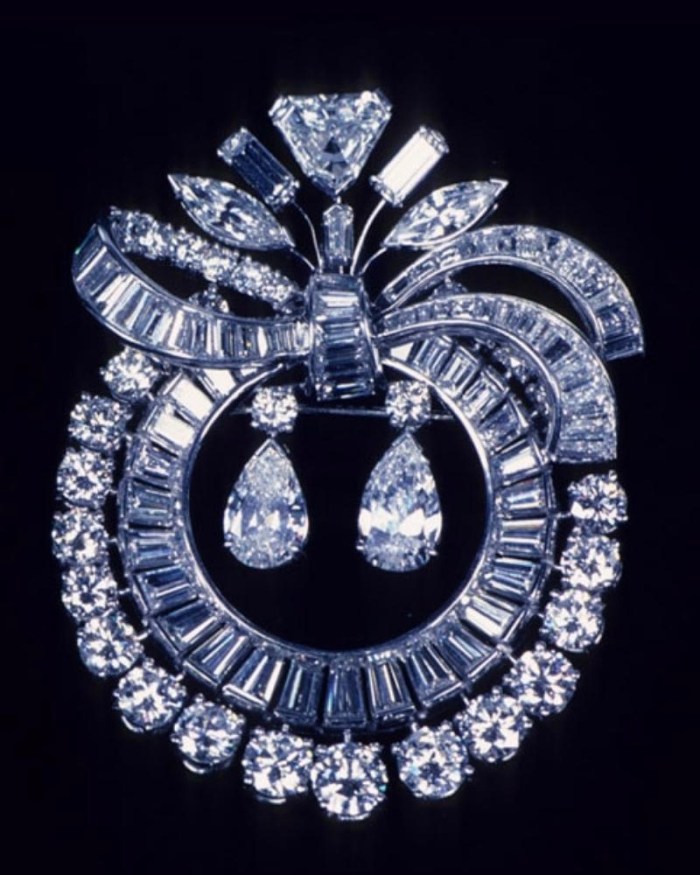
The answer goes all the way back to how a diamond formed. Deep within the Earth, trace elements, most commonly nitrogen, can become part of a diamond’s crystal structure as it grows. When UV light hits the stone, those elements react by briefly giving off visible light. Cue the glow.
Nothing has been added to the diamond to make this happen. Fluorescence isn’t a treatment or enhancement. It’s a natural characteristic connected to the diamond’s formation deep within the Earth.
A Glow-Up a Billion Years in the Making
Fluorescence is especially common in natural diamonds, and its origins are written into the stone itself. Tiny variations in a diamond’s crystal structure, created as it formed billions of years ago beneath the Earth’s surface, can determine whether it fluoresces and how strongly.
Think of it as another small clue to a diamond’s geological past.
And it’s more unusual than you might think. GIA research has found that roughly 25% to 35% of diamonds submitted for grading show some degree of fluorescence. Of those that fluoresce, about 95% glow blue, while only around 10% show medium, strong or very strong fluorescence.
So while fluorescence isn’t exactly rare, a diamond with a noticeable glow is part of a smaller club. And despite some long-standing misconceptions, strong fluorescence rarely has a negative effect on how a diamond looks.
What Does Diamond Fluorescence Look Like?
Most of the time, you won’t see diamond fluorescence it at all. Under normal lighting, fluorescence is typically invisible. Put the diamond under a UV or blacklight, however, and that hidden glow can suddenly appear.
Blue fluorescence can also subtly influence how some diamonds look in everyday light, particularly diamonds in the I–M color range. Because blue visually counteracts yellow, it can make a diamond with warmer undertones appear whiter when viewed face-up.
In some cases, that means a diamond with medium or strong fluorescence may look just as appealing, or even more appealing, than a non-fluorescent diamond with the same color grade.
And what about sunlight? Since sunlight contains UV rays, fluorescence can technically be activated outdoors. But don’t expect your diamond to suddenly turn neon on a sunny afternoon. The effect is generally subtle and often difficult to see with the naked eye. Even diamonds with strong or very strong fluorescence can look completely typical in daylight.
The “Milky Diamond” Myth
Diamond fluorescence has picked up a less-than-flattering reputation over the years, including the idea that it can make a diamond look “milky” or “oily.” In reality, that effect is extremely uncommon.
According to GIA research, fewer than 0.2% of fluorescent diamonds studied showed a hazy appearance, and other characteristics of the diamond may also be responsible.
The best test is refreshingly simple: look at the diamond. View it in different lighting and judge the stone in front of you rather than the word “fluorescence” on its grading report.
Is Fluorescence a Good Thing?
Here’s where fluorescence comes with an unexpected upside. Diamonds with medium to strong fluorescence may be priced lower than comparable diamonds without fluorescence, particularly in higher color grades such as D–H.That difference often comes down to long-standing market preferences rather than an obvious difference you’ll see on the hand.
That can create an interesting opportunity. If you love how a fluorescent diamond looks, you may be able to get the stone you want at a lower price simply because of a characteristic you might never notice outside UV light.
With warmer I–M color grades, blue fluorescence may also help the diamond appear whiter face-up, another reason to judge the individual stone rather than fluorescence alone.
Neither, and that’s kind of the point. Fluorescence isn’t a flaw, and it doesn’t damage a diamond or make it less structurally sound. It’s simply one more characteristic that makes an individual diamond what it is.
For some people, that hidden glow is part of the appeal. A diamond can look one way in everyday light and reveal an entirely different side of itself under UV. Two looks, one stone.

One Diamond, Two Personalities
Our biggest shopping tip? See it in different light. If you’re considering a diamond with medium or strong fluorescence, look at it in daylight and indoor lighting. Then put it under a blacklight and meet its other side.
Compare for yourself. Look at fluorescent and non-fluorescent diamonds with similar color grades side by side. The difference may be barely noticeable, or you might find yourself drawn to the one that glows.
Don’t overlook the price. Fluorescent diamonds can sometimes cost less than comparable non-fluorescent stones, which means that hidden glow could come with an unexpected upside.
Ultimately, fluorescence is one more detail that makes a diamond entirely its own. Most of the time, you may never notice it. Then the UV light hits and suddenly there’s something else to see.
So if “Fluorescence: Medium Blue” shows up on a grading report, don’t treat it as an automatic red flag. Look at the diamond itself. See it in different light. You may discover that the characteristic you weren’t looking for is one of the things you like most about it.