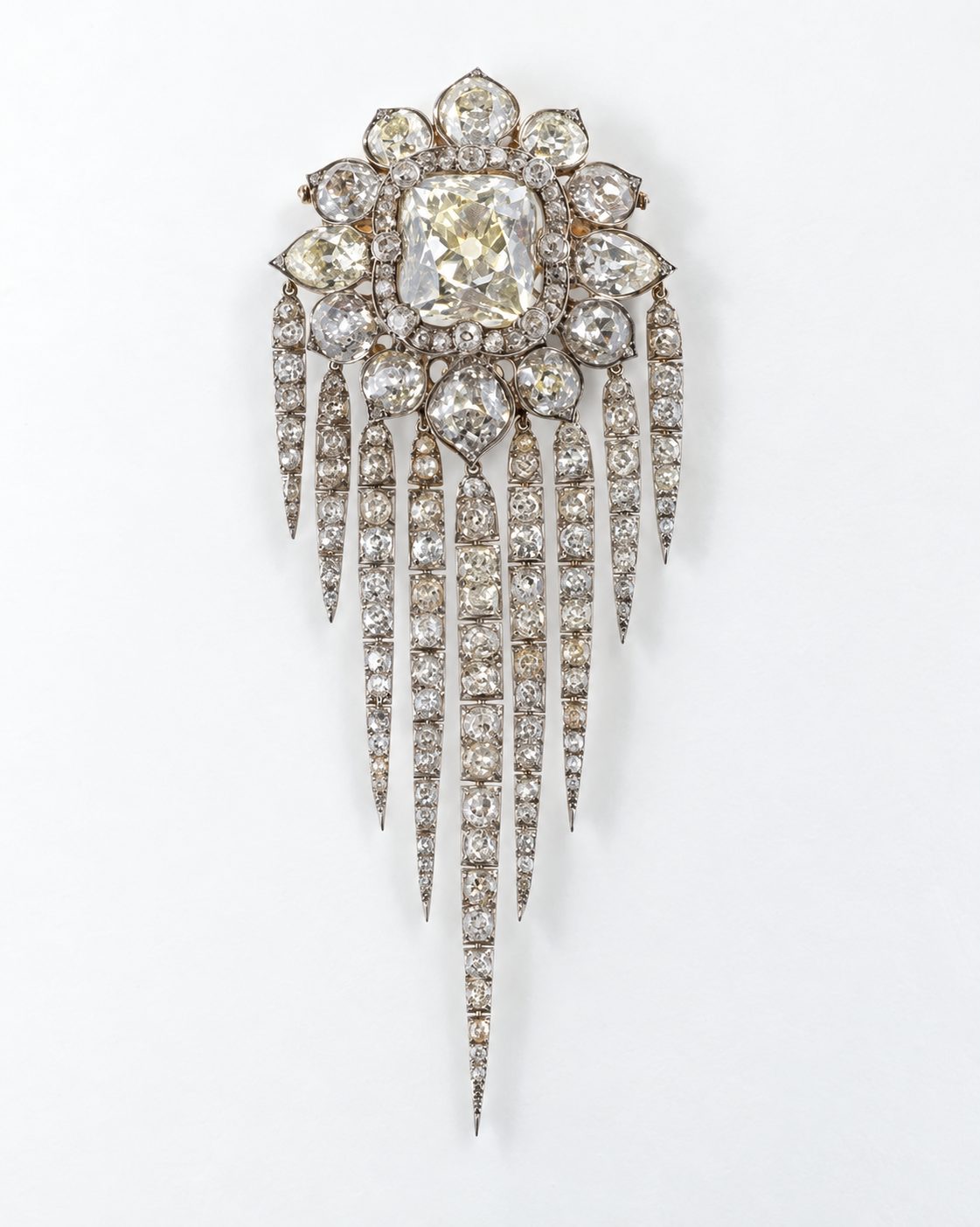
Queen Victoria’s Diamond Fringe Brooch, Attributed to R & S Garrard, circa 1856. (Courtesy Royal Collection Trust)
The Victorians Turned Yearning Into Jewelry
When Prince Albert died tragically, Queen Victoria wore her feelings. The Victorians understood the power of jewels that said a lot without saying a word.
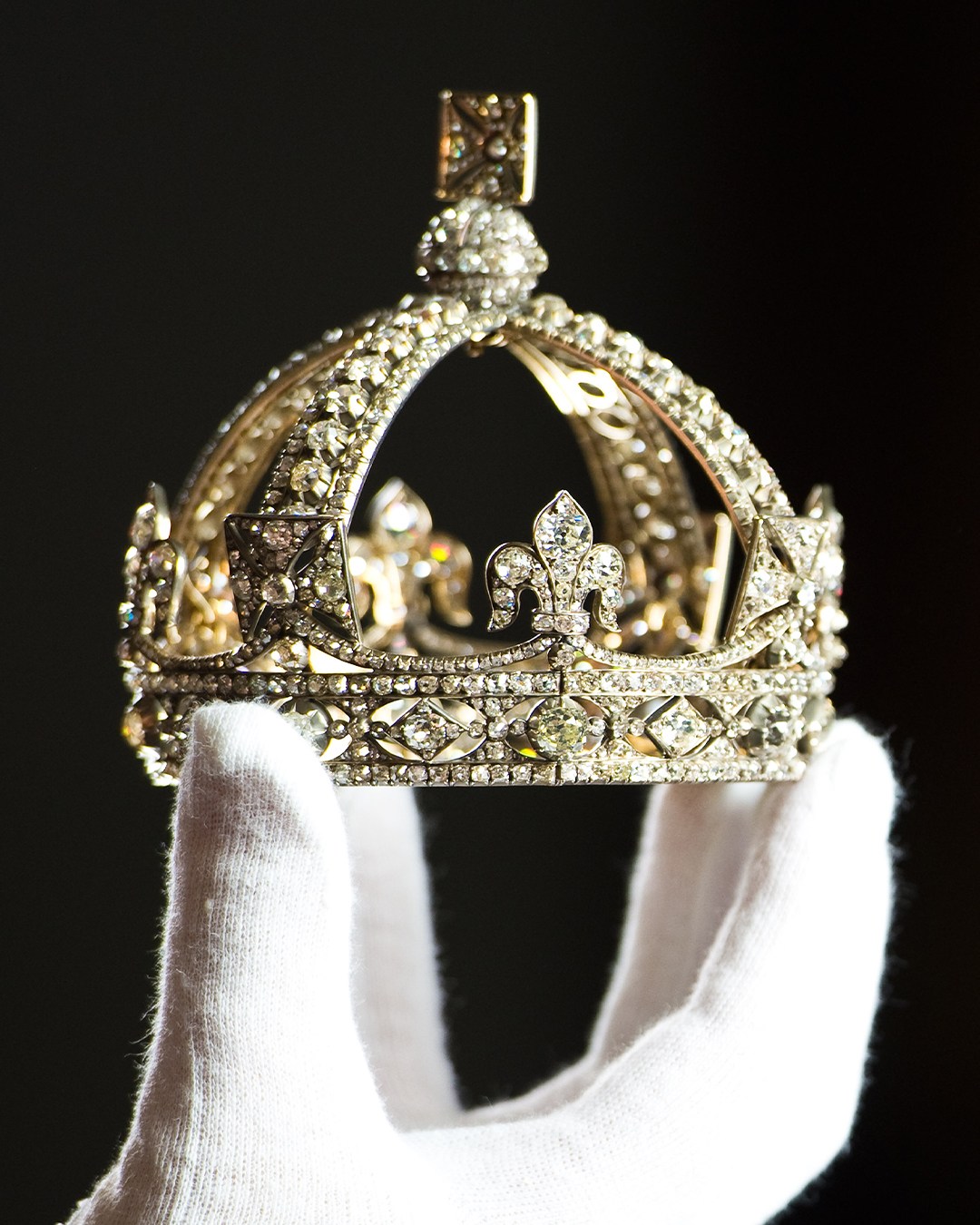
Queen Victoria went into mourning for the rest of her life when she lost her beloved Prince Albert. She commissioned the creation of Queen Victoria’s Small Diamond Crown, a diminutive but dazzling piece designed to sit atop her widow’s cap, set with an extraordinary 1,187 brilliant-cut and rose-cut diamonds on a silver frame.
The piece may have been small in stature compared to other royal jewels, but its meaning was anything but. It allowed Victoria to remain visibly a widow, even while fulfilling the ceremonial duties of a queen. For an era known for its restraint, Victorian jewelry held a surprising amount of feeling. From heart locket pendants and romantic motifs to mourning jewelry made with the hair of lost loved ones, emotion was embedded in every detail.
Ahead, discover how love, loss, discovery, and innovation transformed Victorian diamond jewelry.
Victorian Jewelry Was Built on Feeling

When people mention Victorian jewelry, they may be referring to one of two things: antique jewelry from the Victorian era, which spanned the reign of Queen Victoria from 1837 to 1901, or jewelry inspired by Victorian aesthetics, which may range from delicate and romantic to Gothic-inspired.
Jewelers and collectors often divide authentic Victorian jewelry into three stylistic phases: the Romantic period, the Grand period, and the Aesthetic period. Each had its own codes, but one idea runs through them all: jewelry carried meaning. A serpent could stand for eternal love. A crescent moon could signal romance. A black enamel ring could hold the memory of someone lost. Sentimentality and symbolism were embedded in the designs.
“Queen Victoria was a huge trendsetter and many of us associate her with both sentiment and romanticism,” says Helen Molesworth, jewelry historian and senior curator of jewelry at the Victoria and Albert Museum in London. “She obviously had a very emotional connection to her jewelry and her family – and both of those get intertwined.”
Victorian era jewelry was also marked by changes like industrialization, the discovery of diamonds in South Africa, and archeological excavations that brought back a fascination with the ancient worlds of Greece, Rome, and Egypt.
Three Eras That Changed Victorian Jewelry
Queen Victoria went into mourning for the rest of her life when she lost her beloved Prince Albert. She commissioned the creation of Queen Victoria’s Small Diamond Crown, a diminutive but dazzling piece designed to sit atop her widow’s cap, set with an extraordinary 1,187 brilliant-cut and rose-cut diamonds on a silver frame.
The piece may have been small in stature compared to other royal jewels, but its meaning was anything but. It allowed Victoria to remain visibly a widow, even while fulfilling the ceremonial duties of a queen. For an era known for its restraint, Victorian jewelry held a surprising amount of feeling. From heart locket pendants and romantic motifs to mourning jewelry made with the hair of lost loved ones, emotion was embedded in every detail.
Ahead, discover how love, loss, discovery, and innovation transformed Victorian diamond jewelry.
The world of natural diamonds changed dramatically during the Victorian era. And the jewelry changed right along with it. Over Queen Victoria’s 63-year reign, romance gave way to mourning, restraint followed excess, and entirely new ways of cutting and wearing diamonds emerged.
The Romantic Period: Jewelry Becomes a Love Language
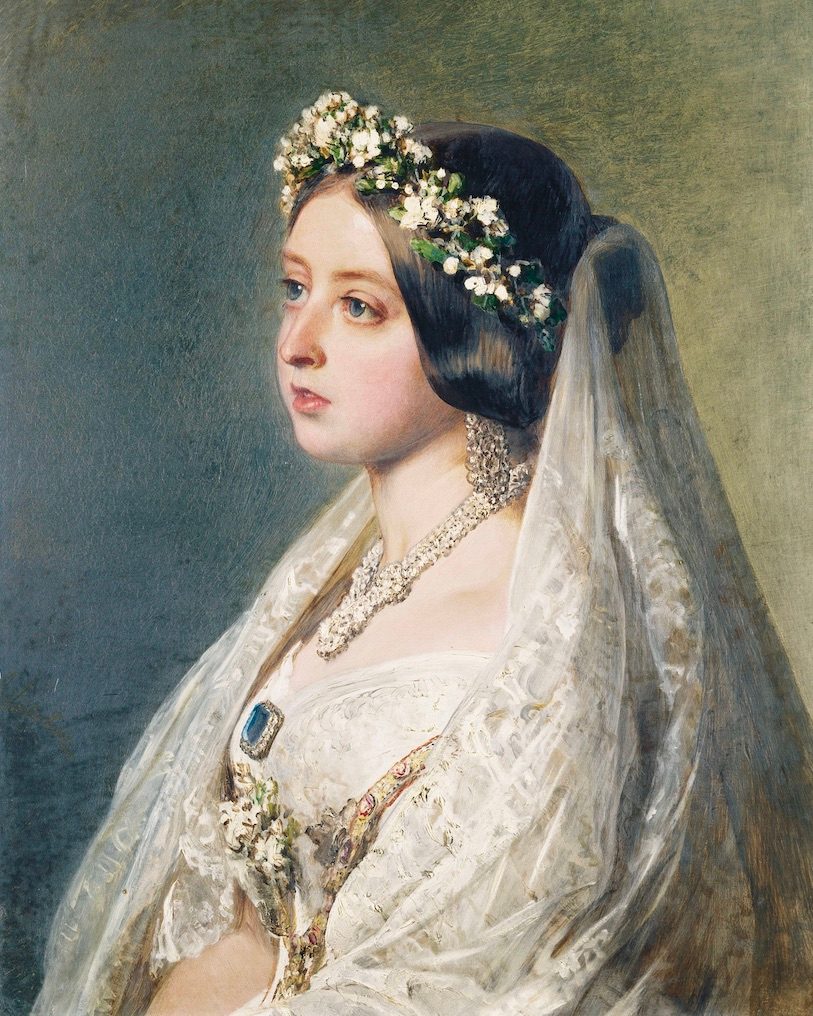
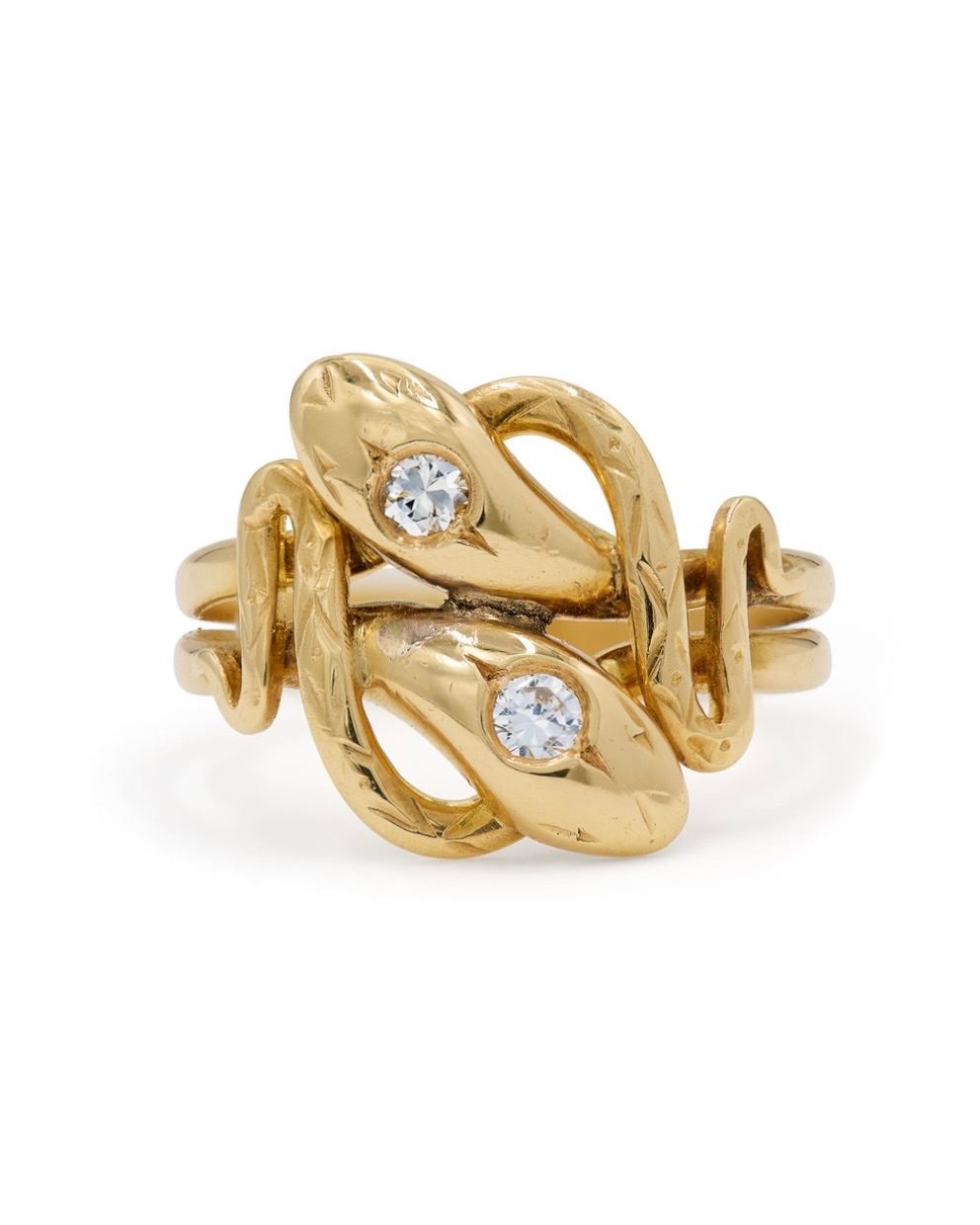
Queen Victoria’s romance with Prince Albert heavily influenced jewelry trends. He gifted her with a now-iconic gold gemstone-set snake ring with diamond accents on the snake’s head. The ring sparked the popularity of serpent motifs, and designs from that time generally featured nature-inspired themes, with diamonds arranged in shapes like florals or birds. Yellow or rose gold were the metals of choice to complement their sparkle.
The Grand Period: Grief Takes Over
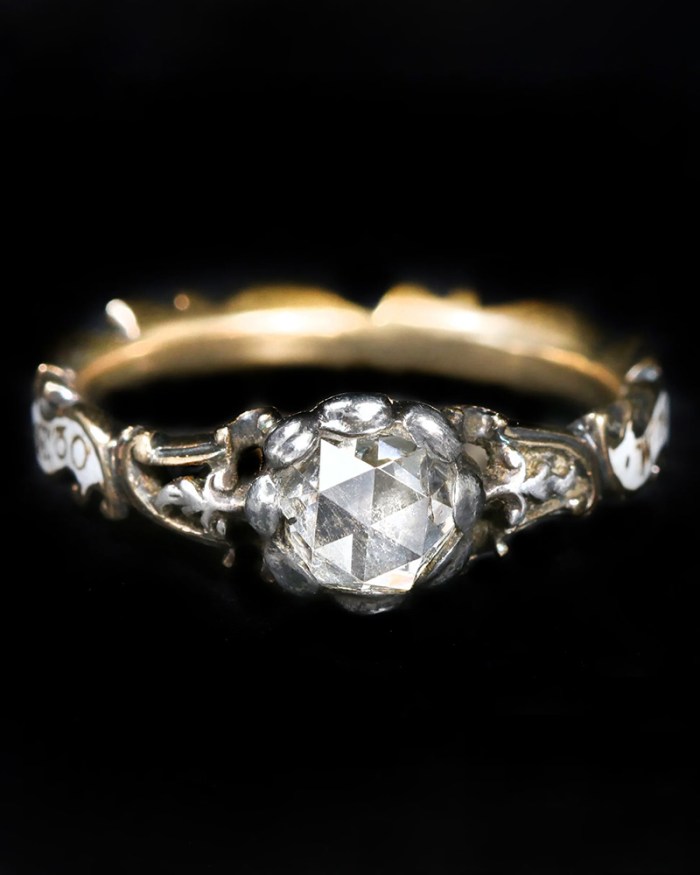
This period started with Prince Albert’s death and continued with Queen Victoria’s descent into a deep state of grief. Delicate, romantic patterns get replaced with more somber, heavy silhouettes and mourning jewelry. Gothic revival elements are in the spotlight, and silver becomes more prominent alongside yellow gold.
The Aesthetic Period: Beauty Without Rules
The later part of the Victorian era saw stylistic movements that challenged convention. “Art for art’s sake” was the motto, the idea that art’s only purpose is to be beautiful rather than serve utilitarian or moral functions. A growing appreciation for Japanese art led to a focus on asymmetrical silhouettes and mixed metals. Diamonds were used with more restraint.
But while tastes were changing, something much bigger was happening to diamonds themselves.
The discovery of diamonds in South Africa in 1867 was “a revolution for jewelry all over the world,” as Molesworth puts it, and made diamonds gradually more accessible beyond royal courts.
Meanwhile, industrialization brought technological advancements to diamond cutting, which was previously always done by hand. The bruting machine, which helps turn a rough diamond into a round stone by grinding it against another diamond, was invented in the early 1870s. While hand-cut diamonds like Old Mine cuts and rose cuts were still prevalent, this innovation led to the creation of the Old European cut – the round brilliant cut’s predecessor.
These changes elevated diamonds to center stage. “By the late 19th century, we see a plethora of diamonds in Victorian jewelry, with diamonds becoming much more commonly used,” says Molesworth. “Suddenly it’s not just about all the other colored gemstones – diamonds are becoming much more central to jewelry.”
The Details That Make Victorian Jewelry Unmistakable

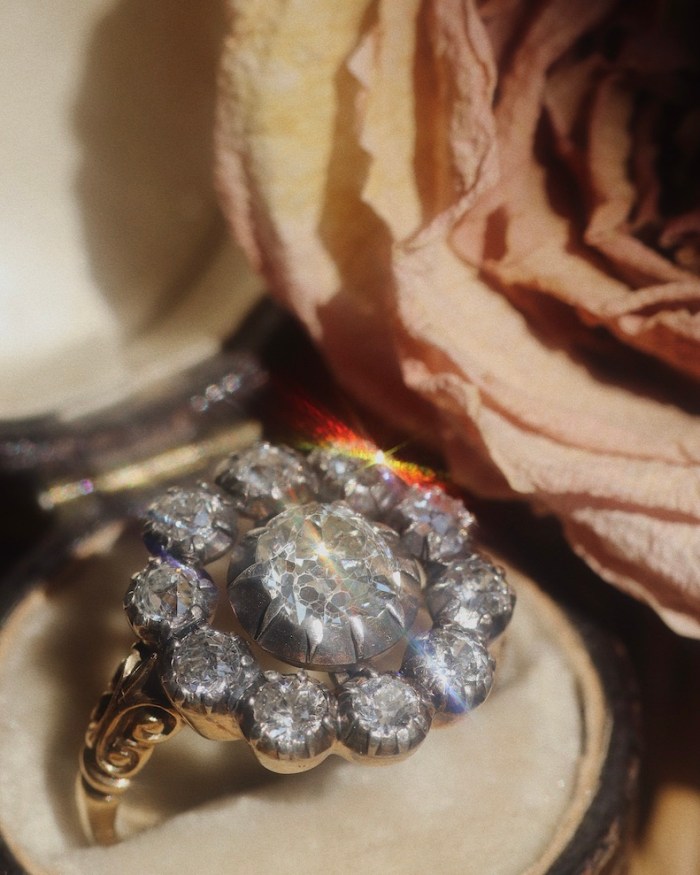
Victorian jewelry can move from ornate and romantic to dark and dramatic, sometimes within the same piece. Look closer, though, and the era reveals itself in the details: diamonds that tremble with movement, coded motifs, metals with warmth and patina, and cuts created for an entirely different kind of light.
Jewelry With a Second Language
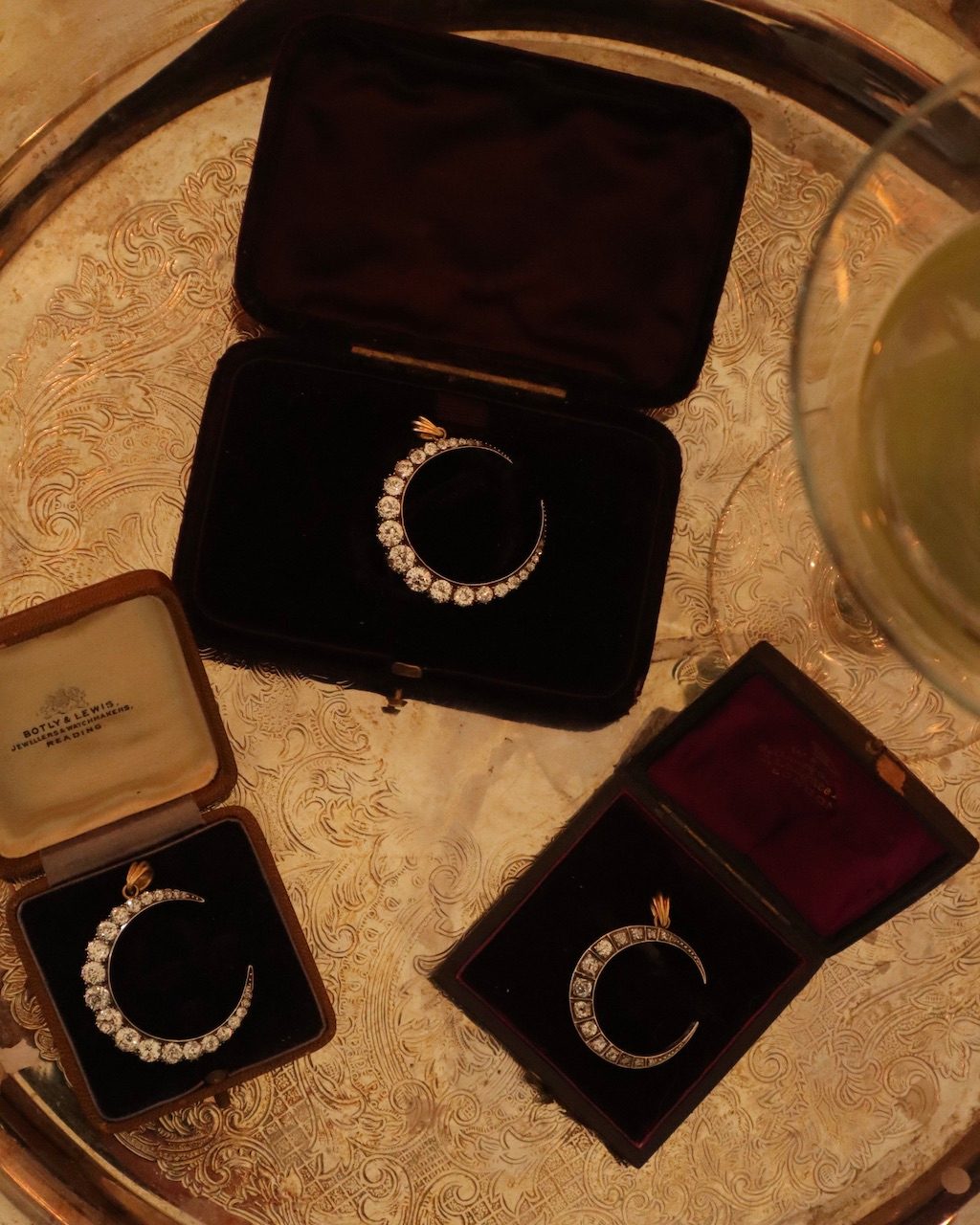
Whether it’s a mourning piece made of black enamel and a weeping willow motif or a diamond crescent pendant given to a lover, Victorian jewelry was rarely decoration for decoration’s sake. Its motifs could communicate love, remembrance, devotion, and hope without saying a word. Natural diamonds, which represented eternal love, were a perfect fit for the Victorians’ penchant for infusing jewelry with emotion and symbolism.
Diamonds Designed to Move
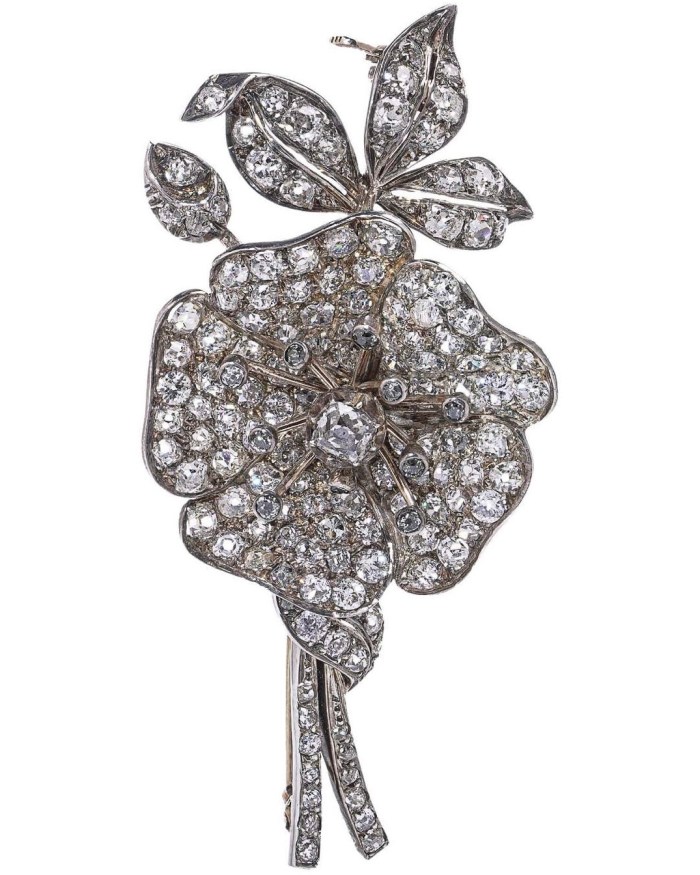
Diamond brooches were exceptionally popular during the Victorian era, and stomacher brooches, which covered a woman’s bodice from neckline to waist with sprays of diamonds, were prevalent.
Then there were diamonds that refused to stay still. According to Molesworth, notable Victorian diamond jewelry trends included en tremblant settings. This technique sets diamonds on tiny springs so that they vibrate with movement. While it existed during the Georgian era, it became much more elaborate in Victorian design and was often used to make tiaras, hair jewelry, and brooches come alive as their wearer moved.
The Natural World, Reimagined
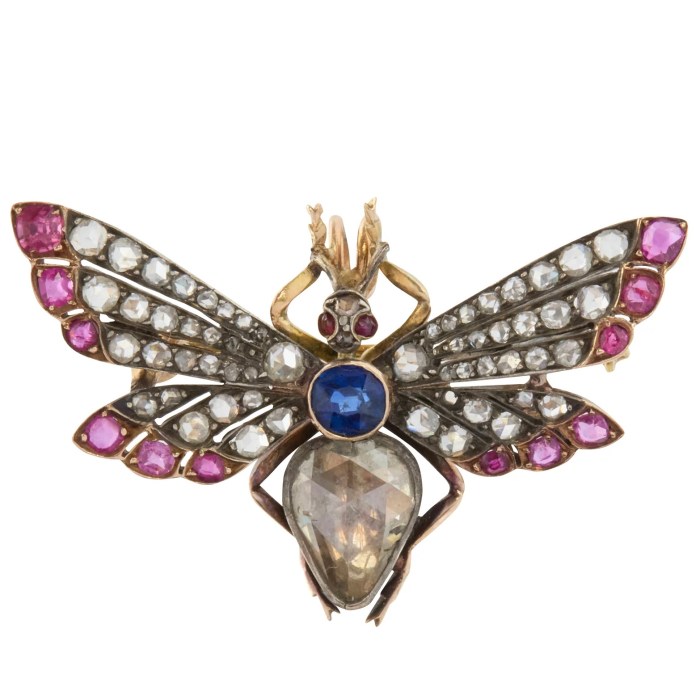
The natural world was a great source of inspiration for Victorian jewelry designers, from motifs featuring birds, butterflies, or insects – Queen Victoria loved animals – to clusters of diamonds arranged in a bouquet.
Gold, Silver, and the Beauty of Age

Queen Victoria’s famous snake engagement ring was crafted from 18-karat gold, which was typical in the early Victorian period. “High-karat gold and, later, silver settings were common,” says Rick Shatz, founder of The Back Vault.
Victorian jewelry can therefore move between the warmth of yellow or rose gold and the cooler character of silver. More than a century later, some pieces have naturally darkened with age, giving each Old World natural diamond piece a surface and character all its own.
Before Brilliant Cuts, Diamonds Glowed Differently
Rose-cut diamonds were favorites of the Victorians – and they still hold an undeniable romantic appeal today with their round shape, flat base, and facets designed to look like a rosebud.
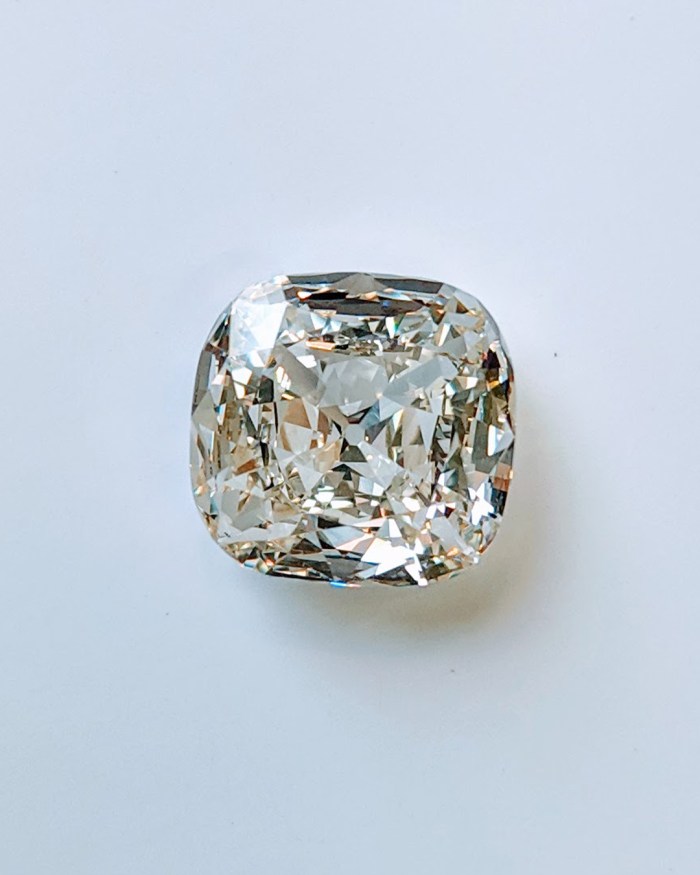
Old Mine cuts, which are distant cousins of the modern cushion-shaped diamond, were also common. Old European cut diamonds, which emerged as diamond cutting techniques evolved, were rounder and offered more brilliance under gas and electric light.
How to Buy Victorian Jewelry With Confidence
If you love the thought of adding an authentic Victorian piece to your diamond jewelry collection, begin with expertise. Look for a trusted jeweler or antique dealer who regularly works with jewelry from the Victorian era and understands the construction and materials of the period.
“Work with a trusted expert who understands period construction and materials, as provenance and integrity are everything,” says Shatz. “Each surviving piece carries historical weight, and with a finite supply remaining, authentic examples are increasingly rare.”
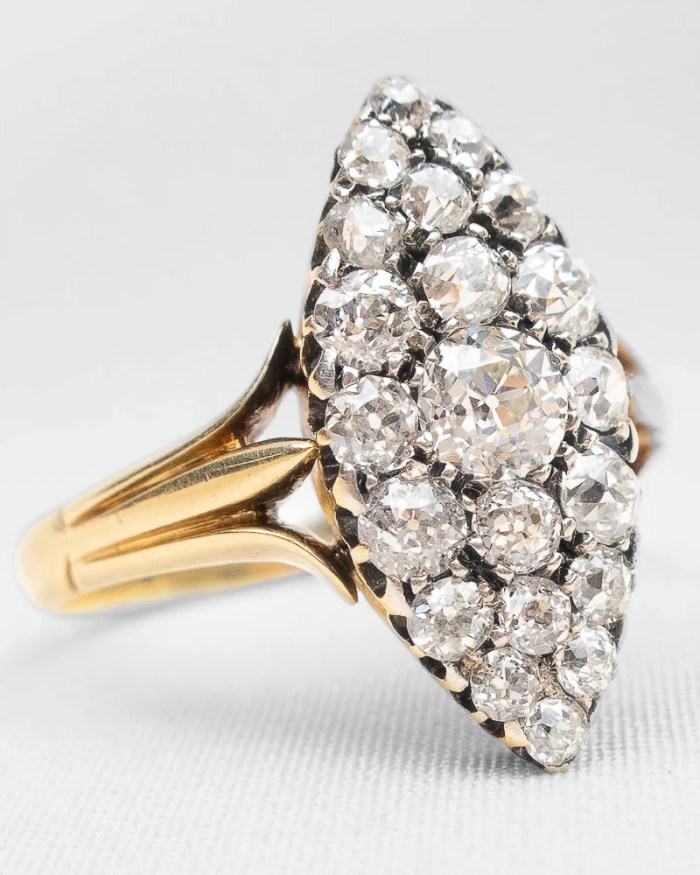
Then, consider which chapter of the era speaks to you. The romance of an early Victorian piece? The darker drama of the Grand period? An unusual navette ring? Part of the appeal of Victorian jewelry is that no two pieces carry quite the same history, character, or point of view. Knowing what draws you in can make it easier to recognize the right piece when you find it.